


Analyzing Burbank Real Estate
Burbank Real Estate: 2025 Market Trends and Investment Opportunities
Burbank, CA remains a focal market for investors in 2025 who need durable demand and financing that moves at deal speed. This guide breaks down what’s happening now, what to expect over the short term, and the practical financing options that let you act quickly—hard money, fix-and-flip, DSCR, and P&L/bank-statement solutions. You’ll learn how values are shifting, which neighborhood signals reliably predict appreciation, and which loan types best match common exit plans. We also demystify lender expectations—typical LTVs, documentation checklists, and realistic closing timelines—so you can underwrite with confidence and preserve return potential while managing risk.
Current Burbank Market Signals to Watch
Burbank’s market shows selective resilience: steady local demand with tighter resale inventory than broader metro areas. Price movement is often tethered to job centers and transit access, and competitive neighborhoods can see compressed days-on-market—making speed-to-close a decisive advantage. Lender perspective matters: financing availability and turnaround time will shape whether you pursue a flip, a bailout, or a buy-and-hold. Below are the primary trend signals to monitor and how they translate into underwriting assumptions.
- Local demand drivers: employment hubs, entertainment-industry spillover, and commute patterns shape buyer and renter pools.
- Inventory and velocity: low active listings and fast sales heighten competition and favor investors with quick funding options.
- Financing environment: the presence of non‑QM and private lenders affects the speed and leverage investors can realistically access.
When these signals point to rapid turnover, flexible underwriting and fast closings often beat traditional lending—next we look closer at recent value movement and what it means for exits.
Recent Property Value Movement in Burbank
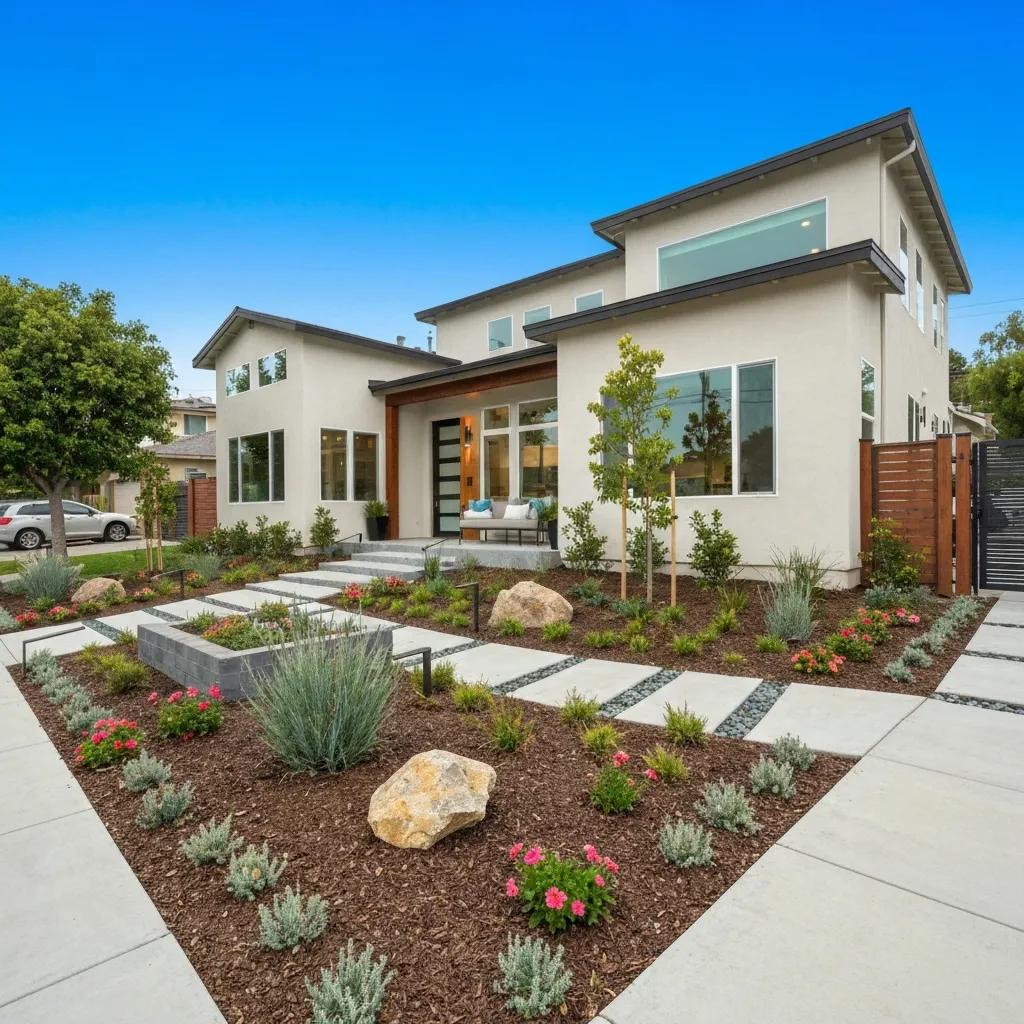
Values in Burbank have risen selectively where demand outstrips supply, with short-term gains concentrated in neighborhoods that attract buyers or respond well to renovations. Distinguish market-level appreciation from project-driven upside: your LTV and exit assumptions should reflect whether the gain comes from broader pricing trends or a rehab you control. Use recent comps as directional guidance and stress-test hold-period scenarios to protect against short-term softening. That approach helps you match financing to the expected rhythm of value realization and required equity cushions.
Key Market Drivers for Burbank in 2025
Three factors are particularly influential this year: employment stability, limited developable land, and access to transit and amenities. Interest-rate trends and credit availability also shape buyer affordability and, by extension, investor exit choices—sale versus rental. Stay alert to zoning changes and new supply; even modest additions to inventory can shift caps and vacancy expectations. These inputs inform vacancy buffers, cap-rate assumptions, and repair budgets for value-add projects.
Projected Value Paths for 2025
Forecasts for 2025 fall into three sensible scenarios—conservative, moderate, and optimistic—driven by employment trends, rate movement, and inventory shifts. The conservative path assumes flat to modest appreciation if credit tightens; the moderate path expects steady local demand and measured gains; the optimistic path pairs strong job inflows with constrained supply to push prices higher. Build your underwriting around the conservative scenario for sizing equity cushions, and only layer additional leverage after you’ve validated comps and buyer demand for the optimistic case.
How to Identify Appreciating Neighborhoods
Instead of relying on names, use repeatable criteria: transit connectivity, strong schools, visible renovation activity, and consistent resale velocity. Seek neighborhoods with repeat bidding, short days-on-market, and sales that clear list price—those indicators suggest rehab-driven forced appreciation will translate to proceeds. When multiple criteria align, you can justify a tighter rehab timeline and leaner contingency budget; when they don’t, widen margins to avoid chasing shallow hotspots.
Economic and Demographic Factors that Matter
Population and job stability form the demand baseline; sectors with steady employment produce more predictable renter and buyer pools. Demographics—household size, renter/owner split, and age cohorts—help determine whether a property performs better as a rental or a resale. Translate those patterns into rent-growth assumptions and vacancy buffers for NOI models. That demographic-to-underwriting link is critical when choosing between cashflow-driven loans (DSCR) and exit-dependent products (fix-and-flip financing).
Investment Property Types and Financing Fit

Match property type—single‑family flips, small multifamily buy‑and‑hold, or small commercial—to expected returns, required capital, and the financing that best supports the strategy. Flips need speed and short-term rehab capital; multifamily requires cashflow underwriting and competent property management; commercial assets demand lease analysis and specialized appraisal work. Choosing the loan that aligns with your exit plan reduces execution risk and protects returns.
Common financing pairings investors use:
- Single-family flips: short-term rehab loans or hard money to preserve speed-to-close while covering purchase and renovation costs.
- Small multifamily buy-and-hold: DSCR products or P&L/bank-statement approvals that prioritize rental income over W‑2 documentation.
- Small commercial/retail: commercial bridge loans or non‑QM programs that underwrite around lease strength and tenant mix.
Mapping financing to property type sets realistic leverage and timeline expectations and helps you gather the documentation lenders will require.
- Flips: expect collateral-focused underwriting, interest reserves, and accelerated appraisal workflows.
- Buy-and-hold: expect rent rolls, operating statements, and rent comps to be central to approval.
- Commercial: expect lease abstracts, operating statements, and a longer appraisal and due-diligence window.
That practical mapping clarifies how your funding choice will affect capital needs and timelines for each approach.
Which Property Types Tend to Deliver the Best Returns?
Returns depend on strategy: flips can produce the highest short-term percentage gains but carry execution and market-timing risk; buy-and-hold offers steady cashflow and compounding appreciation. Small multifamily often delivers strong risk-adjusted returns because unit-level diversification reduces vacancy exposure. Commercial can yield higher returns but usually requires deeper underwriting and a longer time horizon. Align your expected return with liquidity needs and the appropriate financing path.
Estimating Rent and Vacancy in Burbank
Start with lease comparables and adjust for unit condition and location; always apply a conservative vacancy buffer and realistic expense ratio when calculating NOI. A straightforward NOI formula: Gross Scheduled Rent × (1 − Vacancy Rate) − Operating Expenses = NOI. Lenders will scrutinize these inputs for DSCR and bank-statement loans, so validate assumptions with local rent surveys and county lease records and stress-test for higher vacancies or slower rent growth.
When Hard Money Makes Sense
Hard money provides short-term, asset-backed financing that prioritizes collateral and LTV over traditional credit metrics—enabling fast funding for competitive purchases and rehab projects. These loans shine when speed is essential: auctions, time-sensitive contracts, and projects where rehab will materially change collateral value during a short hold. Underwriting focuses on ARV, current condition, and borrower equity; documentation is leaner than conventional mortgages, which shortens approval and closing timelines. The table below compares common program attributes to help you match program features to deal needs.
Below is a side-by-side comparison of representative short-term and bridge loan programs so you can quickly assess fit for a Burbank deal.
| Loan Program | Typical LTV (purchase/ARV) | Typical Term | Typical Fees | Funding Timeline |
|---|---|---|---|---|
| Hard money purchase loans | 60–75% of purchase or 50–70% ARV | 6–24 months | Origination + servicing fees | 7–21 days |
| Fix & flip financing | 60–70% purchase / up to 75% ARV | 3–12 months | Draw fees, inspection fees | 7–21 days |
| Bailout loans (bridge) | 50–70% of current value | 3–12 months | Higher origination, possible legal fees | 3–14 days |
| Second-lien loans | Depends on combined LTV, often lower | 6–36 months | Elevated interest, placement fees | 7–30 days |
| Commercial bridge loans | 60–75% of property value | 6–36 months | Underwriting + appraisal costs | 14–45 days |
Operational summary: hard-money programs prioritize ARV and collateral, offer faster closings than conventional lenders, but carry higher fees and shorter terms. Knowing typical timelines and fee structures helps you minimize carrying costs while preserving upside from forced appreciation.
Practical loan program notes: lenders that operate quickly usually publish clear program sheets—LTV ranges, term expectations, fee structures, and required documents. For many Burbank deals, a simple checklist—purchase contract, property photos, rehab budget, and proof of available equity—gets underwriting moving. Assemble these items early to accelerate review on time-sensitive opportunities.
How Hard Money Works in Burbank
Hard money is collateral-first: lenders evaluate current and after-repair value and require demonstrable equity rather than relying primarily on credit scores. Typical workflow: application → property assessment/appraisal → ARV-focused underwriting → term issuance → closing. Required documents are concise: purchase contract, rehab scope and estimates, and proof of funds for down payment or reserves. Because underwriting centers on the asset, these loans fund faster than conventional products—critical for competitive acquisitions.
When to Use Hard Money
Hard money is best for auction purchases, quick flips, large rehabs where construction loans aren’t available, and bailout scenarios where speed prevents contract loss or foreclosure. Use it when your exit is clear—either a quick resale after rehab or a refinance into longer-term financing. Account for higher fees and interest, and manage rehab timelines tightly to protect returns. When certainty and speed outweigh lower-cost capital, hard money is often the pragmatic choice.
DSCR Loans: A Core Option for Buy-and-Hold
DSCR loans underwrite based on property net operating income versus debt service, making them a go-to for buy-and-hold investors who rely on rental cashflow rather than W‑2 income. The DSCR ratio (NOI / annual debt service) shows whether income covers loan payments; many lenders look for a DSCR above 1.0. DSCR underwriting emphasizes leases, rent comps, and rent rolls and can allow experienced investors to access higher leverage on stabilized assets. The table below contrasts DSCR, P&L/bank-statement, and traditional mortgage qualification elements.
Comparison of qualification focus and documentation expectations for DSCR, P&L/bank-statement, and traditional mortgage products.
| Loan Type | Qualification Metric | Docs Required | Typical DSCR Range | Funding Speed |
|---|---|---|---|---|
| DSCR loans | Property NOI / Debt Service | Rent rolls, leases, operating statements | 1.0–1.3+ | 7–30 days |
| P&L / bank-statement approvals | Business income or deposits | P&L statements, bank statements | N/A (income-based) | 10–30 days |
| Traditional mortgages | Borrower income & credit | W-2s, tax returns, credit | N/A (income-based) | 30–60+ days |
DSCR specifics: lenders often list clear qualification steps—submit rent rolls and leases, provide operating statements or rent comps, and show adequate reserves. Conservative DSCR thresholds typically start near 1.0–1.2; readiness of documentation materially improves funding speed.
How DSCR Differs from Traditional Mortgages in California
DSCR shifts the underwriting lens from borrower income to property performance. Conventional loans rely on W‑2s and DTI; DSCR evaluates whether the property’s NOI supports debt service. This makes DSCR attractive to investors with nontraditional income or large rental portfolios and often delivers faster decisions when rent documentation is in order.
DSCR Qualification Criteria in Burbank
Expect verified rent rolls, leases, and operating expenses that demonstrate NOI sufficient to meet the lender’s minimum DSCR, plus reserves for repairs and vacancy. Lenders will also consider property condition, occupancy history, and borrower experience. Credit and equity standards remain relevant but are secondary to property performance. A complete rent documentation package and conservative NOI model speed approvals and improve terms.
Repeatable Workflow to Close Deals Faster
Use a repeatable deal workflow—market scan, conservative underwriting, select financing, assemble documents, execute—to convert opportunities into funded projects without avoidable delays. Verify comps with MLS and public records, run conservative NOI and exit scenarios, and choose financing that matches your time horizon and risk tolerance. The steps below outline a practical process you can follow to submit deals quickly.
Practical steps to execute Burbank deals:
- Identify the opportunity: secure a contract or off‑market lead and compile recent comps and rent comparables.
- Run conservative underwriting: model multiple scenarios, including higher vacancy and slower appreciation.
- Select financing: match strategy to product (hard money, DSCR, P&L, bridge).
- Prepare docs and submit: assemble purchase contract, rehab budgets, rent rolls, and reserve validation.
- Execute and monitor: manage rehab draws, update underwriting, and plan exit financing or sale.
Tools and Data to Support Deal Analysis
Reliable analysis blends transaction and rental datasets, simple calculators, and due‑diligence checklists to validate comps, rents, and foreclosure timelines. Use county records and MLS for sales history, rent comp services for lease comparables, and cap‑rate/NOI calculators to stress‑test assumptions. Keep standardized templates for comp filters, rehab budgets, and draw inspection schedules to turn market signals into lender-ready materials and shorten lender review cycles.
Pairing Market Signals with Financing Choices
Match market signals to financing: prioritize speed when local velocity is high and favor income-based loans when rental fundamentals are stable. If comps show ready resale demand and short days-on-market, opt for funding that closes quickly and supports rehabs; if rent growth and occupancy look steady, pursue DSCR or P&L options for longer holds. Always plan contingencies for slower exits and maintain conservative leverage to preserve optionality. The table below summarizes property types, investor benefits, financing choices, typical holding periods, and key risks.
Summary table to align property type with financing and risk considerations.
| Property Type | Investor Benefit | Financing Options | Typical Holding Period | Key Risk Factors |
|---|---|---|---|---|
| Single-family flip | High short-term upside | Hard money, fix & flip loans | 3–12 months | Market timing, rehab overruns |
| Small multifamily | Diversified rental income | DSCR loans, P&L approvals | 3–10+ years | Tenant turnover, management needs |
| Small commercial | Higher yield potential | Commercial bridge loans | 1–10 years | Lease risk, tenant credit |
Need funding or program guidance? Prepare a deal package—purchase contract, photos, rehab budget, rent roll or pro forma, and proof of equity—and submit for review. For urgent deals, call the lending team or complete an interest form to begin rapid underwriting; a prepared checklist shortens approval cycles and improves access to fast funding for Burbank opportunities.
Required documents checklist:
- Executed purchase contract and property photos.
- Detailed rehab scope and budget with contractor estimates.
- Proof of equity or funds for down payment and reserves.
Frequently Asked Questions
What are the risks associated with investing in Burbank real estate?
Risks include market volatility, hidden property issues, and financing uncertainty. Values can shift, rehab scopes can expand, and lending terms can tighten—each affects returns. Mitigate risk with conservative underwriting, contingency reserves, and clear exit plans.
How can I find off-market properties in Burbank?
Off-market sourcing works through local networks: agents, investor groups, contractors, direct mail, and targeted outreach. Online platforms that list pocket or off‑market deals, plus consistent local networking, tend to surface the best opportunities.
What is the impact of interest rates on Burbank real estate investments?
Interest rates affect borrowing costs and buyer affordability. Higher rates increase carrying costs and can compress buyer demand; lower rates expand buyer pools and support higher prices. Monitor rate trends and structure financing to preserve flexibility under different rate scenarios.
What are the best strategies for flipping properties in Burbank?
Successful flips start with tight comps, conservative rehab budgets, and a vetted contractor team. Focus on projects with clear cosmetic upgrades over structural surprises, and lock financing that supports quick draws and fast closes. Maintain strict timelines and contingency funds.
How do zoning laws affect real estate investments in Burbank?
Zoning governs use, density, and development potential—impacting value and permissible upgrades. Stay informed on local ordinances and proposed changes; engaging the planning department or a local land-use consultant can reveal conversion or value-add opportunities.
What role does property management play in Burbank rental investments?
Property management affects occupancy, maintenance, and net returns. Good management improves tenant retention and reduces vacancy and repair costs. Decide early whether to self-manage or hire a professional based on portfolio size and operational capacity.
How can I assess the long-term viability of a Burbank investment property?
Assess location fundamentals, employment trends, and amenity proximity. Run conservative cashflow models, stress-test vacancy and expense assumptions, and evaluate long-term demand drivers. Periodic review of these factors keeps your strategy aligned with market realities.
Conclusion
Burbank offers targeted opportunities in 2025 for investors who pair disciplined underwriting with the right financing. Read the market signals, match your exit plan to a suitable loan product, and assemble lender-ready documentation to move fast when deals surface. With conservative assumptions and clear execution, you can protect returns while capturing upside in this compact, in-demand market.