

Frequently Asked Investment Questions
Frequently Asked Questions
What are the risks associated with hard money loans?
Hard money loans can be a powerful tool, but they carry clear risks. The biggest is higher interest and fees, which can erode returns if a project runs long or doesn’t sell for the expected price. If the property fails to produce income or a timely sale, borrowers risk foreclosure and loss of equity. The best way to manage those risks is a realistic rehab budget, a credible exit plan, and conservative valuation assumptions before you borrow.
Can I use a hard money loan for new construction projects?
Yes — hard money can finance new construction, but lenders will expect detailed plans, an accurate budget, and a clear timeline. New builds often require closer scrutiny than existing-property deals, so be prepared to show permits, contractor bids, and a solid exit (sale or refinance) to prove feasibility and increase your approval odds.
How do I choose the right hard money lender?
Start with reputation and program fit. Look for lenders who handle your type of project and offer transparent fees and turnaround times. Compare rates, LTV limits, and underwriting flexibility, then test responsiveness — a lender who communicates clearly during underwriting will be easier to work with on the deal. Ask peers for referrals and review recent deals the lender has closed to confirm alignment with your strategy.
What happens if I default on a hard money loan?
Default typically lets the lender pursue foreclosure on the collateral property. That can mean losing your investment and any built equity, and it can damage your credit and future financing options. To avoid default, keep an executable repayment or exit plan, maintain open communication with your lender, and address issues early so you can negotiate alternatives when possible.
Are hard money loans suitable for first-time real estate investors?
They can be — particularly for time-sensitive flips or acquisitions — but first-time investors should approach them with caution. Higher cost and tighter timelines increase risk. If you’re new, build conservative budgets, confirm contractor reliability, and get mentorship or professional advice so your exit strategy is realistic and your financial buffers are sufficient.
What is the difference between hard money loans and traditional mortgages?
Hard money is asset-driven: underwriters focus on the property’s value, ARV, and exit strategy, not primarily on credit scores or tax returns. That makes approvals faster and more flexible for nonstandard deals, but it also means higher rates and shorter terms. Traditional mortgages rely more on borrower income and credit, offering lower rates and longer repayment for conventional purchases and refinances.
What Is a Hard Money Loan and How Does It Benefit Real Estate Investors?
A hard money loan is short-term, private financing secured by the property itself and underwritten mainly on equity and a clear exit. Because underwriting centers on collateral and plan rather than detailed income verification, approvals move faster when the numbers are solid. Investors use these loans for fix & flips, foreclosure bailouts, bridge financing, and other time-sensitive opportunities where speed and asset value matter more than traditional qualifiers.
How Does Fidelity Funding Provide Fast and Flexible Hard Money Loans?
At Fidelity Funding we underwrite with an emphasis on property equity and practical exit strategies so we can approve and fund efficiently. Our process prioritizes clear title, realistic ARV or rent assumptions, and a concise rehab plan so underwriting focuses on collateral and exit instead of long income verification. Typical approvals and funding often occur within five to seven days; for well-documented, time-sensitive deals we can issue initial approvals in 24–48 hours. Fidelity Funding holds an NMLS ID (340265) and a California BRE License (00785027), which lets us combine regulated oversight with private-lender speed — helping investors act quickly when market windows are narrow.
What Types of Investment Properties Qualify for Hard Money Loans?
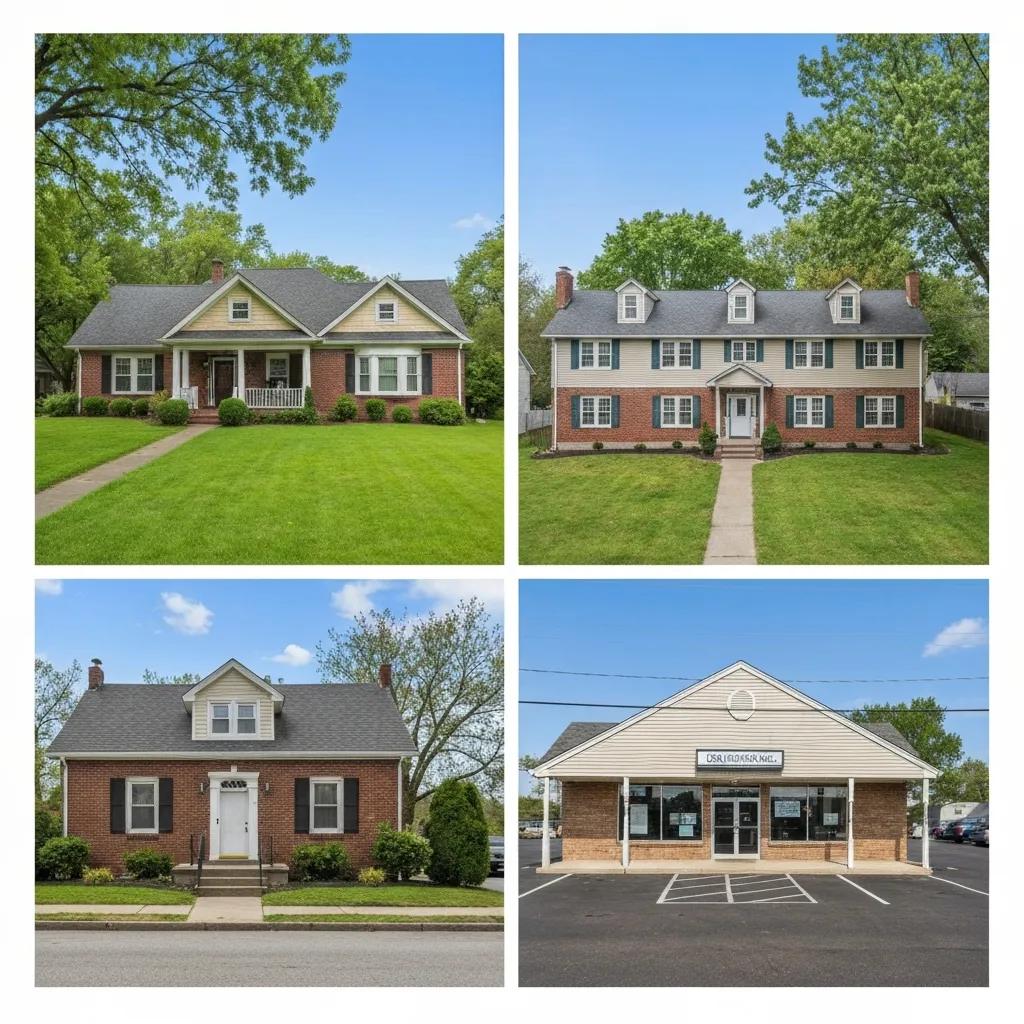
Hard money lenders evaluate properties primarily on collateral value, ARV, and a feasible exit. Commonly eligible property types include single-family homes for flips or rentals, small multifamily buildings, light commercial or mixed-use assets with a clear refinance or sale path, and vacant land when there’s a staged development plan. Highly contaminated sites or properties with unresolved legal issues may need special underwriting or be ineligible. Below is a quick overview of typical property classes and common use cases.
- Single-family homes: Ideal for flips and buy-refinance-rent strategies when ARV and rehab budgets are documented.
- Small multifamily (2–8 units): Underwritten on rent-roll potential and DSCR for longer-term holds.
- Light commercial / mixed-use: Considered when a clear commercial exit or refinance path exists.
- Vacant land: Eligible with a phased development plan and demonstrable exit.
These categories reflect typical eligibility. Final approval depends on zoning, environmental review, title clarity, and other underwriting nuances that affect timelines and terms.
How Quickly Can I Get Approved and Funded for a Real Estate Investment Loan?
Approval and funding speed depends on deal readiness, property condition, and the program chosen. Asset-based underwriting generally closes faster than conventional lending. For well-packaged deals we often reach approval in five to seven days, and initial conditional approvals can come in 24–48 hours when title is clear and documentation is complete. The key drivers are a signed purchase contract, an accurate rehab scope, verifiable equity, and a stated exit strategy — the sooner you provide those, the faster underwriting can move to closing.
What Is the Typical Approval and Funding Timeline with Fidelity Funding?
A practical “days to close” example shows how a prepared deal moves from submission to funding with an equity-focused lender.
Day 0: submit the deal with purchase contract, property photos, and rehab budget.
Day 1–2: initial review and conditional approval based on equity and exit plan.
Day 3–5: underwriting, title review, and appraisal or valuation call; any draw or condition adjustments clarified.
Day 5–7: closing and funding for standard cases; fully documented, expedited deals can fund in 24–48 hours.
Common delays include title defects, incomplete rehab bids, or disputed ownership — resolving those items early keeps turnaround times short.
What Documents Are Required for Fast Loan Approval?
A complete document set answers common underwriting questions up front and minimizes follow-up. Below is a concise checklist by program so you can prioritize what to submit first.
- Basic packet for purchases: fully signed purchase agreement, current property photos, proof of equity or down payment, and ID.
- Fix & flip specifics: detailed rehab scope, contractor bids, cost breakdown, and an ARV estimate supporting the sale exit.
- DSCR / commercial: current rent roll, leases, operating statements, and market rent comparables.
- P&L approvals: recent profit & loss statements, bank statements, and business documentation when borrower income is used.
Submitting these items together reduces back-and-forth with underwriters and shortens the time from conditional approval to funding.
Below is a quick table linking each document type to its typical processing-time impact.
| Document / Step | Why needed | Typical processing time impact |
|---|---|---|
| Purchase agreement & ID | Establishes deal terms and borrower identity | 0–24 hours for initial review |
| Rehab scope & bids | Supports ARV and draw schedule for rehab funding | 1–3 days for cost validation |
| Title report or preliminary title | Confirms ownership and existing liens | 2–4 days, faster with clear title |
| Rent roll / P&L | Validates income for DSCR or P&L underwriting | 1–3 days depending on complexity |
Submitting a complete packet for your program typically keeps approval within the 5–7 day window.
What Are the Credit and Income Requirements for Investment Loans?
Requirements vary by program. Many hard money and private lenders emphasize collateral and exit strategy over borrower credit or traditional income documentation. Asset-based underwriting centers on equity, ARV, and a feasible exit — which can allow borrowers with weaker credit to secure funding. DSCR and P&L programs, however, focus on income metrics like rental income or business cash flow to demonstrate ongoing debt service capacity. Know which metric matters for your program so you submit the right documents and set expectations for pricing and reserves.
Do I Need a High Credit Score or Income Verification for Hard Money Loans?
Not always. Hard money decisions typically lean on property equity and the exit plan more than FICO. That said, credit and income history can affect pricing, reserves, and program availability — especially for subordinate financing or longer terms. Alternative underwriting inputs such as detailed ARV analyses, contractor bids, investor track record, and P&L statements can offset weaker credit. When credit or income is marginal, lenders commonly require stronger equity cushions or shorter terms to reduce risk.
How Do DSCR Loans Differ in Eligibility and Income Requirements?
DSCR (Debt Service Coverage Ratio) loans focus on a property’s ability to cover debt from net operating income, so they prioritize rent rolls, leases, and operating statements. DSCR is Net Operating Income divided by Annual Debt Service; lenders typically look for ratios above roughly 1.0–1.25 depending on risk and property type. For example, $30,000 NOI against $24,000 annual debt service equals a DSCR of 1.25. Lenders usually want historical rent rolls, current leases, expense statements, and market comparables; projected rents can work if backed by local data and prudent assumptions.
What Loan Programs Does Fidelity Funding Offer for Real Estate Investors?
Fidelity Funding provides a range of private-lending solutions for investors: purchase loans, refinance loans, fix & flip financing, bridge and commercial loans, foreclosure bailout loans, seconds, DSCR loans, and P&L-based approvals. Each program is built around property equity, a practical exit strategy, and timelines that support time-sensitive deals. Programs differ by typical LTV, speed, and required documentation — the table below helps you compare options at a glance.
| Loan Program | Typical focus / LTV / Speed | Key requirements |
|---|---|---|
| Fix & Flip Financing | Acquisition + rehab; up to 75–90% of purchase or ARV-driven LTV / 5–7 days | Purchase contract, rehab scope, ARV estimate |
| Purchase Loans | Quick closings for acquisitions; up to 70–80% LTV / 5–7 days | Signed purchase agreement, proof of funds/down payment |
| Foreclosure Bailout / Bridge | Time-sensitive rescue or short bridge; lower LTVs, urgent funding / 24–72 hours initial | Notice of default or urgent sale date, clear exit strategy |
| DSCR Loans | Rental income-driven; LTV varies with DSCR / 7–14 days | Rent roll, leases, operating statements |
| Commercial Loans | Small commercial underwriting; LTV and terms vary / 7+ days | Financials, leases, operating statements |
This matrix helps you match product, speed, and documentation to the deal. We structure each program to focus on equity and a realistic exit so underwriting can move quickly for qualified transactions.
How Do Fix and Flip Loans Work and What Are Their Key Features?
Fix and flip loans typically combine acquisition and rehab financing with a draw schedule tied to verified progress and inspections, and they’re underwritten to ARV so the sale exit is viable. Lenders usually fund an acquisition advance and then release rehab draws as milestones are completed, relying on contractor bids, contingency reserves, and a realistic ARV. Terms are short — generally 6–12 months — and fees reflect speed and risk. Accurate budgeting of purchase price, rehab costs, and resale margin is essential to protect flip profitability. For example, a $200,000 purchase with $50,000 in rehab targeting a $320,000 ARV may qualify for financing that covers most acquisition and rehab costs when documentation supports the ARV.
What Are Foreclosure Bailout and Bridge Loan Options?
Foreclosure bailout and bridge loans address urgent needs: stopping a foreclosure sale or closing a time-sensitive purchase while longer-term financing is arranged. These products are priced and structured for urgency and lower tolerance for uncertainty, so lenders want evidence of imminent risk (like a sale date) and a clear exit to repay the loan. Bridge terms are short with conservative LTVs based on quick-sale or refinance values. Documentation proving urgency — a sale notice, refinance commitment, or a concrete borrower plan — enables faster underwriting and can produce funding within 24–72 hours in exceptional cases.
What Are Typical Loan Terms, Interest Rates, and Loan-to-Value Ratios?
Rates, terms, and LTVs depend on program, property quality, and borrower experience. Short-term fix & flip loans carry higher monthly interest but shorter terms; DSCR or refinance options can offer lower rates for stable income properties. Pricing is influenced by condition, combined loan-to-value (including seconds), borrower track record, and required speed to close. The table below summarizes typical ranges so you can compare cost of capital quickly.
| Program | Typical LTV | Typical rate range | Typical term / fees |
|---|---|---|---|
| Fix & Flip | Up to 75–90% of purchase or ARV-driven | Higher monthly rates (market varies) | 6–12 months; points/fees apply |
| Purchase Loans | Up to 70–80% | Moderate private-lender rates | Short-term bridge; points vary |
| DSCR Loans | Varies by DSCR; lower LTV for conservative DSCR | Rate depends on income profile | 1–3 years typical for bridge-to-rental |
| Commercial Loans | Lower LTVs, case-by-case | Rate varies with property class | Terms vary; underwriting more detailed |
What LTV Percentages Are Available for Different Loan Programs?
LTV caps depend on program, property condition, and clarity of the exit. Fix & flip deals can reach higher LTVs when ARV and rehab budgets are credible; bailout and commercial loans are often more conservative. Key drivers of allowable LTV are the strength of the ARV or rent support, borrower experience, and title clarity. Combined loans (seconds) are judged on combined loan-to-value (CLTV), so subordinate financing will reduce the primary lender’s LTV capacity. For faster decisions, bring solid ARV support, contractor bids, and evidence of equity.
How Do Interest Rates and Loan Terms Affect Investment Financing?
Interest and term choices shape carrying costs and investment returns. Higher short-term rates raise the breakeven point on flips and tighten profit margins; longer terms ease monthly pressure but may increase total interest. Points and origination fees are upfront costs that affect returns, and prepayment expectations influence refinance or resale timing. Investors should model monthly carrying costs, projected sale proceeds, and contingency reserves to confirm the chosen loan supports the intended exit with acceptable returns.
How Can I Apply and What Are the Next Steps to Secure Investment Financing?

Applying is a sequence of clear steps that, when followed, reduce underwriting time and improve approval chances. Assemble a concise deal package, pick the right program, and present a credible exit strategy with supporting documents. For well-documented deals expect initial conditional responses within 24–48 hours and a typical underwriting and title cycle that finishes within 5–7 days. Clear communication and a complete submission packet are the fastest paths to funding.
What Is the Step-by-Step Application Process for Fidelity Funding Loans?
Follow this submission workflow to speed review and underwriting:
- Prepare a complete deal packet with the purchase agreement, property photos, and proof of equity.
- Add program-specific documents like rehab scope and contractor bids for flips, or rent rolls and leases for DSCR loans.
- Submit the packet to our team for initial review; expect a quick conditional approval when collateral and exit are clear.
- Complete title work, appraisal/valuation, and any underwriting clarifications.
- Close and fund once all conditions are satisfied.
When documents are ready, each step commonly aligns with 24–72 hour task windows, helping preserve the 5–7 day funding target.
How Can I Contact Fidelity Funding or Submit a Deal for Fast Approval?
To submit a deal quickly, assemble a concise packet: purchase contract, property photos, rehab scope or rent roll, proof of available equity, and ID. Sending these items together lets underwriting focus on collateral and exit and supports faster conditional approvals. Fidelity Funding reviews submissions with an emphasis on speed and clear loan information; for well-documented deals expect an initial response within the typical 24–48 hour conditional review window. Clear title documents and solid rehab bids are the single most effective way to shorten time to funding.
- Prepare a complete submission packet with purchase agreement, photos, and rehab or income documentation.
- Indicate the program you’re requesting (fix & flip, purchase, DSCR, bailout) and state your exit strategy.
- Expect a fast initial reply when the packet is complete; be ready to provide title and valuation items promptly.
These steps keep the process focused on property equity and exit viability — the fastest routes to approval and funding for time-sensitive investment opportunities.
Conclusion
Hard money loans give investors rapid access to capital so they can act on time-sensitive deals and complete renovations efficiently. By centering underwriting on property equity and exit strategy, these loans offer flexibility and speed that conventional financing often can’t match. With careful budgeting, conservative assumptions, and a clear exit plan, hard money can be a practical part of your investment toolkit. Explore our tailored loan options to find the program that fits your next deal.