


Understanding USDA Loans
USDA Loans: Requirements, Eligibility, Application Steps, and What They Mean for Buyers and Investors
USDA loans are government-backed mortgages that expand affordable homeownership in designated rural and certain suburban areas. They often require little or no down payment and, for some borrowers, include payment assistance. This guide walks through how the Direct and Guaranteed USDA programs work, who they serve, exact eligibility and property rules, and each step of the application so you can judge fit. You’ll find plain-language explanations of income limits, rural eligibility maps, required documents, typical closing timelines, and a side-by-side look at faster, investor-focused alternatives like hard money and DSCR lending when speed or investment use is the priority.
What Are USDA Loans and How Do They Work?
USDA loans—administered by USDA Rural Development—help make homeownership more affordable in qualifying rural and near-rural communities. There are two main paths: the Direct program, where the USDA issues loans and may offer payment assistance for very low- and low-income borrowers; and the Guaranteed program, where approved private lenders make loans that the USDA guarantees, often allowing no down payment. The practical result is lower upfront cash needs for eligible buyers and, in some cases, subsidy features that reduce monthly payments. Knowing these program mechanics makes it easier to see whether USDA or a private lender is the better route for your situation.
What Is the Difference Between USDA Direct and Guaranteed Loans?
Direct loans come straight from the USDA and target very low- and low-income households, sometimes with subsidy to lower payments. Guaranteed loans are made by private lenders but backed by the USDA to encourage lending in eligible areas. Direct loans usually require extra agency review for subsidies and target the most financially vulnerable borrowers; Guaranteed loans rely more on lender underwriting and reach a broader income range. The difference affects timelines, required documents, and how underwriting is handled—so pick the path that matches your income and timing needs.
Who Are USDA Loans Designed For?
USDA loans are built for low- to moderate-income buyers who will live in the home as their primary residence and who are buying in USDA-eligible areas. Typical borrowers include working families, first-time buyers, and households in towns and suburbs that fall within USDA’s rural definitions. Applicants must be U.S. citizens or have eligible immigration status, and the property must be owner-occupied—not an investment property or second home. Use these rules to make an early yes/no decision before investing time in an application.
What Are the Eligibility Criteria for USDA Loans?
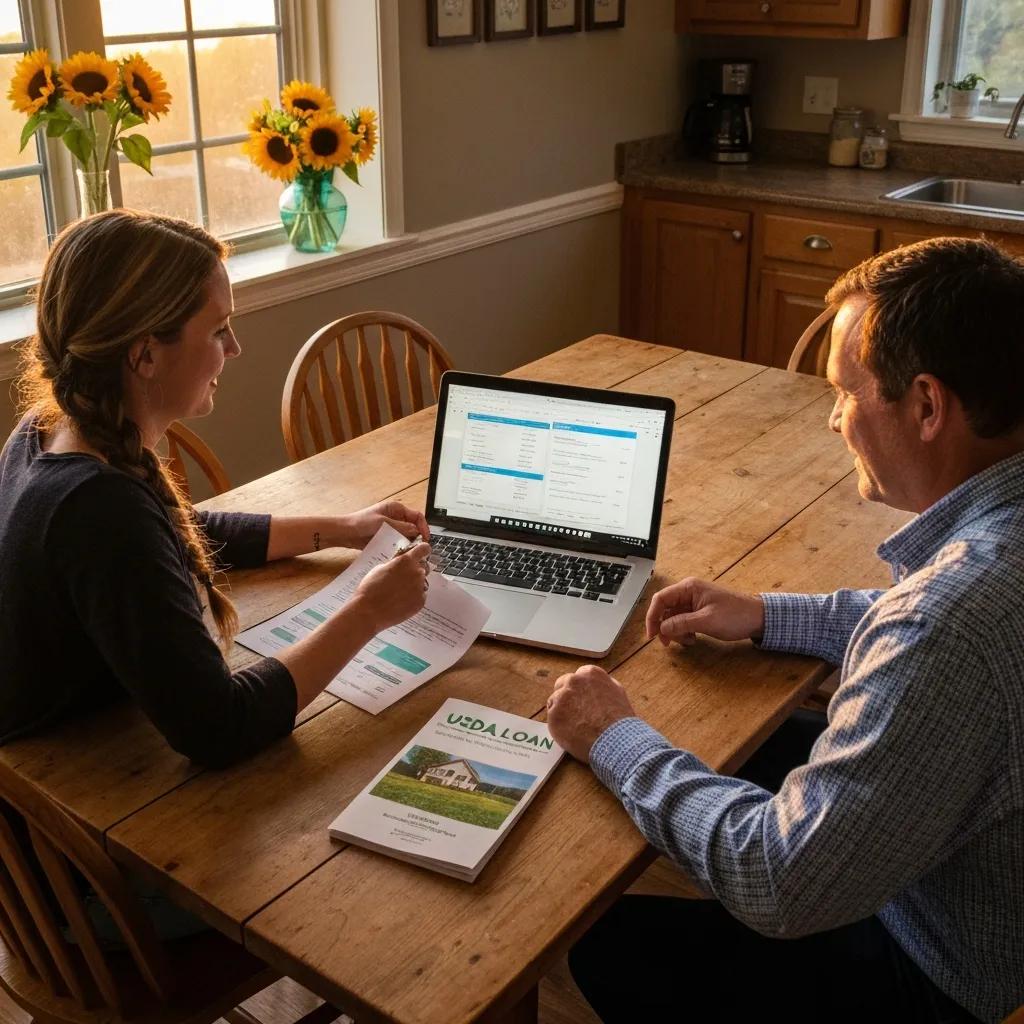
USDA eligibility focuses on four areas: household income relative to local limits, primary-residence occupancy, basic creditworthiness, and the property’s location and condition as defined by USDA maps. Income limits vary by county and household size; credit standards emphasize steady payment history and allow both automated and manual underwriting; and eligible properties include single-family homes, qualifying condos, and certain manufactured homes that meet program standards. The quick-reference table below highlights the core borrower attributes to scan for fit.
This table summarizes core borrower eligibility attributes and how they influence USDA qualification.
| Eligibility Area | Attribute | Typical Value |
|---|---|---|
| Income Limits | How household size affects threshold | County-specific limits tied to AMI |
| Occupancy | Required occupancy type | Primary residence only |
| Credit | Guidance and flexibility | Automated and manual underwriting allowed |
| Citizenship | Status requirement | U.S. citizen or eligible non-citizen |
That table shows income limits and occupancy are often decisive, while credit is evaluated with some flexibility. The sections below dive into documentation and property rules you’ll need to address.
What Income Limits and Credit Requirements Apply to USDA Loans?
Income eligibility uses county-adjusted limits and household size, so the same family income can qualify in one county but not another. Credit standards prioritize a stable payment history; lower scores can be approved when compensating factors—like savings or rent payment history—exist. Lenders commonly use automated underwriting when documentation is straightforward, but manual review is possible. Gather tax returns, pay stubs, and household verification up front to speed the process and determine whether Direct or Guaranteed financing is most appropriate.
Which Properties Qualify for USDA Loans?
Properties must fall inside USDA rural eligibility areas and meet occupancy rules. Eligible property types usually include single-family homes, certain condos in approved projects, and some manufactured homes that meet program standards. Properties also must meet minimum condition and appraisal requirements—significant deferred repairs can disqualify a home until repaired or financed. Because USDA’s rural designation is specific to counties and tracts, confirm geographic eligibility early to avoid wasted time.
How Does the USDA Loan Application Process Work?
The USDA application process moves from prequalification to application, underwriting, any needed agency review, and closing. Key milestones include an initial eligibility check, lender submission (for Guaranteed loans), appraisal and inspections, underwriting verification, and USDA review for guarantees or subsidies. Agency review or manual underwriting can add time, so submit accurate, complete documents at the start and coordinate closely with lender, seller, and appraiser to keep things on track. The next sections list required documents and typical timelines so you can plan offers and closings.
What Documents Are Required for a USDA Loan Application?
Documentation focuses on income, identity, assets, and property details, with slight differences between Direct and Guaranteed loans. Common documents include recent tax returns, W-2s or 1099s, pay stubs, recent bank statements, government ID, and appraisal and title paperwork. Self-employed applicants should add profit-and-loss statements or business returns. Lenders may also ask for proof of household size and intent to occupy—having these organized up front reduces underwriting back-and-forth.
Required documents below form a practical checklist to prepare before applying:
- Income Verification: Recent tax returns, W-2s, and pay stubs to document household income.
- Asset Statements: Bank statements and documentation of reserves or funds for closing.
- Property Documentation: Appraisal, purchase contract, title evidence, and insurance information.
How Long Does USDA Loan Approval and Closing Take?
Expect roughly 30 to 60 days from application to closing in most cases. Timing varies with appraisal scheduling, lender workload, and whether USDA must perform subsidy or guarantee reviews. Common delays include required repairs, detailed income verification, or manual underwriting. If you’re making an offer in a competitive market, plan for this window—otherwise consider private investor lenders (hard money or DSCR) that can fund much faster, often within 5–7 days for suitable deals.
What Are the Benefits and Limitations of USDA Loans?

USDA loans offer clear advantages—low or no down payment and competitive rates backed by government support—but they come with constraints, such as income caps, geographic limits, and strict primary-residence rules. Those strengths make USDA a strong choice for eligible owner-occupants, while the limitations rule out many investor or flip scenarios. The comparison below shows where USDA fits versus investor-focused alternatives like hard money and DSCR financing.
This comparison table outlines key attributes of USDA loans versus investor alternatives for quick evaluation.
| Attribute | USDA Loan | Hard Money / DSCR (Investor Alternative) |
|---|---|---|
| Down Payment | Often none (Guaranteed program) | Typically equity-based; higher upfront |
| Allowable Use | Primary residence only | Investment, rehab, and bridge uses allowed |
| Typical Closing Time | 30–60 days | 5–7 days for hard money; 2–3 weeks for DSCR |
| Credit Preference | Favors conventional credit or compensating factors | Equity-focused; credit secondary |
The table illustrates that USDA loans are best for owner-occupants seeking low upfront costs, while investor alternatives prioritize speed and flexibility.
What Are the Key Benefits of USDA Loans?
For eligible buyers, USDA loans lower barriers to homeownership through reduced upfront cash needs and program-backed affordability. Primary advantages include minimal or no down payment on Guaranteed loans, competitive interest available through government support, and subsidy options in Direct loans to lower monthly payments for very low-income borrowers. These features can make ownership attainable where traditional financing would be difficult.
- Primary USDA advantages:
No or Low Down Payment: Reduces the initial cash needed to buy a home.
Competitive Interest: Government support helps secure favorable rates.
Subsidy Options: Direct loans may include payment assistance to lower monthly costs.
These benefits make USDA attractive to qualifying owner-occupants, but the next section covers the program’s practical limits.
What Are the Common Limitations and Restrictions of USDA Loans?
USDA loans restrict use to owner-occupied primary residences, enforce county-based income ceilings, and require properties to meet habitability standards. Additional limits include waiting periods after foreclosure or short sale, and limited renovation flexibility unless paired with eligible repair financing. Because of these rules, most investors and fix-and-flip buyers must turn to alternative lenders for business-purpose transactions.
Why Are USDA Loans Not Suitable for Real Estate Investors?
USDA’s occupancy and use rules are clear: the financed property must be the borrower’s primary residence. That excludes typical investor activities—buy-and-hold rentals, short-term flips, or second-home investment strategies—because they don’t meet owner-occupancy requirements. Investors who need speed, rehab capital, or loans tied to property equity should evaluate private lending options that underwrite on business purpose, DSCR, or collateral rather than owner occupancy.
Can USDA Loans Be Used for Investment Properties or Fix and Flip Projects?
No. USDA loans are not appropriate for investment purchases or routine fix-and-flip projects. Program rules require owner occupancy and limit use to primary residences, and the timelines and property-condition requirements make short-term flips impractical. Investors should pursue lenders that permit non-owner-occupied financing and rehab or resale uses without violating program rules.
If you need speed or investor flexibility, private lenders can help. Fidelity Funding, based in Glendale, California, focuses on investor loans that prioritize property equity over full tax-return documentation and often close quickly—typically 5 to 7 days on qualifying deals. Our product lineup includes hard money purchase and refinance loans, fix-and-flip financing, bridge loans, foreclosure bailouts, and DSCR loans for buy-and-hold investors, all structured to move deals forward when USDA financing isn’t an option.
How Do Fidelity Funding’s Hard Money and DSCR Loans Support Real Estate Investors?
Fidelity Funding offers investor-tailored financing that fills gaps left by USDA rules: faster closings, equity-based underwriting, and product flexibility for purchases, rehabs, bailouts, and rental acquisitions. Typical strengths include rapid approval and funding timelines—often 5–7 days for qualified deals—underwriting that centers on property equity rather than strict credit or tax returns, and a menu of programs including fix-and-flip loans, bridge financing, commercial hard money, foreclosure bailouts, and DSCR loans that use rental income to qualify. The summary table below gives a quick reference for common product attributes.
This table summarizes Fidelity Funding product attributes in an Entity | Attribute | Typical Value format to give investors a quick reference.
| Loan Type | Attribute | Fidelity Funding Typical Value |
|---|---|---|
| Hard Money Purchase | Approval Speed | 5–7 days funding for qualified deals |
| Fix-and-Flip | LTV / Rehab | Equity-focused underwriting with rehab support |
| DSCR Loan | Qualification Basis | Rental income / DSCR can replace personal income |
| Foreclosure Bailout | Use Case | Short-term rescue to stabilize title or avoid loss |
What Are the Features and Benefits of Fidelity Funding’s Hard Money Loans?
Our hard money loans are built for investors who need speed, flexible underwriting, and structures that support rehab and quick resale or short-term holds. Common features include interest-only payments during rehab, underwriting that prioritizes current and post-rehab property value, and loan structures that can combine purchase and repair funding when conventional lenders are too slow. The benefit to investors is clear: close competitive offers fast, secure rehab capital, and avoid lengthy conventional underwriting cycles that can kill deals.
- Hard money features and investor benefits:
Rapid Funding: Close quickly to win competitive bids.
Equity-Focused Underwriting: Limited credit documentation accepted when equity is strong.
Rehab Support: Financing options that include repair funding for flips.
How Do DSCR Loans Qualify Investors Based on Rental Income?
DSCR loans qualify based on the property’s net operating income versus its debt obligations, using the Debt Service Coverage Ratio (DSCR) instead of relying solely on borrower wages or tax returns. Lenders document rental income with leases, rent rolls, or market rent estimates and typically look for a DSCR at or above a baseline threshold (for example, 1.0 as a conceptual baseline). This model suits buy-and-hold investors because qualification reflects the property’s real cash flow rather than personal employment income, enabling portfolio growth based on asset performance.
If you’re pursuing Fidelity Funding programs, get these materials ready: an appraisal or AAV to show equity, recent rent rolls or market comps for DSCR underwriting, a contractor scope and budget for rehab loans, and basic ID and asset statements to speed closing. We handle nationwide larger transactions and focus regionally for smaller deals—prepare a concise deal summary and supporting docs when you contact our team for an initial review.
- Actions to prepare before contacting Fidelity Funding:
Assemble Property Valuation: Recent appraisal or comparative market analysis (CMA).
Document Rental Income: Leases, rent rolls, or comparable market rents for DSCR evaluation.
Detail Rehab Scope: Contractor estimates and a realistic repair budget for flip financing.
USDA Loans: Next Steps for Buyers and Investors
This guide explained USDA Direct and Guaranteed programs, eligibility and property rules, the application process and timelines, and why USDA financing typically excludes investor uses. When USDA rules limit a purchase—because of occupancy requirements, income caps, or geography—investor-oriented products like hard money and DSCR loans provide flexible, equity-based options and much faster timelines for flips, bailouts, and rental acquisitions. Investors who need speed should prepare the document checklist above and consider submitting deals to specialized lenders like Fidelity Funding to get swift, tailored terms.
Next steps for readers who want to act:
- If you think you qualify for USDA: Verify county eligibility and gather income and property documents.
- If you’re an investor: Prepare property valuation, rental documentation, and a rehab scope to pursue hard money or DSCR financing.
- If time is critical: Prioritize lenders that underwrite on equity or DSCR and that offer rapid funding to protect your deal.
Collect the checklist items—tax returns, pay stubs, bank statements, appraisal or valuation, rent rolls, and rehab budgets—so you can quickly submit a deal, call a lending team for a pre-qualification, or complete an online form for expedited review. Organized documents cut underwriting friction whether you pursue USDA approval or investor financing and help you close on schedule.
Frequently Asked Questions
1. What types of properties are eligible for USDA loans?
USDA loans finance properties located in USDA-designated rural areas. Eligible property types commonly include single-family homes, certain condominiums in approved projects, and manufactured homes that meet program standards. All properties must be intended for owner occupancy as a primary residence—not for rental or investment—so verify location and condition before applying.
2. How do income limits for USDA loans vary by location?
Income limits are set at the county level and adjust for household size and area median income (AMI). That means eligibility can differ significantly from one county to another. Check your county’s published USDA income limits or speak with a lender to confirm whether your household falls within the applicable threshold.
3. Can self-employed individuals qualify for USDA loans?
Yes. Self-employed borrowers can qualify but should prepare additional documentation, such as business tax returns, profit-and-loss statements, and other records that demonstrate stable, ongoing income. Lenders also consider the length of self-employment and overall financial health when underwriting.
4. What happens if a property does not meet USDA condition requirements?
If an appraisal or inspection finds that the property doesn’t meet USDA minimum property standards, financing can be delayed or denied until necessary repairs are completed. In some situations, repair funding or escrowed repairs may be possible—talk with your lender to explore options and next steps.
5. Are there any waiting periods for borrowers after a foreclosure or short sale?
Yes. USDA generally requires waiting periods—commonly three years after a foreclosure or short sale—before a borrower can qualify. Exceptions can apply in limited circumstances, so consult a lender for guidance based on your specific history.
6. How can borrowers expedite the USDA loan application process?
Organize and submit complete documentation up front: income verification, asset statements, property information, and identification. Promptly responding to lender requests and coordinating appraisal and inspections helps minimize delays. Clear communication and an organized packet are the quickest paths through underwriting.
7. What are the alternatives for buyers who do not qualify for USDA loans?
If you don’t qualify for USDA, options include conventional loans, FHA loans, and private solutions like hard money and DSCR lending. Conventional and FHA loans serve many owner-occupants, while hard money and DSCR loans suit investors and time-sensitive deals. Choose the product that matches your use case, timing, and documentation ability.
Conclusion
USDA loans are a powerful option for eligible buyers who need low upfront costs and program-backed affordability in rural areas. Understanding eligibility, property rules, and timelines helps you decide whether USDA or a private alternative is right for your purchase. If USDA isn’t a fit, hard money and DSCR loans offer the speed and flexibility investors need. Take the next step: verify county eligibility, organize your documents, and contact a lender for a focused pre-qualification.