


Hard Money Property Types
Hard Money Property Types: A Practical Guide to Eligibility & Financing Options
Hard money loans are short-term, asset-backed real estate loans that lean on property equity and a clear exit plan instead of conventional credit alone — making them the go-to for investors, flippers, and owners with time-sensitive deals. This guide walks through which property types qualify for private money, why lenders underwrite to ARV or cash flow, and how LTV and DSCR influence eligibility. When bank timelines or underwriting rules slow you down, hard money moves the deal by focusing on collateral value and a practical repayment path. You’ll find the main residential and commercial categories we finance, how DSCR and P&L underwriting work for income properties, what land and construction projects we’ll consider, and which specialty programs cover bailouts and bridges. We also include concise LTV and timing tables, documentation checklists, and straightforward examples you can apply to fast-turn deals. Read on for clear, step-by-step guidance to prepare a package that meets lender expectations and speeds approvals and closings.
What Are the Main Residential Hard Money Loan Property Types?
Residential hard money typically underwrites to the property’s equity or after-repair value (ARV), which lets investors access acquisition and rehab capital quickly — even when conventional lenders require lengthy approvals. This equity-first method supports short-term purchases, rehabs, and rental conversions across single-family homes, small multi-units, condos, townhomes, short-term rentals, and distressed properties. Lenders focus on the asset (ARV, condition, clean title) and the exit (sell, refinance, or rent), so documentation that shows scope of work and equity matters more than a high FICO score. Knowing these residential sub-types helps you pick the right program — purchase loans for acquisitions, fix & flip for rehabs, and DSCR or longer-term hard money for rentals — so deals close fast with predictable leverage.
Which Residential Properties Qualify for Hard Money Loans?
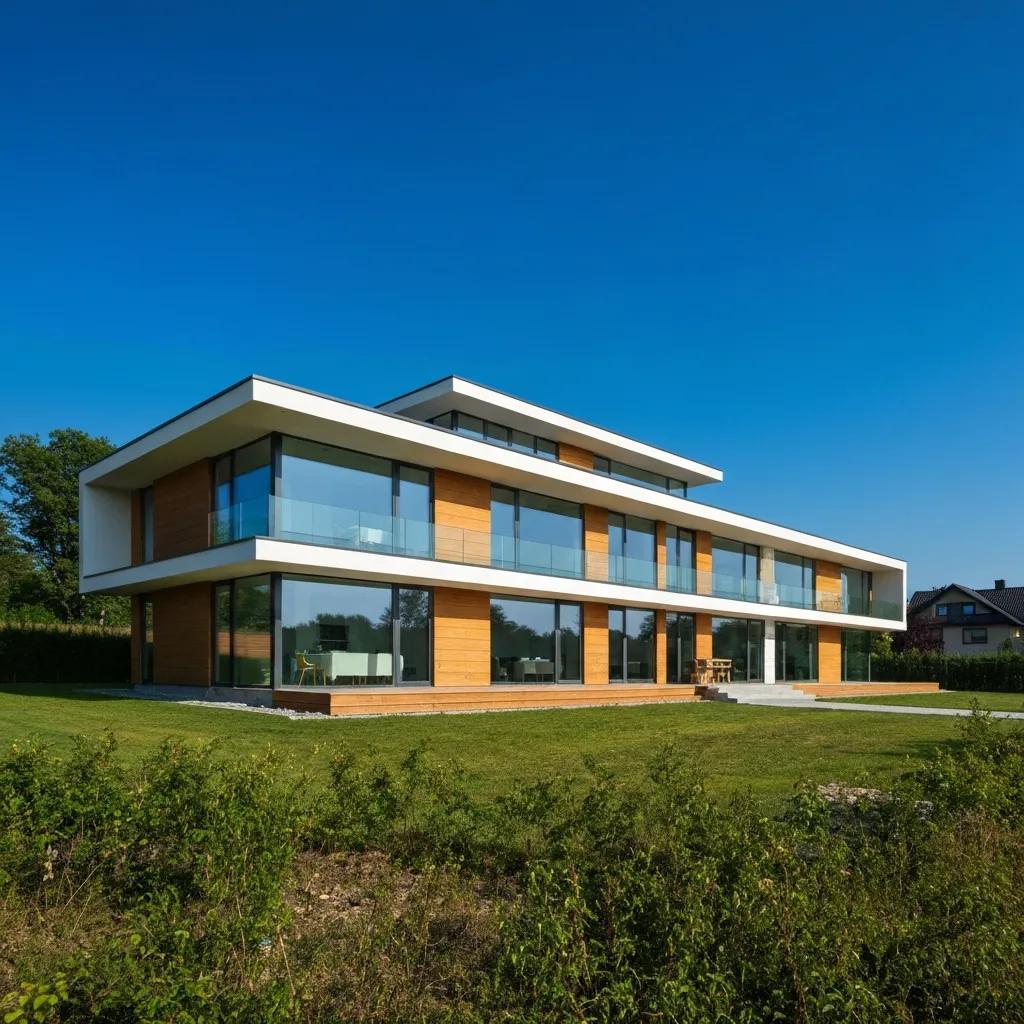
Residential properties that qualify show clear collateral value, a realistic exit plan, and enough equity or ARV to cover the loan — borrower credit is secondary to the property math. Common examples include single-family houses with rehab upside, duplexes–fourplexes that can be stabilized or sold, condos and townhomes in acceptable HOAs, short-term rentals with revenue history, and distressed homes needing rehab or foreclosure bailouts. Lenders expect clear title, a defined scope of work, contractor bids, and an exit strategy that proves repayment. When ARV and equity support the loan, property-level underwriting can move a file quickly — critical for time-sensitive acquisitions and rehab schedules.
Residential financing quick-reference table for common scenarios and documentation needs:
| Residential Sub-type | Best Use Case | Max Typical LTV | Required Documents |
|---|---|---|---|
| Single-family (fix & flip) | Short-term rehab and resale | Purchase + rehab up to 90% combined ARV | ID, purchase contract, scope of work, contractor bids |
| Duplex–4-plex (value-add) | Rehab and hold or sell | 65–75% of ARV or purchase price | Title, rent roll (if applicable), rehab budget |
| Condos/townhomes | Purchase or rehab in stable HOA | 60–70% depending on HOA status | HOA docs, estoppel, purchase contract |
| Short-term rentals | Income-based refinance/DSCR | Varies by income documentation | Lease history, STR revenue reports, photos |
| Distressed/foreclosure bailouts | Stop foreclosure and rehab | Equity-based, varies | Notice of default, title report, rehab plan |
This matrix highlights how property type changes the best use case, leverage, and paperwork needed. Preparing the right evidence up front speeds underwriting under equity-based rules.
How Fidelity Funding Helps
Fidelity Funding is a California-based hard money lender with programs tailored to residential investors: purchase loans, fix & flip financing, cash-out refinances, foreclosure and bankruptcy bailouts, and second/third trust deeds. We underwrite to equity and move quickly — decisions in 24 hours and closings in as little as 5–7 days on well-documented deals. Program examples include high combined ARV financing for fix & flip (up to 90% in select cases) and flexible cash-out options (up to ~75% when qualified), and we generally don’t charge prepayment penalties. For a faster review, have ID, title details, purchase contracts, scopes of work, and contractor bids ready.
What Commercial Property Types Are Eligible for Hard Money Loans?
Commercial hard money covers a range of income-producing and special-purpose properties by underwriting to property income, market value, and use — not just borrower credit. Typical commercial assets include small office buildings, retail storefronts, light industrial warehouses, mixed-use properties, and hospitality assets like small motels that need bridge capital or rehab funds. Underwriting focuses on NOI, vacancy risk, lease structure, and exit strategy (sale or refinance), so lenders will request income analyses, rent rolls, and sometimes appraisals. Commercial files often need more documentation than residential, but the trade-off is speed and flexibility for nonconforming projects banks won’t touch.
Which Commercial Properties Can Be Financed with Hard Money Loans?
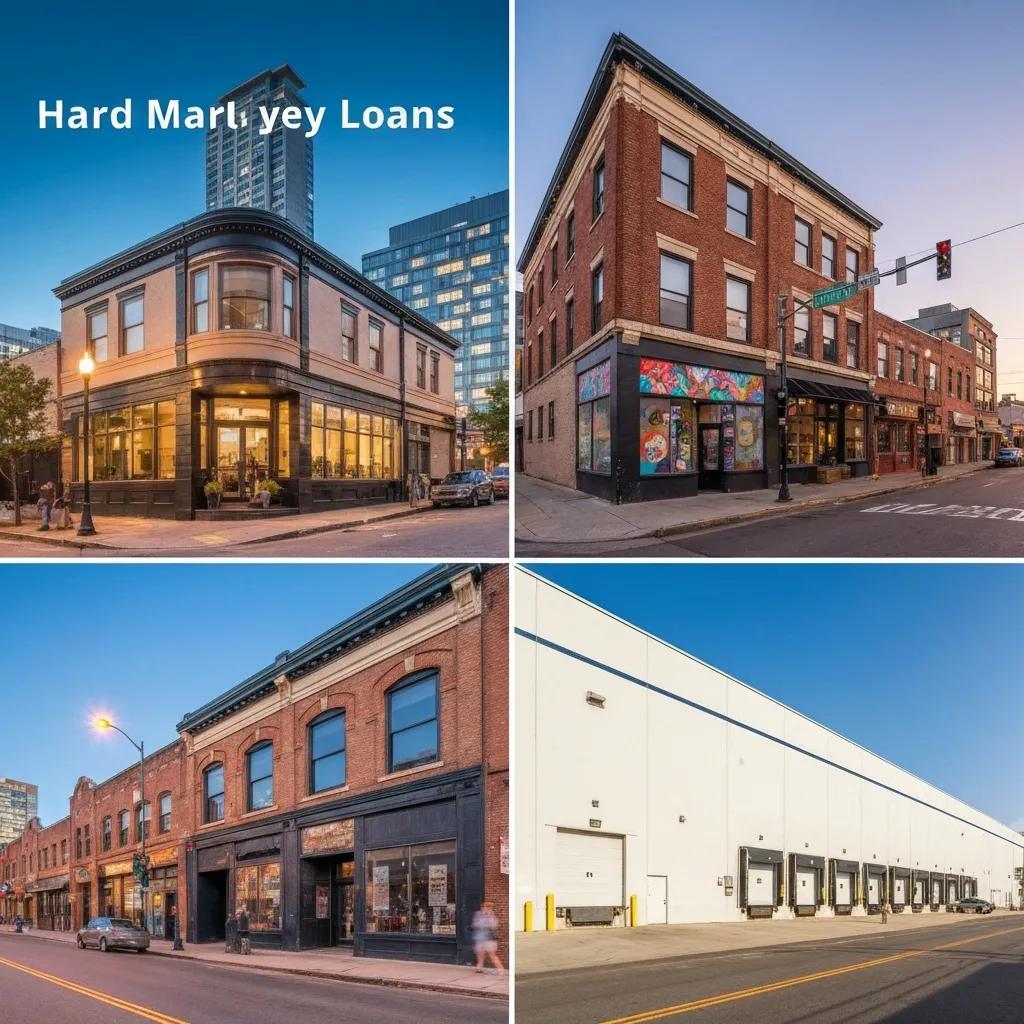
Small- to mid-size commercial properties with identifiable income or clear redevelopment plans make common hard money candidates—especially when quick capital is required. Examples include single- or multi-tenant office buildings, neighborhood retail centers, light industrial warehouses, mixed-use buildings with residential above retail, and hospitality properties that can be stabilized or repositioned. Lenders evaluate lease terms, tenant quality, occupancy history, and local cap rates to estimate value and debt capacity. Because underwriting focuses on the property, provide current leases, a rent roll, and a pro forma showing how the loan will be serviced or repaid.
Commercial loans offer several advantages compared to conventional financing:
- Faster closings than traditional commercial lenders, so you can act on time-sensitive acquisitions.
- Flexible underwriting that accepts nonstandard tenants, short leases, or mixed-use plans.
- Custom lien positions (first, second, or third trust deeds) to stack capital for complex structures.
Those benefits let operators bridge short-term gaps and execute repositioning strategies that rigid bank underwriting often blocks.
How Fidelity Funding Supports Commercial Borrowers
Fidelity Funding provides commercial hard money solutions — bridge loans, DSCR financing, and other commercial products for California borrowers. We combine practical timelines with adaptable leverage: underwriting decisions in 24 hours and closings as soon as 5–7 days on complete files, with LTVs tailored to property class and income stability. Commercial applicants should prepare lease audits, rent rolls, and recent operating statements to speed review. Our local market experience and flexible lien structures (including second and third trust deeds when appropriate) help operators close urgent acquisitions or stabilize assets for a longer-term exit.
How Do DSCR Loans Apply to Eligible Investment Properties?
DSCR loans underwrite to property cash flow rather than borrower wages, using the debt service coverage ratio (DSCR = NOI ÷ annual debt service) to measure repayment capacity. That makes DSCR lending a solid fit for single-family rentals, small multifamily properties, and short-term rentals with reliable income. Lenders typically require a minimum DSCR (often around 1.0–1.25) and accept rent rolls, lease agreements, or P&L statements to verify income. By focusing on property-level cash flow, DSCR loans let investors leverage income-producing assets even when personal tax returns are inconsistent.
What Property Types Qualify for DSCR Hard Money Loans?
Income-producing assets with verifiable rental or STR income are the primary DSCR candidates: single-family rentals, small multifamily buildings, and professionally managed short-term rental portfolios. Lenders will review leases, bank deposits, tax schedules if available, or operator P&L statements to calculate NOI and DSCR. For example, a rental generating $24,000 NOI against $20,000 in annual debt service produces a DSCR of 1.2 — often within acceptable thresholds. A clean rent roll and steady occupancy improve your chances under DSCR underwriting.
DSCR loan features and documentation expectations:
| DSCR Feature | Requirement/Threshold | Typical Documentation |
|---|---|---|
| Minimum DSCR | 1.0–1.25 depending on risk | Rent roll, lease agreements, P&L, bank statements |
| Income sources acceptable | Rental income, STR revenue, net operating income | Management statements, booking histories, tax schedules |
| Application focus | Property-level cash flow vs borrower wages | NOI calculation, expense substantiation, market comps |
This table underscores that DSCR underwriting depends on verifiable property income and documented expenses — a practical route for investors who prioritize rental yield over credit score.
Fidelity Funding’s DSCR and P&L Options
Fidelity Funding offers DSCR loans and P&L-based approvals for self-employed borrowers as part of our California product set. Our DSCR program sizes loans off NOI and cash flow, while P&L underwriting can replace tax-return verification when appropriate. To apply, have a current profit-and-loss statement, recent bank statements, leases, and any STR revenue reports ready. With equity-focused underwriting and fast decisioning — typically 24-hour decisions and possible 5–7 day closings on complete submissions — self-employed investors can access capital without traditional income documentation delays.
What Land and Construction Property Types Qualify for Hard Money Financing?
Hard money for land and construction ranges from raw acreage to entitled lots and full construction loans, with underwriting that reflects entitlement status, development risk, and exit clarity. Lenders view raw land as higher risk, while entitled or shovel-ready lots get more favorable treatment. Construction loans are usually acquisition-plus-construction structures with staged draws tied to inspections. Typical uses include major renovations, new builds for resale or hold, and subdivision projects where the developer shows a realistic exit (lot sales, completed home sales, or refinance to long-term debt). Expect risk premiums, lower LTVs, and more documentation compared with stabilized residential loans.
Which Land Properties Are Eligible for Hard Money Loans?
Land financing eligibility hinges on entitlements, access to utilities, and a clear exit. Lenders are more likely to finance entitled parcels or lots with approvals and site plans. Raw land without entitlements carries higher risk, usually lower LTVs, or requires stronger sponsor equity. Underwriting focuses on feasibility, environmental constraints, and market demand; common required items include site plans, surveys, entitlement letters, and environmental reports. Developers with established contractor relationships and a clear sales or refinance plan improve approval odds for land and pre-construction funding.
Hard money supports new builds and renovations through staged draws and lender oversight. Lenders provide an initial acquisition advance and then disburse construction draws as milestones are completed, usually requiring inspections and lien releases at each stage. A typical sequence includes an initial purchase advance, progress draws for foundation, framing, and finishes, and a final holdback until completion is certified. Expect requests for a detailed construction budget, GC contract, schedule of values, and periodic inspections to control disbursements and protect collateral value.
How Do Hard Money Loans Support New Construction and Renovation Projects?
Construction hard money blends acquisition and development financing with draw-based disbursements tied to verified progress and approved budgets. Lenders require a construction budget, general contractor agreement with insurance, schedule of values, and periodic inspections before releasing funds — which helps ensure work matches draws and limits overruns. Timelines vary by scope but follow a common flow: acquisition funding, milestone draws, and a final holdback until certificate of occupancy or final inspection. Clear exit strategies — sale, refinance to long-term financing, or conversion to rental — must be documented for underwriting.
Construction funding list: required documentation to expedite draws
- Project budget and detailed cost breakdown with line-item costs.
- General contractor agreement showing licensing and insurance.
- Construction schedule and timetable for milestone-based draws.
- Preliminary title report and builder’s risk insurance where applicable.
What Specialized Hard Money Loan Programs Support Unique Property Types?
Specialty hard money programs cover situations standard purchase or rehab loans don’t — bridge loans for timing gaps, foreclosure and bankruptcy bailouts, seller carry-back arrangements, second/third trust deed financing, and P&L-based approvals for self-employed borrowers. Each program targets a specific need: bridges fill short timing gaps, bailouts stop imminent foreclosures, seller carry-backs provide flexible capital when third-party lenders are constrained, and P&L approvals let operating income stand in for tax returns. These programs are document‑flexible and accept varied lien positions, but they all require a clear exit strategy that justifies the risk.
How Do Bridge Loans Facilitate Property Transitions?
Bridge loans provide short-term gap financing so buyers or owners can acquire or hold property until a permanent loan or sale closes. They’re used to secure time-sensitive purchases, complete small renovations to stabilize income, or quickly buy out a seller when bank financing won’t move fast enough. Bridge features include faster underwriting, short terms tied to an exit event, and lien structures aligned to a planned refinance or sale. Because bridges trade higher cost for speed, underwriters expect solid exit plans — a refinance commitment or a realistic listing strategy — to approve favorable timing.
What Are P&L Based Approval Loans for Self-Employed Investors?
P&L-based approvals let self-employed borrowers qualify using profit-and-loss statements, bank statements, and business records instead of traditional tax-return verification. Lenders review recent P&L statements, settled deposits, and business banking trends to establish sustainable cash flow — useful for owners whose taxable income doesn’t reflect actual cash flow due to deductions or accounting. Typical documents include a current P&L, year-to-date bank statements, business licenses, and sometimes a CPA letter. This route helps experienced operators who can demonstrate consistent operating income even if tax returns look irregular.
Specialized program comparison—key tradeoffs:
- Bridge Loans: Fastest speed, higher cost, clear exit required.
- Bailouts: Time-sensitive rescue financing, needs title clarity and a remediation plan.
- Seller Carry-Backs: Alternative capital when third-party funds are limited; terms negotiable.
- P&L Approvals: Income flexibility for self-employed borrowers; requires solid business documentation.
What Are the Key Loan Terms and Requirements by Property Type?
Terms and requirements vary by asset class and program — LTV ranges, terms, fees, and documentation are all sized to property risk, exit plan, and condition. Typical patterns include higher combined ARV LTVs for fix & flip loans, conservative LTVs for raw land and special-purpose commercial assets, DSCR thresholds for rental lending, and draw mechanics for construction loans. Fees commonly include origination points, interest reserves for draws, and inspection or appraisal costs; many private lenders allow flexible lien positions (including second/third trust deeds) and may offer no prepayment penalties to facilitate fast exits. A complete documentation packet addressing valuation, scope of work, and exit strategy speeds underwriting and sets realistic funding timelines.
How Do Loan-to-Value Ratios Vary Across Property Types?
LTV ranges shift with program and asset quality: fix & flip lending can reach high combined leverage because lenders rely on ARV and rehab budgets, while long-term rental or commercial loans usually carry lower LTVs to reflect income stability and market risk. For example, fix & flip loans may allow combined purchase-plus-rehab leverage up to 90% of ARV in select cases; DSCR rental loans typically target 65–75% LTV depending on NOI and market; commercial bridge loans often sit at 60–70% with vacancy and tenant risk adjustments; and raw land or entitlement-risk projects generally see reduced leverage due to higher uncertainty. Factors that support higher LTVs include strong ARV comps, reliable contractor bids, and nearby comparable sales; factors that reduce LTV include title issues, entitlement risk, and unstable cash flow projections.
ARV table: Typical loan terms by property type
| Property Type | Typical LTV Range | Typical Term | Typical Funding Speed |
|---|---|---|---|
| Fix & Flip (residential) | Up to 90% combined ARV | 6–18 months | Funding in 5–7 days for clean deals |
| DSCR/Rental Properties | 65–75% of value | 1–5 years (convertible) | Decision in 24 hours, funding in days |
| Commercial Bridge | 60–70% of value | 6–24 months | 1–2 weeks depending on docs |
| Land/Entitlement | 40–60% depending on entitlements | 6–24 months | 2+ weeks with surveys/reports |
| Construction Loans | Varies by stage; lower initial LTV | Term matches build schedule | Staged draws, initial funding in days–weeks |
This table summarizes typical LTV bands, terms, and realistic funding speeds so you can match program choice to deal timing and leverage needs.
What Documentation Is Needed for Different Hard Money Property Loans?
Across lenders, documentation proves identity, title, equity or ARV, scope of work or business plan, and an exit strategy that supports repayment. Packet specifics differ by program: fix & flip needs purchase contract, contractor bids, and a rehab budget; DSCR requires rent rolls, leases, or P&L statements; commercial loans ask for leases, NOI statements, and tenant details; land loans need surveys, entitlement letters, and environmental checks. Submitting a preliminary title report, photos, and contractor references up front reduces back-and-forth and speeds decisions during tight approval windows.
Documentation checklist (copy-and-paste friendly for applications):
- Government-issued ID and personal information for all borrowers.
- Purchase contract and seller disclosures for acquisitions.
- Scope of work, contractor bids, and construction schedule for rehab or construction.
- Preliminary title report and any notices of default for bailout scenarios.
- Rent rolls, lease agreements, and P&L statements for income-producing properties.
Providing this packet up front lets lenders underwrite to property equity and exit plans efficiently, which aligns with the speed expectations of private money transactions.
Final CTA and How to Submit a Deal
- Submit a Deal: Send the core documents above to start rapid underwriting.
- Call the Team: Have a concise summary of the asset, rehab scope, and exit plan ready.
- Fill Out the Form: Use one submission to centralize documents and speed review.
These are practical next steps that align with equity-focused lending and fast-approval workflows we use for investor deals.
Frequently Asked Questions
What are the advantages of using hard money loans over traditional financing?
Hard money loans move faster and focus on the property’s value and exit plan rather than solely on borrower credit. That speed and flexibility help investors capture time-sensitive opportunities — distressed buys, quick flips, or bridge financing — that conventional lenders may pass on due to rigid underwriting or long timelines.
How does the loan-to-value (LTV) ratio affect my hard money loan?
LTV determines how much you can borrow relative to the property’s value. In private lending, LTV varies by property type and risk: fix & flip loans can allow higher combined leverage to ARV, while commercial and land deals usually carry lower LTVs to reflect income or entitlement risk. Higher LTVs increase available capital but also reflect higher lender risk, which can influence rates and terms.
What types of properties are considered distressed and eligible for hard money loans?
Distressed properties are those needing significant repairs or facing foreclosure — structural issues, severe cosmetic damage, or titles with pending defaults. Hard money lenders often finance these because they underwrite to post-rehab value and a clear exit plan. To qualify, provide a realistic rehab plan and evidence of how you’ll repay the loan (sale or refinance).
What documentation is typically required for a hard money loan application?
Prepare ID, purchase contracts, scope of work, contractor bids, and a preliminary title report. For income properties, include rent rolls, leases, and P&L statements. Having these documents ready significantly speeds underwriting and funding.
Can I use hard money loans for new construction projects?
Yes. Construction loans can cover land acquisition and build costs. Lenders will ask for a detailed construction budget, GC agreement, insurance, and a timeline tied to milestone draws. Underwriting will focus on project feasibility and a clear exit: sale, refinance, or hold-to-rent.
What are the risks associated with hard money loans?
Hard money carries higher interest and fees and is typically short-term, so a clear exit plan is essential. If a property doesn’t perform or you can’t execute the exit, costs can mount and the risk of default rises. Careful underwriting, accurate budgets, and realistic timelines reduce that risk.
Conclusion
Knowing which property types qualify for hard money — and what documentation, LTV, and timing each requires — helps investors move quickly and confidently. When traditional lending is too slow or inflexible, private money gives you a practical path to close deals, rehab, or stabilize assets. Whether residential, commercial, land, or specialized situations, use the checklists and tables above to prepare the right package and get a faster decision. Reach out to explore tailored loan options that fit your strategy.