


Hard-Money Loan Eligibility: How to Qualify for Fast, Flexible Real Estate Financing
Hard‑money loans are short‑term, asset‑backed loans that prioritize property equity and marketability over traditional credit metrics — a practical route to quick financing for investors and owners. This guide walks through the core eligibility drivers, program‑specific requirements, and the application steps that can turn approvals from weeks into days. You’ll learn how loan‑to‑value (LTV), after‑repair value (ARV), property type, and borrower profile work together to determine eligibility, plus the documents and timelines typical programs expect. For time‑sensitive deals — purchases, flips, foreclosure bailouts, and bridge financing — knowing these rules is often the difference between closing and walking away. The article maps underwriting priorities, property eligibility, program thresholds (purchase, fix & flip, DSCR, commercial, seconds/thirds, and P&L approvals), LTV mechanics, a practical application checklist, and an honest look at costs and benefits. Practical examples and clear tables help you estimate down payment, timeline, and the paperwork that speeds approvals.
What are the core eligibility factors for hard‑money loans?
Hard‑money lenders underwrite against the property first: equity, marketability, and a credible exit plan drive approval speed and borrowing capacity. Equity and LTV set the maximum loan because repayment depends on the asset’s value more than the borrower’s FICO. Property condition and type affect marketability and appraisal adjustments, while borrower experience, renovation liquidity, and the loan purpose (purchase, rehab, bailout) shape terms and pricing. Knowing these priorities helps investors spot deals that will clear quickly versus those that need more equity or paperwork. Below are the key underwriting priorities lenders evaluate.
- Property equity and ARV: Lenders assess current value, repair costs, and after‑repair value to determine usable LTV.
- Loan‑to‑value (LTV/CLTV): The maximum percentage of value a lender will advance — varies by program.
- Property type and condition: Marketability, zoning, and structural condition affect acceptance and pricing.
- Borrower profile and liquidity: Experience, proof of funds, and renovation reserves influence approvals and terms.
These priorities explain why equity‑first underwriting speeds decisions and unlocks more program options. Next, we’ll look closer at how ARV and equity shape qualification.
How does property equity affect hard‑money loan qualifications?
Equity determines how much a lender will advance because the property secures repayment. Lenders calculate usable equity by comparing existing mortgage balances and repair costs to current value and ARV; stronger equity usually means higher permitted LTV or a simpler approval. For example, a flip with solid ARV and repair estimates typically qualifies for ARV‑based rehab financing at a higher percentage than raw land. More equity also shortens underwriting by reducing valuation risk. Understanding how equity is calculated helps you estimate down payment needs and whether a subordinate lien or gap financing is necessary.
What role does credit score play in hard‑money loan eligibility?
Credit score matters less for hard‑money loans than for conventional financing because lenders focus on property risk. Lenders still review credit for recent bankruptcies, judgments, or recurring defaults that indicate operational risk, but many programs accept lower scores when strong equity or alternative income documentation is present. Alternative approval paths — DSCR (income‑driven) or P&L‑based underwriting — further reduce emphasis on FICO when property cash flow or business performance supports repayment. As a result, borrowers with imperfect credit can qualify by showing sufficient equity, a solid exit plan, and documented reserves.
Which property types qualify for hard‑money loans?
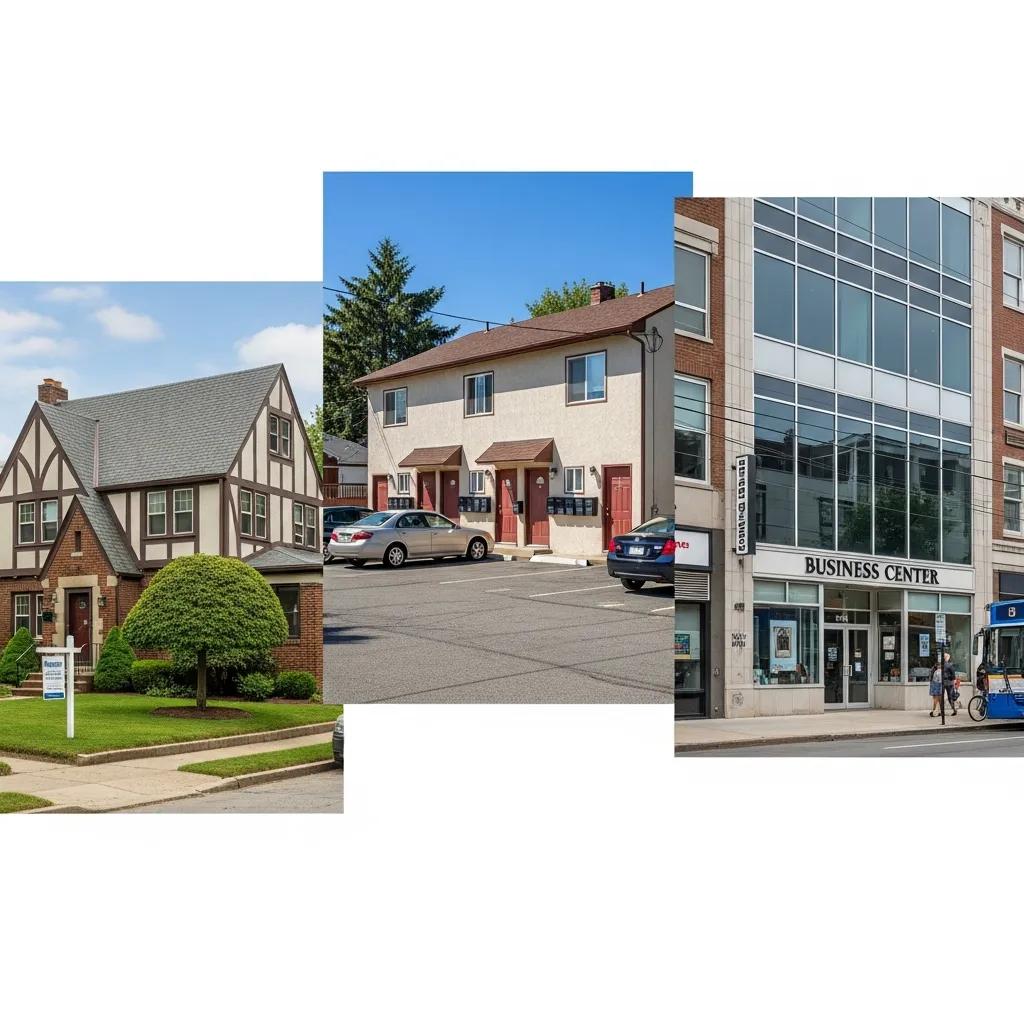
Hard‑money loans cover a wide range of property classes, but acceptability and LTV caps depend on type and marketability. Lenders commonly fund single‑family homes and small multifamily units; commercial properties are underwritten more tightly around income and DSCR. Raw land, vacant parcels, and specialty uses face stricter caps or conditions because comparables and liquidity are limited. Condition matters: properties needing moderate rehab are often eligible with ARV underwriting, while severely distressed or unmarketable assets may require stronger equity or borrower experience. The list below summarizes common property types and quick eligibility notes.
- Single‑family residences (SFR): Widely accepted; solid comps and ARV support higher LTVs.
- Small multifamily (2–4 units): Accepted with income consideration or DSCR underwriting for rentals.
- Commercial real estate (retail/office/industrial): Requires income documentation and typically lower LTV.
- Vacant land and raw parcels: Stricter underwriting and lower LTV due to limited liquidity and comparables.
These categories show where lenders are flexible versus where they’ll apply tighter scrutiny. Next, we’ll cover program suitability for flips, land, and non‑owner‑occupied rentals.
What residential and commercial properties are eligible?
Residential single‑family homes and small multifamily properties are the most common hard‑money collateral because comparables and exit markets are easier to establish. Commercial properties — retail, office, industrial — are eligible but generally require stronger underwriting focused on leases, vacancy risk, and DSCR rather than ARV alone. Lenders also review zoning, tenant quality, and long‑term marketability. Properties in fair‑to‑good condition with clear renovation plans qualify faster; severely dilapidated assets usually need deeper review or more borrower experience to offset risk.
Are fix‑and‑flip, land, and non‑owner‑occupied properties accepted?
Yes. Fix‑and‑flip projects are commonly funded with ARV‑based programs that combine purchase financing and renovation draws, provided the borrower supplies a detailed budget and contractor bids. Vacant land and raw parcels can qualify but usually at lower LTVs and with higher reserves because sales timelines and comparables are limited. Non‑owner‑occupied rental properties are often financed under DSCR or P&L underwriting, where property income or business statements demonstrate repayment ability. Each program requires specific documentation and a clear exit strategy; matching property use to the right product speeds approval.
What are the specific eligibility requirements for different hard‑money loan types?
Eligibility varies by program: purchase loans, fix‑and‑flip financing, DSCR loans, foreclosure bailouts, seconds/thirds, and P&L approvals each emphasize different attributes. Purchase loans focus on title, proof of funds, and marketability; flip lenders want ARV estimates, repair budgets, and draw schedules; DSCR programs center on property income and debt coverage; bailout loans prioritize speed and payoff accuracy. The table below summarizes program‑specific attributes and typical thresholds so borrowers can match deals to products and anticipate paperwork.
| Loan Type | Eligibility Attribute | Required / Typical Value |
|---|---|---|
| Purchase Loan | Down payment / Equity | Varies by property; often 10–30% equity required |
| Fix and Flip | ARV / Rehab budget | ARV‑based underwriting; repair estimates and contractor bids required |
| DSCR Loan | Income / Coverage | Debt coverage ratio documented via income or leases |
| Foreclosure Bailout | Timeline / Payoff accuracy | Fast approval and clear payoff statement to stop sale |
| Second/Third Trust Deed | Combined LTV (CLTV) | Lower CLTV caps; higher rates due to subordinate position |
| P&L Approval | Business income verification | P&L statements or bank statements substitute for W‑2s |
How do purchase loan qualifications differ from fix‑and‑flip loans?
Purchase loans emphasize purchase price, title status, and proof of funds, and they often close faster when no rehab is involved. Fix‑and‑flip loans use ARV underwriting: the lender projects post‑rehab value, subtracts repair costs, and advances a percentage of ARV to cover purchase and renovations. Flip financing usually requires a detailed repair budget, contractor bids, and a draw schedule tied to completed work. Time‑to‑fund differs — pure purchase deals can close quicker than ARV‑based rehab loans, which need valuation and scope confirmation before full funding.
What are the criteria for commercial, DSCR, and foreclosure bailout loans?
DSCR loans qualify on property income and its ability to cover debt; lenders calculate DSCR by dividing net operating income by proposed debt service and typically look for coverage above a minimum (often 1.2 or higher). Commercial underwriting weighs leases, tenant credit, and vacancy risk, and usually requires stronger equity or lower LTV than residential programs. Foreclosure bailouts prioritize speed — lenders need a current payoff statement, clear title status, and rapid decisioning to halt or redeem a sale. For urgent bailouts, streamlined underwriting that focuses on payoff accuracy and the exit plan is essential to meet tight timelines.
What are the requirements for second and third trust deed loans?
Second and third trust deed loans bridge financing gaps but carry higher risk for lenders and higher rates for borrowers. Underwriting centers on combined loan‑to‑value (CLTV); lenders limit total debt against the property to protect recovery value and often impose lower CLTV caps than first‑lien programs. Subordinate liens may require stronger borrower reserves or shorter terms to reduce exposure. Common uses include gap financing to close a purchase or to bridge to refinance — expect stricter documentation and pricing that reflects the junior lien position.
How do loan‑to‑value ratios impact hard‑money loan approval?
Loan‑to‑value ratios (LTV and CLTV) quantify lender exposure and determine how much cash a borrower must bring to closing. LTV expresses the loan as a percentage of property value or ARV, and CLTV aggregates all outstanding liens to show total leverage. Higher LTV raises lender risk, which narrows program eligibility and pushes pricing up; conversely, more borrower equity lowers risk and can unlock higher‑LTV programs or faster approvals. The table below compares typical LTV caps across common hard‑money programs to give practical benchmarks when evaluating eligibility.
| Loan Program | Key Attribute (max LTV) | Typical Value |
|---|---|---|
| Purchase Loan | Max LTV (purchase price basis) | 65%–80% depending on program and property |
| Fix and Flip | Max LTV (ARV basis) | 60%–75% of ARV; select deals up to 80% in rare cases |
| Commercial | Max LTV (income/asset basis) | 50%–70% depending on DSCR and asset class |
| DSCR Loan | DSCR threshold / LTV | DSCR‑focused; LTV often 60%–75% if DSCR strong |
| Second/Third Lien | Max CLTV (combined) | Lower combined limits; lender‑specific caps apply |
What are typical LTV ratios for various loan programs?
Typical LTV ranges depend on the program: purchase loans commonly allow 65%–80% LTV on stable residential assets, while fix‑and‑flip programs advance against ARV at 60%–75% in most cases. DSCR and commercial loans usually cap LTV lower — often 50%–70% — because income stability is key to repayment. Strong deals with experienced borrowers and in‑house underwriting can see higher LTVs; some private lenders may offer up to 80% on select transactions when equity and exit plans are exceptionally strong. Knowing these ranges helps you estimate required cash or whether subordinate financing is needed.
How does equity influence LTV and down payment requirements?
Equity reduces lender risk and lowers the cash you must bring to closing: a lower LTV means a smaller loan relative to value, so the borrower provides the difference as down payment or reserves. For example, on a $200,000 property with a 70% LTV cap, the maximum loan is $140,000 and the borrower must provide $60,000 plus closing costs. Strong equity or a credible ARV for a rehab can increase available loan amounts or reduce pricing. When equity is insufficient, borrowers may combine a first lien with a second trust deed or document additional reserves to bridge the gap.
What is the hard‑money loan application and approval process?

A clear, organized application speeds approvals: complete documentation and a reliable exit plan enable decisions in days. Typical stages include initial inquiry and deal submission, preliminary underwriting and valuation, documentation and title review, closing, and funding — each step has defined requirements and expected timelines. In‑house underwriting and direct capital access shorten turnaround because decisions don’t depend on third‑party pipelines, enabling approvals in as little as 48 hours and funding in days for clean, time‑sensitive deals. The table below links required documents to purpose and their impact on turnaround so you can prepare efficiently.
| Document | Who/When/Why | Value / Notes |
|---|---|---|
| Purchase contract / title status | Borrower at submission; verifies transferability | Essential for underwriting and closing timeline |
| Proof of funds / down payment | Borrower before approval; confirms ability to close | Speeds conditional approval and funding |
| Repair budget & contractor bids | Rehab loans before funding; supports ARV calculation | Required for draw schedules and staged funding |
| P&L, leases, or bank statements | DSCR/P&L programs; verify income | Enables alternative income underwriting without W‑2s |
| Payoff statement (bailouts) | Urgent loans; needed to stop foreclosure | Critical for timing and exact funding amount |
What steps are involved in getting fast approval and funding?
Fast approvals follow a defined sequence: submit a complete deal package, respond promptly to underwriting requests, complete valuation and necessary inspections, finalize closing documents, and fund once conditions are satisfied. Lenders that offer rapid decisions typically perform a pre‑underwrite on submission, order valuation or appraisal quickly, and use in‑house underwriting to issue a conditional approval — this workflow supports approvals within 48 hours and funding within days for clean files. Borrowers who provide contractor bids, title reports, and proof of funds at submission materially shorten the timeline. Use the checklist below to coordinate for same‑week funding when property and paperwork align.
- Submit complete deal package: Include the purchase contract, photos, and proof of funds to start underwriting.
- Provide repair budgets and contractor bids: Accurate scopes reduce appraisal back‑and‑forth and speed draws.
- Supply income or P&L documentation when needed: DSCR and P&L approvals require leases or statements to calculate coverage.
Which documents are required to qualify for a hard‑money loan?
Documentation varies by program but centers on property, title, funds, and exit planning. Core items include the purchase contract or current deed, title report, proof of funds for the down payment, contractor bids and repair budgets for rehab loans, and income verification for DSCR or P&L approvals. Alternative documentation — bank statements or P&L statements — can replace W‑2s for non‑W‑2 borrowers, and a current payoff statement is essential for foreclosure bailouts. Submitting prioritized documents early resolves common delays like title exceptions or incomplete repair scopes and keeps approval windows measured in days.
- Purchase: purchase contract, title report, proof of funds.
- Fix & Flip: ARV estimate, repair budget, contractor bids, draw schedule.
- DSCR/Commercial: leases, P&L, rent roll, insurance, and operating statements.
- Foreclosure Bails: current payoff, title status, and expedited underwriting notes.
What are the benefits and costs associated with hard‑money loan eligibility?
Hard‑money’s main advantages are speed, flexible underwriting, and equity‑first approvals that let investors act on time‑sensitive opportunities. Flexibility shows up in programs that prioritize ARV or income (DSCR, P&L) over credit scores, and structural features like no prepayment penalties in some offerings that support quick refinances or early exits. Costs reflect risk transfer: expect higher interest rates, origination fees, and points compared with conventional loans, plus higher pricing for subordinate liens. Balancing speed and flexibility against borrowing costs will show when hard money is the right tool — typically for short‑term flips, bridge financing, foreclosure rescue, or when conventional lending isn’t available.
- Benefit — Speed and flexibility: Approvals and funding can occur in days with property‑focused underwriting.
- Cost — Higher rates and fees: Pricing compensates lenders for shorter terms and higher risk exposure.
- Benefit — Equity‑first approvals: Strong collateral can offset borrower credit shortcomings and enable approval.
How do no prepayment penalties and flexible terms benefit borrowers?
No prepayment penalties let borrowers refinance or sell without extra costs when an exit happens sooner than planned, which can materially reduce total financing expense for quick flips or rapid refinances. Flexible terms — short durations, tailored draw schedules, and acceptance of alternative income documentation — help borrowers match financing to project timelines and lower carrying costs. For investor strategies where speed and quick rehab turnaround matter, these features often outweigh higher nominal rates because they preserve arbitrage between purchase and sale or refinance. Lenders offering this flexibility support practical exit strategies and reduce friction for active investors.
What interest rates, fees, and terms should borrowers expect?
Rates and fees vary by program, borrower profile, and property quality; industry ranges generally run higher than conventional loans due to shorter terms and elevated risk. Typical hard‑money pricing depends on market conditions, asset type, and lien position; short‑term flip loans are priced for project risk and expected hold period, while bridge and commercial loans may have different structures. Borrowers should model monthly servicing and total financing costs — interest, points, and origination fees — to compare hard money to other options and ensure projected profits or a refinance will cover expenses.
- Rate and fee modeling: Calculate total dollars paid for your expected hold period and compare to projected profit.
- Term alignment: Match loan term to your exit plan (e.g., 6–12 months for flips; longer for some bridge deals).
- Junior lien premium: Expect higher pricing for second or third trust deeds because of subordinate risk.
If you’re ready to move forward: assemble the document checklist, match your property to the right program, and prepare an exit plan that clearly demonstrates repayment. Fidelity Funding, a private hard‑money lender, follows equity‑first underwriting and in‑house decisioning that can produce approvals within 48 hours and funding in days for time‑sensitive deals. They offer programs that emphasize property equity over credit history, higher‑LTV options on select transactions, no prepayment penalties in some offerings, and direct access to capital via in‑house underwriting. If you need immediate financing for purchases, refinances, fix‑and‑flips, foreclosure bailouts, bridge loans, or DSCR and P&L approvals, submit a complete deal package or contact the team to start an expedited pre‑underwrite and valuation.
Frequently Asked Questions
What is the typical timeline for hard‑money loan approval and funding?
Timelines can be fast: approvals often take as little as 48 hours, with funding in a few days for clean files. That speed comes from streamlined underwriting that focuses on property equity instead of borrower credit alone. To move quickly, submit a complete deal package — proof of funds, repair budgets, and clear title information — so underwriting can act without delay.
Can I use a hard‑money loan for investment properties?
Yes. Hard‑money loans are commonly used for investment properties: single‑family homes, small multifamily units, and commercial assets. These loans are especially useful when you need to purchase, renovate, or flip quickly. Because they’re asset‑backed, lenders weigh property equity and exit strategy more heavily than credit score, making hard money a practical option in competitive or time‑sensitive markets.
What are the risks associated with hard‑money loans?
Hard‑money loans provide quick capital but carry higher costs and risks. The biggest risk is higher interest rates and fees compared with conventional loans, which can erode profits if the investment underperforms. If the property doesn’t appreciate as planned or the exit strategy fails, borrowers can face financial strain. Perform thorough due diligence, maintain conservative budgets, and have a clear repayment path before borrowing.
Are there any prepayment penalties with hard‑money loans?
Many hard‑money lenders offer loans without prepayment penalties, allowing you to refinance or sell without extra charges if you exit early. That flexibility benefits flips and short hold strategies. Policies vary by lender and program, so confirm terms before signing.
How does the condition of a property affect hard‑money loan eligibility?
Property condition directly affects eligibility. Lenders assess marketability and repair costs when setting loan amounts and terms. Properties in good condition with a clear renovation plan typically qualify for higher LTVs. Severely distressed properties often require more borrower equity or experience to offset increased valuation and resale risk.
What documentation is typically required for a hard‑money loan application?
Required documents vary by program but usually include a purchase contract, proof of funds for the down payment, and a title report. For fix‑and‑flip loans, submit repair budgets and contractor bids. DSCR or P&L loans need income verification like leases or bank statements. Providing complete, accurate documentation early speeds approval and funding.
Can I qualify for a hard‑money loan with a low credit score?
Yes — many borrowers with low credit scores qualify for hard‑money loans because lenders prioritize the property and equity. Low FICO may raise questions, but strong collateral, a solid exit plan, and documented reserves can offset credit issues and make approval possible.
Conclusion
Understanding hard‑money eligibility helps investors act quickly and confidently on time‑sensitive deals. By focusing on property equity and practical underwriting, these loans provide a dependable path to fast financing when speed matters. To explore options that fit your investment plan, reach out to a trusted hard‑money lender or submit your deal package for a rapid pre‑underwrite.