


California Hard-Money Construction Loans — Fast, Flexible Financing for Your Projects
California’s real estate market moves fast — and traditional lenders don’t always keep up. Our hard‑money construction loans give developers and investors quick access to capital when timing matters. Below we explain how hard‑money lending works, the advantages it brings to California projects, the loan options Fidelity Funding provides, what the application looks like, typical terms, and who benefits most from this type of financing.
What Are Hard Money Construction Loans and How Do They Benefit California Projects?
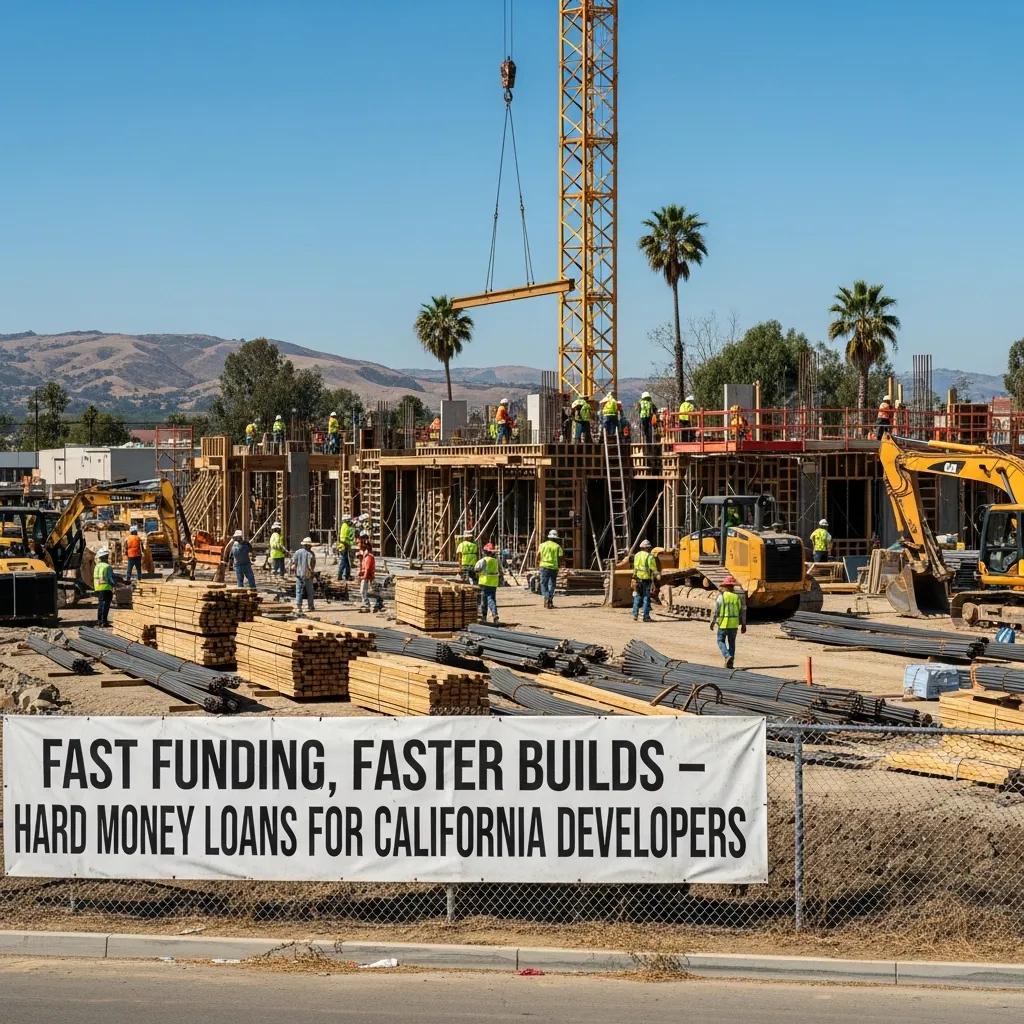
Hard‑money construction loans are short‑term, asset‑backed loans secured by the property itself. Rather than relying primarily on credit scores or lengthy income verifications, these loans are underwritten based on the collateral and the project plan. That focus lets lenders approve and fund faster — often within days — making hard‑money a practical choice for time‑sensitive builds and renovations. Loans can also be structured to fit each project’s timeline and cash‑flow needs.
Definition and Key Features of Hard Money Construction Loans
Hard‑money construction loans follow an asset‑based lending model that places primary weight on the property and its projected value. Key features include:
- Short-Term Financing: Generally six months to three years — built for quick turnarounds and project completion.
- Flexible Requirements: Underwriting centers on the asset and the plan, so borrowers with non‑traditional profiles often qualify.
- Higher Interest Rates: Rates are typically above conventional mortgage levels, but the speed and flexibility can outweigh the cost for many investors.
Those characteristics make hard‑money loans a pragmatic tool for investors who need fast, project‑driven capital.
Why Choose Hard Money Loans for California Real Estate Development?
California’s market rewards speed and certainty. Hard‑money lending is well suited to that environment for several reasons:
- Speed of Funding: Fast approvals let you move on opportunities other lenders can’t close in time.
- Less Stringent Requirements: Borrowers with complex incomes, past credit issues, or unconventional ownership structures often find more flexible paths to funding.
- Market Demand for Quick Financing: In shifting markets, the ability to close quickly can be the margin between a successful deal and a missed one.
For developers and investors focused on execution, these benefits translate into real competitive advantage.
Which Types of Hard Money Construction Loans Does Fidelity Funding Offer in California?
Fidelity Funding provides a range of hard‑money construction solutions tailored to California projects. Knowing the available loan types helps you select the right product for your scope and timeline.
Ground-Up Construction Loans for Residential and Commercial Projects
Ground‑up loans cover new construction from land purchase through project completion, for both residential and commercial developments. Key points include:
- Eligibility Criteria: We look for a clear project plan and evidence of value creation at completion.
- Typical Loan Amounts: Amounts vary by project size, land value, and projected finished value.
- Funding Timelines: We can often fund within 1–2 weeks so work can begin without costly delays.
Ground‑up financing is aimed at developers who need reliable capital to move projects from permit to delivery.
Fix and Flip Construction Loans: Rehab and Renovation Financing
Fix‑and‑flip loans support purchases and renovations intended for quick resale. This financing is built for investors focused on renovation and turnaround. Important features include:
- Rehab Financing Details: Loans cover acquisition plus renovation budgets so you can complete the work on schedule.
- After‑Repair Value Considerations: Lenders evaluate the expected post‑renovation value (ARV) to set loan sizing and terms.
- Investor Success Stories: Many flippers rely on this product to unlock capital and deliver profitable exits.
Fix‑and‑flip loans give active investors the cash flow needed to rehab properties and capture market demand.
How Does the Hard Money Construction Loan Process Work in California?

The application and approval process for hard‑money construction lending is designed to be straightforward and fast while still protecting the integrity of the project and collateral.
Step 1: Application and Required Documents
To start, submit an application and key documentation. Typical requirements include:
- Proof of Property Ownership: Title documents or a purchase agreement for the asset.
- Project Plans: Scope of work, timelines, and budgets that show how the project will reach completion.
- Financial Statements: Basic financials to demonstrate your ability to manage the project and repayment.
Complete, accurate documentation helps us move quickly through underwriting.
Step 2: Approval Timelines and Underwriting Criteria
After submission, underwriting focuses on the property, the exit strategy, and the project plan. Key points:
- Typical Approval Timelines: Many approvals are issued within a few days to one week, far faster than traditional lenders.
- Underwriting Criteria for Hard Money Loans: Emphasis is placed on collateral value, ARV projections, and the feasibility of the build or rehab rather than on credit score alone.
This streamlined approach delivers the speed investors need without sacrificing prudent risk assessment.
What Are Typical Loan Terms, Rates, and LTV Ratios for California Construction Loans?
Understanding common terms helps you evaluate whether a hard‑money solution fits your project and returns.
Understanding Loan-to-Value and After-Repair Value Ratios
Loan‑to‑value (LTV) determines how much of the project value a lender will finance. In California, LTVs for hard‑money construction loans commonly fall between 60% and 70%, depending on property condition and borrower experience. After‑repair value (ARV) is used to estimate the finished asset’s worth and is a central factor in loan sizing.
Interest Rates, Fees, and No Prepayment Penalties Explained
Hard‑money financing carries higher interest than conventional mortgages — typically in the 8%–14% range — reflecting the short‑term, higher‑risk nature of these loans. Many lenders waive prepayment penalties, so you can refinance or repay early once the project is complete without extra fees.
The table above summarizes typical terms across common hard‑money construction products to help you compare options quickly.
Who Can Benefit from Hard Money Construction Loans in California?
Hard‑money construction loans serve a wide range of borrowers — not just seasoned pros. They’re a practical tool when speed and asset value matter most.
Real Estate Investors, Developers, and Flippers
Investors and developers use hard‑money loans to secure projects quickly and execute rehabs or new builds without waiting for slow bank approvals. The ability to close fast and access construction capital is especially valuable in competitive markets.
Borrowers with Non-Traditional Credit or Time-Sensitive Deals
Borrowers who don’t fit conventional underwriting boxes — or who face a tight timeline — often find hard‑money loans more accessible. Because underwriting centers on the property and exit plan, these loans open financing options that traditional lenders may deny.
What Are the Current California Market Trends and Regulatory Considerations for Construction Loans?
Keeping abreast of market dynamics and regulatory rules helps you plan and execute projects with confidence.
California Real Estate Market Insights for Developers and Investors
Demand for housing and well‑located commercial space remains a central driver in California. Competition and rising costs make quick, reliable financing solutions and disciplined project execution essential for maintaining margins and meeting timelines.
Regulatory Landscape and Licensing Requirements for Private Lenders
Private lending in California is regulated by the Department of Financial Protection and Innovation (DFPI). Lenders must comply with licensing and disclosure requirements under the California Financing Law (CFL) and related statutes. Borrowers should confirm a lender’s compliance status and licensing to ensure transparent, lawful transactions.
Frequently Asked Questions
1. What are the risks associated with hard money construction loans?
Hard‑money loans provide speed and flexibility but carry risks: higher interest costs, potential budget overruns, and exposure if a property doesn’t appreciate as expected. A realistic timeline, conservative budgets, and a clear exit strategy help mitigate those risks.
2. How can I improve my chances of getting approved for a hard money loan?
Present a detailed project plan with realistic budgets and timelines, provide clear ownership and financial documentation, and show an exit strategy (sale, refinance, or lease). Experience on past projects also strengthens your application.
3. Are hard money loans suitable for first-time real estate investors?
They can be. Hard‑money loans prioritize the asset and project plan, making them accessible to newcomers without perfect credit. First‑time investors should still understand the costs, maintain tight budgets, and work with experienced contractors and advisors.
4. What types of properties can be financed with hard money construction loans?
Hard‑money construction loans can finance single‑family homes, multi‑family and commercial builds, and renovation projects. Lenders evaluate each property’s investment potential and ARV when determining eligibility and loan size.
5. How do hard money loans compare to traditional financing options?
Hard‑money loans are asset‑driven and faster to fund, with higher rates and shorter terms. Traditional loans are typically cheaper over the long run but take longer to close and have stricter eligibility requirements. Each has a role depending on timing, borrower profile, and project goals.
6. Can I refinance a hard money loan later?
Yes. Many borrowers refinance into conventional financing after completing the project or improving their credit profile. Refinancing can lower your rate and extend the repayment term once the property’s value and income profile are stable.
7. What should I consider when choosing a hard money lender?
Look for reputation, experience with your project type, transparent terms, and responsiveness. Compare rates, fees, LTV limits, and how the lender handles draws and inspections. Clear communication and a proven track record matter most.
Conclusion
Hard‑money construction loans offer California investors a fast, flexible financing path to execute projects that require speed and certainty. With options for ground‑up builds, rehabs, and flips, these loans can be tailored to your timeline and exit strategy. If you’re planning a project and need reliable capital, Fidelity Funding can help you evaluate the right loan and move from opportunity to close.