

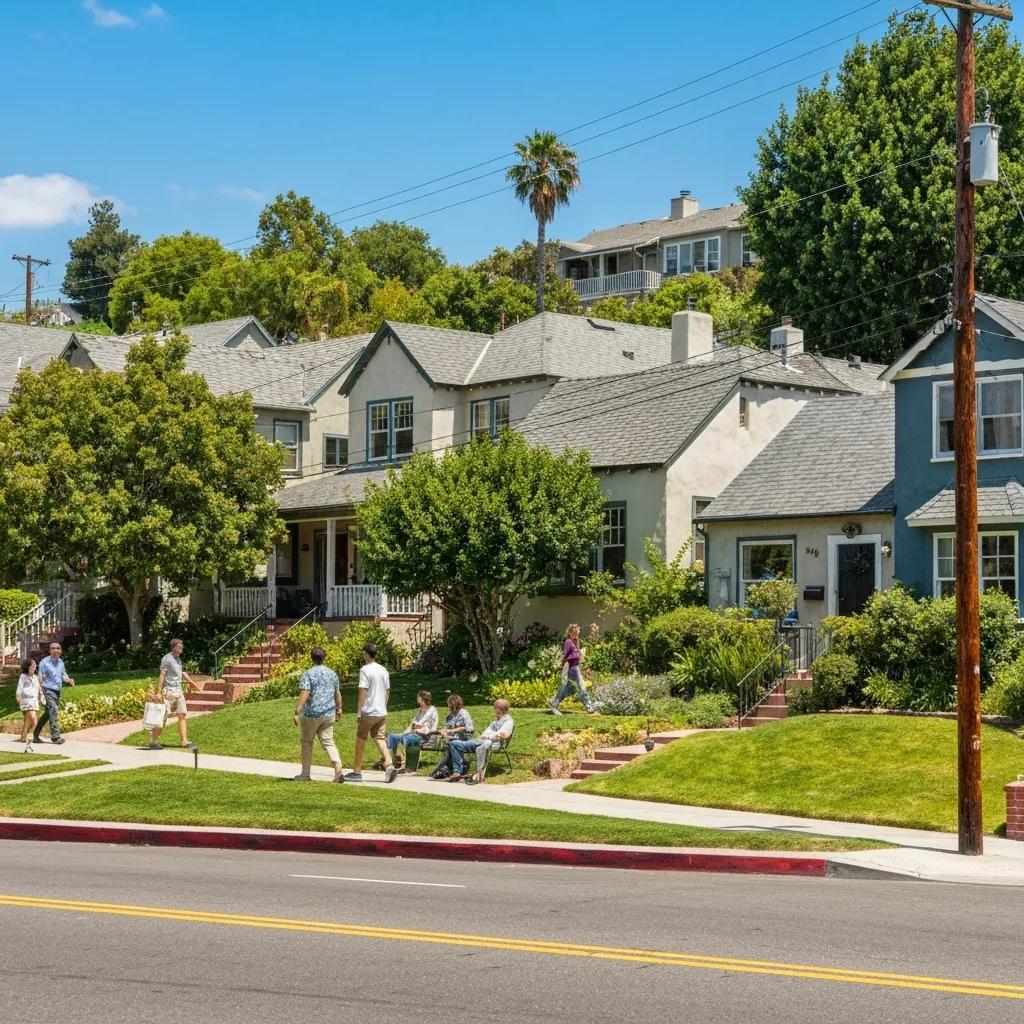
Analyzing Pasadena Real Estate
Pasadena Market Outlook 2025 — Trends and Financing Strategies for Investors
Pasadena’s real estate market in 2025 is active and modestly appreciating. Success for investors depends on matching financing speed and structure to local price momentum and property type. This guide translates current Pasadena metrics into practical lending strategies — from hard money and fix‑and‑flip to DSCR, commercial, bailout, and second‑trust solutions. You’ll get neighborhood signals, clear loan mechanics (LTV, ARV, rehab funding, timelines), approval checklists, and example calculations tailored to Pasadena use cases. We start with market trends, then explain loan mechanics across program types so you can choose the right financing path for each deal. Practical lists, side‑by‑side tables, and checklist timelines are included to help you move from opportunity to close.
What Are the Key Pasadena Real Estate Market Trends in 2025?

In 2025 Pasadena is seeing steady price growth driven by low inventory and persistent demand for single‑family homes and small multifamily buildings. Limited resale supply, paired with continued interest in walkable and near‑suburban neighborhoods, is pushing median prices higher and shortening some sale cycles. For investors that can execute clean, timely rehabs, this environment supports stronger ARV assumptions — but paying top market prices narrows LTV room and squeezes returns. Reading neighborhood metrics and days‑on‑market helps you decide whether to pursue aggressive purchase‑plus‑rehab plays, buy‑to‑rent conversions, or targeted commercial opportunities.
This table highlights the quick metrics investors rely on when sizing deals and comparing micro‑markets.
| Metric | Description | Value / Period |
|---|---|---|
| Median Home Price | Representative transaction price used for comps | $1.1M (Oct 2025) |
| Year-over-Year Change | Annual price movement showing market direction | +5.7% (YoY) |
| Price per Sq Ft | Unit valuation used in comp‑based ARV estimates | $805 / sq ft (approx.) |
| Average Days on Market | Sales velocity metric that affects hold time | ~44 days |
| Sales Volume | Transaction activity indicating liquidity | Moderate (steady transactions) |
These figures point to a market where ARV‑driven rehabs can outperform if timelines and budgets are tightly managed. Next, we unpack how Pasadena’s price movement should influence underwriting and deal selection.
How Have Pasadena Home Prices Changed This Year?
Prices in Pasadena rose modestly in 2025. The median sits near $1.1M with roughly a 5.7% year‑over‑year increase. That growth reflects constrained new supply, buyer preference for established neighborhoods, and rising investor interest in small multifamily conversions and high‑quality single‑family rehabs. For lenders and investors this means higher potential ARVs — provided rehab scopes and schedules are realistic. Pair $/sqft trends with recent comps to set prudent maximum offers and protect your target returns.
Which Pasadena Neighborhoods Offer the Best Investment Opportunities?
Opportunity varies by neighborhood. Walkable central pockets favor small multifamily and short‑term rental conversions; older suburban tracts often deliver value‑add single‑family rehab potential; commercial corridors can support mixed‑use redevelopment. Choose neighborhoods based on local demand signals — days on market, $/sqft, and buyer/renter profiles — then match the loan type to that micro‑market: aggressive purchase+rehab programs for fast central pockets, conservative buy‑and‑hold terms for stable suburban blocks, and commercial bridge lending for mixed‑use projects. Constantly update comps and rent data to refine underwriting assumptions.
How Do Hard Money Loans Support Pasadena Real Estate Investors?

Hard money loans provide short‑term, asset‑backed capital that underwriters weight toward property value and equity rather than personal income. That asset‑first approach enables fast closings and staged rehab funding — a useful fit for Pasadena’s competitive listings. Typical structures are interest‑only payments, LTV caps tied to ARV, and draw schedules that release rehab funds as work completes. The main benefits are speed, flexibility, and access for borrowers with non‑traditional income or recent credit events. Knowing common terms, required docs, and expected timelines helps you decide when hard money is the optimal bridge versus conventional financing.
| Loan Type | Typical LTV / Term / Rate | Typical Docs / Notes |
|---|---|---|
| Purchase Loan | Up to 70% LTV (75% case‑by‑case) / 6–24 months / interest‑only starting example 6.99% | Photo ID, purchase contract, title, basic property info |
| Rehab / Fix & Flip | Purchase up to 90% + rehab financing (see fix‑and‑flip table) / 6–12 months / IO rates | Contractor bids, rehab budget, ARV comps, draw schedule |
| Bridge / Bailout | Varies (equity‑driven) / short‑term / IO | Existing loan statements, payoff quote, title |
| Second Trust Deeds | Subordinate financing to first, structured to cover cash‑out or rehab top‑ups | First loan details, seasoning, collateral documentation |
Hard money lenders move quickly when the equity case and rehab plan are clear — often approving deals in days when documentation is complete. Below are the core investor advantages and the typical borrower requirements that influence program choice.
- Speed to Close: Win competitive offers and secure rescue funding for time‑sensitive deals.
- Equity‑Focused Underwriting: Approvals driven by collateral value rather than strict credit metrics.
- Rehab Funding Access: Draw‑based rehab budgets tied to verified milestones.
- Flexible Exit Options: Support for flips, short holds, or refinance into permanent loans.
When conventional financing is too slow or restrictive, hard money is a practical alternative. The next section outlines the concrete benefits of using fast programs in Pasadena.
What Are the Benefits of Fast Hard Money Loans in Pasadena?
Fast hard money lets investors act where speed matters: secure a contract, fund critical rehab work, and avoid delays that cost offers. Approval focuses on LTV and ARV instead of full income verification, which helps borrowers with strong collateral or recent credit events move forward. Tangible benefits include winning multiple‑offer situations, keeping rehabs on schedule with draw funding, and providing short‑term liquidity for bailout scenarios. Preparing a concise deal packet — purchase contract, photos, scope, and contractor bids — typically shortens review and moves a file from LOI to funding faster.
What Are the Typical Terms and Requirements for Pasadena Hard Money Loans?
Expect shorter terms, interest‑only payments, and LTV limits that protect equity. Common guidance is around 70% LTV with case‑by‑case exceptions to 75%, while ARV‑based rehab programs may allow higher combined leverage. Advertised rates can start at example figures such as 6.99% IO, but pricing varies by deal risk, property type, and borrower profile. Lenders usually request photo ID, purchase contract, title report, contractor bids, project budget, and basic financials or P&L when relevant — providing these up front accelerates underwriting and funding.
With these parameters you can calculate break‑even exits and test whether a deal meets your return targets.
Below is how one hard‑money provider frames program guidance for time‑sensitive Pasadena deals.
Fidelity Funding offers fast, flexible hard money programs for real estate investors and business‑purpose borrowers across California. Key program points include expedited approvals and closings often within 5–7 days, asset‑based underwriting that emphasizes equity over strict credit, and a suite of loan types: purchase loans, fix‑and‑flip (purchase up to 90% + rehab funds), bailouts, seconds, and commercial loans. Fidelity Funding’s guidelines include LTVs up to 70% (75% on a case‑by‑case basis), ARV financing up to 85–90% with rehab funds allowed, and interest rates starting at example 6.99% interest‑only. Investors needing rapid, straightforward financing can submit deal details, call the underwriting desk, or complete an application to begin the review process.
What Are Pasadena Fix and Flip Loan Programs and How Do They Work?
Fix‑and‑flip loans combine acquisition financing with staged rehab funding and are underwritten around projected ARV. Lenders size the loan to the purchase price and ARV, then disburse rehab funds through draws tied to contractor milestones. That structure protects both lender and borrower while enabling leveraged renovations. The main benefit is higher effective leverage on value‑add projects — you can buy quickly and access rehab capital without liquidating other assets, accelerating turnaround and compounding returns when ARV holds. Know the purchase %, rehab %, draw cadence, and timeline to structure profitable Pasadena flips.
A typical approval and funding timeline looks like this:
- Submit Deal Package: Send purchase contract, photos, preliminary scope, and contractor bids to start underwriting.
- Appraisal / ARV Underwrite: Lender orders appraisal or completes an ARV analysis and finalizes loan structure.
- Close and Fund Acquisition: Initial proceeds close the purchase; rehab draw schedule is set.
- Rehab Draws & Inspections: Funds released per milestones; inspections verify progress.
- Exit / Sale / Refinance: Loan repaid at sale or via refinance into permanent financing.
Speed and a clean document set shorten hold time — a major advantage in Pasadena’s resale market.
Below are common program variants and typical underwriting caps to help size rehab budgets against ARV.
| Program Variant | Max Purchase % | Rehab % | ARV % (Loan Cap) |
|---|---|---|---|
| High‑Leverage Flip | Up to 90% of purchase | Up to 100% of rehab costs (with strong ARV comps) | Up to 85%–90% of ARV (combined) |
| Conservative Flip | Up to 70% of purchase | Partial rehab funding | Up to 70% of ARV |
| Bailout / Short‑Term Rehab | Purchase or payoff focus | Rehab top‑up funds | Structured case‑by‑case based on equity |
Underwriters commonly allow higher purchase leverage when ARV comps support the rehab plan, while capping combined exposure as a percentage of ARV to protect returns.
How Does Fix and Flip Financing Help Pasadena Property Investors?
Fix‑and‑flip loans bridge acquisition and renovation with capital sized to projected ARV. That lets investors make stronger offers and access ongoing rehab funding without tapping personal liquidity. Because loan size ties to after‑repair value and draws follow milestones, investors can maximize purchase leverage while keeping funds available for high‑impact improvements. The practical edge is speed: combined purchase‑plus‑rehab financing reduces contingency risk and shortens project timelines, improving odds of a profitable exit. Submit clear contractor bids and conservative ARV comps to speed underwriting and cut holding costs.
What Are the Eligibility Criteria and Loan Limits for Pasadena Fix and Flip Loans?
Eligibility centers on property type, clear scope, and sponsor capacity. Single‑family homes and small multifamily properties typically qualify; larger commercial projects need specialized underwriting. Typical limits include purchase leverage up to 90% with rehab financing covering documented costs and combined loan exposure capped around 85%–90% of ARV in aggressive cases. To expedite approval, provide purchase contracts, contractor bids, a detailed rehab budget, preliminary ARV comps, title info, and borrower or business ID. Having these materials ready moves a file through review faster.
How Are DSCR Loans Changing Rental Property Investment in Pasadena?
DSCR loans underwrite using property cash flow instead of personal income, measuring the property’s ability to cover debt service via the debt service coverage ratio (DSCR = NOI / Debt Service). When NOI comfortably covers payments, DSCR underwriting opens financing to investors with non‑traditional income. This makes DSCR programs especially useful for buy‑and‑hold strategies in Pasadena, where reliable rent comps and conservative pro formas demonstrate coverage and support purchase or refinance requests.
- Cashflow‑Based Underwriting: Loans approved when property NOI supports debt payments.
- Useful for Non‑Traditional Income: Less emphasis on personal tax returns for qualification.
- Supports Buy‑and‑Hold: Enables purchases supported by predictable rent rolls.
Below we walk through a sample DSCR calculation and the documentation lenders expect.
What Is a DSCR Loan and How Does It Benefit Pasadena Rental Investors?
A DSCR loan evaluates the property’s net operating income against required debt payments using DSCR = NOI / Debt Service. For example, a property with $30,000 NOI and $24,000 in annual debt service yields a DSCR of 1.25 — a commonly acceptable threshold for many lenders. The advantage is clear: strong property‑level cash flow can substitute for full personal income verification, opening financing for investors with business income or complex tax situations. Prepare rent rolls, expense schedules, and conservative pro formas to speed DSCR approval.
What Are the Requirements and Typical Terms for DSCR Loans in Pasadena?
Lenders typically request rent comps, current leases or credible market rent estimates, an operating expense schedule, and a pro‑forma showing NOI. LTVs commonly fall in the 70%–80% range depending on cash flow strength, with fixed or adjustable rate options and amortizations aligned to your exit plan. Many lenders target a minimum DSCR of roughly 1.20–1.25 for conservative underwriting; stronger DSCRs can unlock better terms. Supporting your case with verified market rents and conservative expense assumptions smooths the path to approval.
What Commercial Real Estate Loan Options Are Available in Pasadena?
Commercial hard money and bridge loans for mixed‑use and commercial properties combine collateral value with cash‑flow analysis. Underwriting places greater weight on appraised value, tenant mix, and projected income, so the mechanics differ from residential products. Investors gain access to larger loan amounts and flexible structures for repositioning assets, but should expect more documentation and rigorous appraisals. Compare commercial and residential terms to choose the right lender for mixed‑use or retail conversions in Pasadena.
How Do Commercial Hard Money Loans Work for Pasadena Properties?
Commercial hard money blends collateral analysis with income underwriting to finance acquisitions, renovations, or repositioning of income‑producing assets. Typical structures include shorter terms, interest‑only periods, and an exit plan such as refinance after stabilization or sale. Use cases in Pasadena include repositioning retail or converting mixed‑use buildings; underwriting will commonly require detailed rent rolls, leases, and a commercial appraisal that reflects highest‑and‑best use.
What Are the Key Benefits and Terms of Pasadena Commercial Real Estate Loans?
Commercial loans let you finance larger projects, structure complex rehabs for income growth, and use bridge capital tied to lease‑up milestones. Expect lower LTVs relative to residential collateral, DSCR requirements for income properties, and higher diligence and fee profiles. Be ready with leases, business plans, pro formas, and a commercial appraisal — and allow extra time in the financing timeline for these analyses while using bridge funds to execute value‑add strategies.
How Can Pasadena Investors Use Foreclosure Bailout and Second Trust Deed Loans?
Foreclosure bailout loans and second trust deeds are targeted tools for short‑term capital needs: stopping imminent sales, preserving equity, or layering rehab/cash‑out financing. A bailout loan provides quick payoff funds to cure defaults and stabilize ownership; a second trust deed creates subordinate financing to add capital without displacing the first lien. These tools preserve upside for owners and investors but require a clear exit plan — sale, refinance, or payoff — to avoid extended subordinate exposure.
Use this checklist to identify borrower profiles and required documents for bailout and second‑deed scenarios.
- Foreclosure Bailout Candidates: Owners facing imminent sale dates, parties needing quick payoffs to avoid auction, or investors buying distressed equity.
- Second Trust Deed Use Cases: Cash‑out for rehab, bridge to refinance, or layering funds for value‑add that the first lender won’t provide.
- Typical Documents: Payoff statements, title info, proof of rehab funds, and a clear exit strategy for repayment.
Next we outline qualification and timeline expectations for these fast‑move products.
What Are Foreclosure Bailout Loans and Who Qualifies in Pasadena?
Foreclosure bailouts are short‑term payoffs that halt foreclosure timelines so an owner or investor can execute an exit. Lenders typically qualify borrowers who have demonstrable equity or a credible, near‑term exit plan (sale or refinance). Because timelines are compressed, approvals and funding are prioritized to prevent auction — often within days when payoff figures and title paperwork are available. Candidates include owners with temporary liquidity gaps and investors who need to clear title obligations on distressed buys.
How Do Second Trust Deeds Support Pasadena Real Estate Investment Strategies?
Second trust deeds provide subordinate capital behind an existing first mortgage, allowing investors to increase total leverage for rehab, cash‑out, or short‑term liquidity without replacing the first lien immediately. The upside is fast access to capital and the ability to preserve first‑lien relationships while executing a value‑add plan. The downside is higher subordinate interest and added complexity at refinance; always model combined LTV and plan a clear exit — sale, refinance, or payoff — to limit subordinate exposure.
Fidelity Funding supports bailout and second‑deed needs with asset‑based options designed for quick underwriting and execution, helping borrowers stabilize situations and protect equity. If you’re preparing a bailout or second request, gather payoff statements, title information, contractor bids (if rehab is involved), and a concise exit plan; with complete docs Fidelity Funding can often move from submission to funding on an expedited schedule.
When you’re ready to act, follow these practical next steps.
- Prepare Deal Package: Purchase contract, photos, rehab budget, contractor bids, and payoff statements as relevant.
- Submit or Call: Send the package to the lender or call underwriting to explain urgent timelines.
- Expect Timelines: With complete documentation, expedited programs commonly close within 5–7 days.
These steps form the clear pathway from deal assembly to closing for many Pasadena investors who need speed and clarity.
Fidelity Funding provides immediate solutions for time‑sensitive deals through fast loan programs and straightforward, asset‑based requirements. Before submitting, compile purchase contracts, contractor bids, preliminary ARV comps, title information, and payoff figures where applicable. Fidelity Funding emphasizes clear documentation and rapid decisioning, often enabling closings within a few business days for qualifying opportunities. If you have a Pasadena deal that needs decisive financing, gather the materials above and start the lender application process to begin underwriting.
Frequently Asked Questions
What factors should investors consider when choosing a neighborhood in Pasadena?
Focus on days on market, price per square foot, and recent comparable sales. Also consider buyer and renter profiles, local amenities, school districts, and planned development. These factors influence demand and the likely exit strategy — whether a quick flip, a buy‑and‑hold rental, or a redevelopment play.
How can investors effectively manage renovation timelines in Pasadena’s competitive market?
Create a clear project plan with milestone dates, hire reliable contractors, pull permits early, and budget a contingency. Maintain frequent site checks and open communication with your team. Using a lender that provides draw funding on verified milestones helps keep work moving and reduces holding costs.
What are the risks associated with fix‑and‑flip investments in Pasadena?
Risks include market swings that reduce ARV, unexpected rehab costs or delays, and financing shortfalls if projections are optimistic. Mitigate risk with conservative ARV comps, realistic budgets, contingency reserves, and a flexible exit plan that includes refinance options or extended hold assumptions.
What role do local economic conditions play in Pasadena real estate investments?
Local employment trends, income levels, and new development affect demand and pricing. A healthy local economy supports rental demand and resale values; conversely, weakening economic indicators can lengthen hold times and compress returns. Monitor job growth, major employers, and planning activity to anticipate shifts.
How can investors leverage technology to enhance their real estate strategies in Pasadena?
Use market analytics to track comps and rent trends, virtual tours and drone photography to market properties, and project management tools to monitor rehab progress. Technology improves underwriting accuracy, marketing reach, and operational efficiency—helpful edges in a fast market.
What are the common pitfalls to avoid when investing in Pasadena real estate?
Avoid underestimating rehab costs and timelines, skipping thorough market research, and over‑leveraging. Don’t overlook property management or assume high rents without verified comps. Plan conservatively and verify every assumption before you submit an offer.
Conclusion
Pasadena presents attractive investment opportunities, but success depends on matching financing to market realities and executing quickly and accurately. Understand neighborhood signals, choose the loan program that fits your exit plan, and prepare a complete deal package to move swiftly. If you’d like help sizing a deal or comparing program options, review our resources and contact our team — we’ll help you turn Pasadena opportunities into financed, executed projects.