


California Hard Money vs. Traditional Loans — An Investor’s Guide to Fast, Flexible Real Estate Financing
California investors often face a trade-off: speed and flexibility from asset-focused hard money lenders or lower long-term costs from income- and credit-driven conventional financing. This guide breaks down both paths, compares their mechanics and metrics, and gives concrete steps you can use to close time-sensitive deals while protecting returns. You’ll see what hard money underwriters prioritize (property equity and a clear exit), how conventional lenders evaluate borrowers (credit, income, DTI), and which loan types work best for flips, bailouts, bridges, and long‑hold investments. We map approval timelines, typical loan-to-value (LTV) ranges, interest and fee trade-offs, and the document checklist that speeds underwriting on California transactions. Where useful, real-world examples from a private hard money lender in Glendale, California illustrate program-level terms and timelines. Read on to compare financing options, match a product to your deal profile, and follow a step-by-step flow to get funded fast when timing matters.
What Are California Hard Money Loans and How Do They Benefit Real Estate Investors?
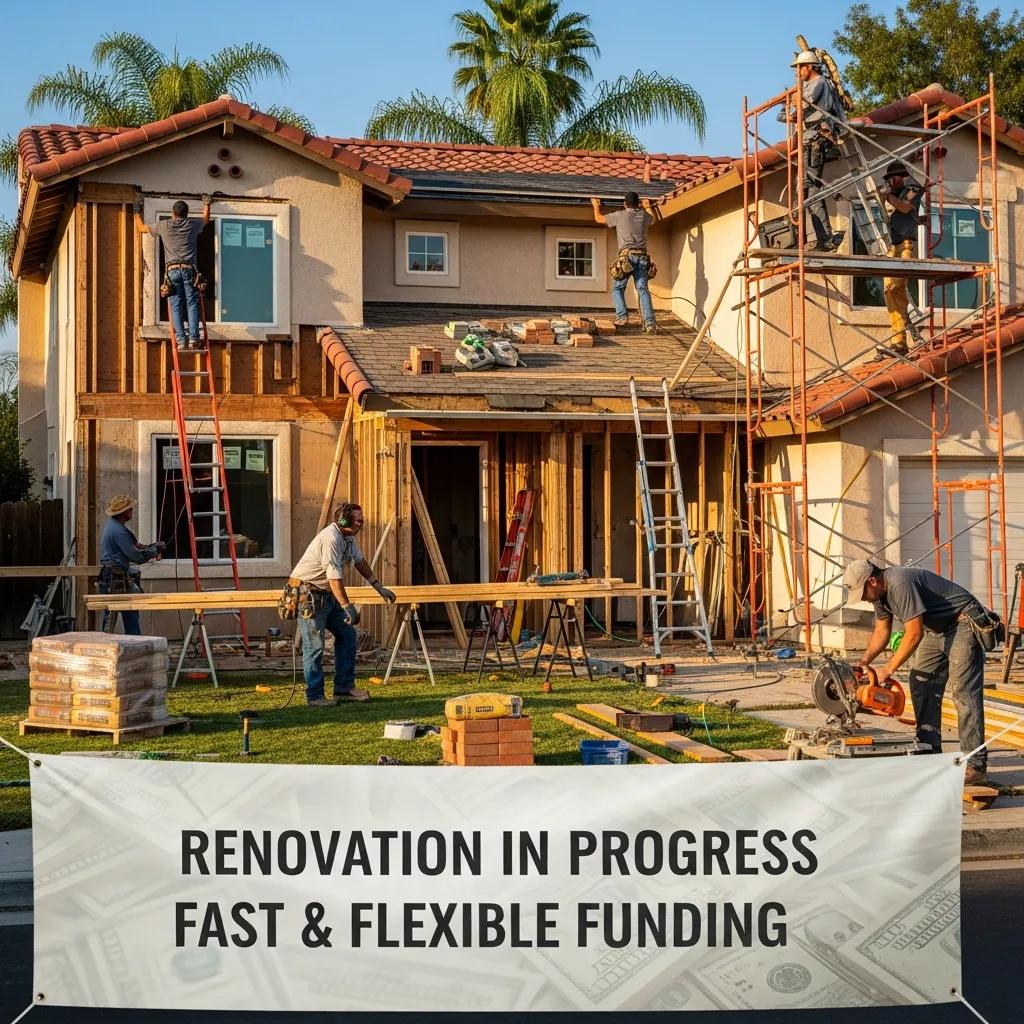
Hard money loans in California are short-term, asset-based loans secured primarily by the property itself rather than by the borrower’s income or credit record. Underwriting centers on the collateral, the property’s after‑repair value (ARV), and a credible exit plan, which lets lenders make faster decisions and offer more flexible terms for investors. The core investor advantages are speed to close, underwriting that accepts non‑traditional documentation, and program structures built for renovation, bridge financing, or rescue situations. Hard money is a tactical tool for deals that need immediate purchasing power or rapid stabilization and rehabbing prior to refinance or resale — not usually a long‑term financing strategy.
What Key Features Make Hard Money Loans Fast and Flexible in California?
Hard money lenders shorten timelines by using in‑house underwriting, appraisal‑lite valuation approaches, and an emphasis on exit plans tied to property equity. That reduces dependence on full income verification and lengthy third‑party checks, shortening underwriting cycles. Interest‑only payments, short terms, and selective LTV allowances help investors manage renovation cash flow and execute exits. On well‑documented deals, approvals can occur in as little as 48 hours and funding often follows within a few business days — a critical advantage when competing for time‑sensitive purchases.
Which Property Types and Investment Scenarios Qualify for Hard Money Loans?
Hard money programs typically underwrite single‑family homes, small multifamily buildings, mixed‑use properties, certain commercial assets, and distressed or vacant properties that need repair. Common use cases include purchase‑for‑rehab (fix & flip), short‑term bridge financing, foreclosure bailouts to prevent trustee sales, and short construction or stabilization loans. Lenders usually exclude properties with severe environmental hazards, complex title clouds, or assets requiring unusual permitting, so preliminary due diligence on condition and title is essential before submission.
For quick reference, the table below summarizes common hard money programs and the headline attributes investors should expect when evaluating options.
This table lists representative hard money program types, typical LTV guidance, usual loan terms, and the primary use case so you can match program characteristics to deal needs.
| Loan Program | Typical LTV / Loan Size | Typical Term | Primary Use Case |
|---|---|---|---|
| Purchase / Bridge | Up to 70-80% on many deals | 6–24 months | Fast acquisitions where speed matters |
| Fix & Flip Financing | Up to 70-80% of ARV (select deals 80-85%) | 6–12 months | Renovation and quick resale |
| Foreclosure Bailout | LTV based on payoff needs / equity | Short-term (weeks–months) | Stop trustee sale, restructure exit |
| DSCR / Commercial Loans | 60–75% typical, based on cash flow | 12–36 months | Income-producing properties |
| P&L Based Approvals | LTV varies; relies on P&L evidence | Short–medium term | Borrowers with strong business income but limited traditional proof |
How Does Traditional Real Estate Financing Work in California?

Traditional financing depends on borrower creditworthiness, documented income, and a formal appraisal that verifies property value for long‑term mortgage underwriting. Conventional loans usually require full credit checks, tax returns, pay stubs, DTI calculations, and lender‑ordered appraisals that extend timelines. The payoff is lower interest rates and longer amortization, which suit owner‑occupants and buy‑and‑hold investors seeking lower lifetime financing costs. But this path is slower and less flexible for borrowers with unconventional income or for properties that must be rehabbed before reaching stable value.
What Are the Main Requirements and Processes for Conventional Loans?
Conventional mortgages typically mandate minimum credit scores, comprehensive income verification via tax returns and pay stubs, and a complete appraisal and title review. Underwriting evaluates DTI ratios, asset reserves, and employment stability, producing multi‑week review cycles. Appraisal timing and final underwriting commonly push closings to 30–60 days or more in busy markets, and any undocumented income or complex property issues will trigger remediation that delays funding. That sequence explains why conventional loans favor predictable, long‑term purchases.
When Are Traditional Loans the Best Choice for California Borrowers?
Traditional financing is often the right choice when you plan to occupy the property, refinance to lower long‑term interest costs, or hold rental property where minimizing monthly carrying costs is key. Borrowers with strong credit, verifiable income, and time to close can secure lower rates and favorable amortization that reduce lifetime financing expense. For long‑hold strategies where speed isn’t critical, conventional loans typically improve returns through lower interest and principal paydown.
What Are the Key Differences Between California Hard Money Loans and Traditional Financing?
Hard money and traditional loans diverge mainly in approval speed, underwriting focus, typical LTVs, interest and fee structure, and ideal property uses. Those differences determine which financing path fits a given investor goal — fast acquisition and rehab versus low‑cost, long‑term capital. Comparing these factors side‑by‑side helps you choose the right tool for each deal, trading time sensitivity against borrowing cost.
How Do Approval Speed and Funding Times Compare?
One of the clearest distinctions is timeline: hard money lenders can approve a well‑documented deal within 48 hours and fund in as little as 5–7 business days for clean files, while traditional lenders typically need 30–60 days because of appraisal, income verification, and secondary market processes. Common bottlenecks on conventional loans include lender‑ordered appraisals, AUS conditions, and investor overlays. Hard money’s speed comes at a higher interest and fee cost, but it preserves purchase opportunities that conventional lenders can’t meet on tight schedules.
How Do Qualification Criteria Differ: Credit Score vs Property Equity?
Hard money underwriting emphasizes collateral value and exit strategy — refinance, sale, or cash‑out — so equity and ARV matter more than credit score in many decisions. Conventional lenders put heavier weight on credit score, stable income, and DTI, which can disqualify investors with recent credit issues or non‑traditional income. Hybrid programs like DSCR underwriting (focused on property cash flow) and P&L‑based approvals offer middle ground for borrowers who can show property or business income instead of standard documentation.
| Metric | Hard Money Loan | Traditional Loan |
|---|---|---|
| Typical Funding Time | 5–7 days (select deals) | 30–60+ days |
| Key Underwriting Focus | Property equity, ARV, exit strategy | Credit score, income, DTI |
| Typical LTV | Up to 70–80% common; select deals 80–85% | Lower for investment properties, often 70% or less |
| Interest Rates (general) | Higher (reflects short-term risk premium) | Lower (long-term market rates) |
| Documentation Burden | Minimal income documentation possible | Full income, tax returns, verification |
What Are the Differences in Loan-to-Value Ratios, Interest Rates, and Fees?
Hard money loans typically charge higher interest rates and origination fees to offset short terms and lender risk, while allowing higher LTVs on deals with strong collateral and exits. Traditional loans generally offer lower rates and fewer fees but enforce stricter LTV limits for investment properties and require borrower qualifying metrics. Origination, appraisal, title, and closing fees exist across both types, but total upfront costs are usually higher on hard money deals because of speed and flexibility. Investors should model net returns after financing costs to determine whether faster execution offsets the added expense.
Which Loan Types and Property Uses Suit Each Financing Option Best?
Hard money is well suited to fix & flip projects, short bridge financing, foreclosure bailouts, and quick purchases that need immediate funding or renovation capital. Traditional loans work better for owner‑occupied purchases, long‑term buy‑and‑hold investments, and situations where minimizing monthly costs drives returns. DSCR and P&L programs can bridge the gap by offering longer terms or lower rates than typical hard money while accepting non‑traditional documentation. The right product depends on your timeline, intended hold period, and ability to execute an exit plan.
How Can Investors Overcome Credit Challenges and Time-Sensitive Deal Needs with Hard Money Loans?
Hard money lending opens paths for borrowers with imperfect credit or unconventional income to secure capital when timing is critical. By focusing on collateral value, a documented exit plan, and realistic repair schedules, investors can structure deals that meet lender risk models without spotless credit. Operational readiness — complete comps, contractor bids, a clear exit strategy, and title pre‑checks — reduces friction and speeds approvals, turning credit questions into manageable underwriting considerations.
Do Hard Money Loans Require Good Credit in California?
Credit affects pricing and concessions, but many hard money lenders place greater weight on property equity and exit plans than on credit score alone. Borrowers with lower credit can still qualify if the deal shows a strong ARV, adequate equity cushion, and a viable plan to sell or refinance. Some lenders accept secondary collateral or co‑borrowers to mitigate credit risk, and alternative approval paths like P&L‑ or DSCR‑based underwriting serve self‑employed or non‑traditionally documented borrowers.
How Do Hard Money Loans Support Fast Closings and Urgent Real Estate Deals?
Fast closings come from in‑house underwriting, streamlined initial applications, expedited title and escrow coordination, and acceptance of appraisal‑lite or desktop valuations. A tight submission packet — clear property photos, contractor scopes and bids, recent comps, proof of funds, and a concise exit plan — lets lenders reach preliminary approval within 48 hours and book a quick closing. Expect trade‑offs: speed usually means higher rates and fees, so weigh urgency against financing cost before committing.
- The next section shows a concrete example of how a private hard money lender structures programs to deliver quick outcomes.
Why Choose Fidelity Funding for California Hard Money Loans?
Fidelity Funding is a Glendale, California–based private lender that focuses on fast, flexible real estate financing for investors. We emphasize quick approvals and funding through in‑house underwriting that prioritizes property equity over strict credit thresholds. Our product mix includes purchase loans, fix & flip, foreclosure bailouts, second and third trust deeds, construction and commercial loans, plus DSCR and P&L‑based approvals. Fidelity Funding’s capabilities span loan sizes from $50,000 to $50,000,000, selective high‑LTV programs (up to 80–85% on qualifying deals), and stated approvals in 48 hours with funding commonly within 5–7 days on clean files — a practical example of how private lenders operationalize speed for time‑sensitive transactions.
What Unique Loan Programs and Terms Does Fidelity Funding Offer?
Our programs are built for investor flexibility: short‑term purchase and fix & flip loans, bridge funding, foreclosure bailouts, second and third trust deeds, construction and commercial financing, plus alternative approvals like DSCR and P&L underwriting. Key features include in‑house decisioning to shorten turnaround, loan sizes from $50,000 to $50,000,000, and selective programs that allow higher leverage on strong collateral. These options help investors align finance structure with deal strategy — whether a fast acquisition or a complex commercial rehab.
- Summary insight: In‑house underwriting plus a broad product menu can materially reduce time‑to‑close on investor transactions.
Are There Prepayment Penalties or Other Fees with Fidelity Funding Loans?
Fidelity Funding does not charge prepayment penalties, a meaningful benefit for investors planning quick resale or refinance exits. Borrowers should still expect standard upfront items such as origination fees, appraisal or valuation costs, title and closing fees, and routine escrow charges. Comparing fee composition and prepayment policies against expected hold periods makes the true cost of capital clear for each investment strategy.
- Summary insight: No prepayment penalties support flexible exits; customary origination and closing costs reflect market norms for expedited lending.
What Do Clients Say About Fidelity Funding’s Service and Speed?
Client feedback typically highlights fast approvals, responsive underwriting teams, and practical problem‑solving on complex deals rather than scripted promises. Prospective borrowers should review available testimonials, third‑party review pages, or request references to validate speed and responsiveness claims. Checking licensing and regulatory identifiers is also a smart step when evaluating any private lender’s standing.
- Summary insight: Evaluate lender responsiveness and underwriting clarity as operational indicators of whether a lender can meet tight closing timelines.
How Do You Apply for a California Hard Money Loan with Fidelity Funding?
Below is a practical, step‑by‑step application flow and a concise documents checklist to help you prepare for fast approvals and funding. The process prioritizes a short initial submission, prompt preliminary underwriting, and coordinated valuation/title work to support the 48‑hour approval and 5–7 day funding timeline on clean files.
What Is the Step-by-Step Application and Approval Process?
- Submit high‑level deal details through our simple application — basic property and borrower information gets the process started.
- Receive preliminary approval, typically within 48 hours, based on property photos, comps, and a clear exit plan.
- Order valuation and title work while in‑house underwriters confirm terms and minimize back‑and‑forth.
- Finalize documents, schedule closing, and fund — many clean deals close in 5–7 business days when title and appraisal are straightforward.
Each step is designed to reduce turnaround: a concise packet and a realistic exit plan shorten approval friction and speed the path to funding.
What Documents and Information Are Needed for Fast Funding?
Use the checklist below to prepare a submission that supports rapid underwriting and closing.
This table maps core documents to their purpose and offers quick notes so borrowers can prioritize what to submit when time is limited.
| Document | Required For | Notes / Value |
|---|---|---|
| Property photos and recent repairs list | Preliminary valuation | High‑resolution images and a repairs roadmap speed appraisal review |
| Comparable sales (comps) | ARV estimation | Provide 3–5 recent comps in the local market |
| Contractor bids / rehab budget | Underwriting & draw schedule | Itemized bids accelerate approval for fix & flip |
| Title report / preliminary title issues | Closing readiness | Early title review prevents last‑minute clouds |
| Proof of funds / source of down payment | Purchase verification | Bank statements or verified proof required for closings |
| P&L statements or DSCR documentation | Alternative approvals | Business income statements or rent rolls for non‑traditional borrowers |
| Borrower ID and entity docs | KYC and entity verification | Driver’s license, LLC operating agreement, or corporate docs as applicable |
- Summary insight: Prioritize property photos, comps, contractor bids, and early title checks to shorten time to preliminary approval and funding.
- Assemble the packet above and complete the brief application.
- Expect preliminary underwriting within 48 hours on clean submissions.
- Coordinate title and valuation while underwriting finalizes terms to target funding in 5–7 days.
Following these steps and the document checklist helps investors execute time‑sensitive deals with minimal friction and predictable timelines.
Frequently Asked Questions
What are the risks associated with hard money loans in California?
Hard money loans provide fast access to capital but come with risks: higher interest rates and fees, short terms that require a clear exit, and the potential for financial strain if the property doesn’t perform as expected. Poorly planned exits can lead to repeated refinancing. Investors should run conservative comps, stress‑test timelines and budgets, and understand local market conditions to reduce risk.
How can investors determine if a hard money loan is right for their project?
Assess your timeline, funding needs, and exit strategy. If a project needs quick acquisition or rehab capital and the ARV supports the economics, hard money can be the right tool. Model returns after financing costs and compare alternatives — a lender or financial advisor can help you decide if speed justifies the higher short‑term cost.
Are there specific regulations governing hard money lending in California?
Yes. Hard money lending in California is subject to state laws and oversight. The California Department of Financial Protection and Innovation regulates lending practices and requires clear disclosures about terms, fees, and borrower rights. Verify a lender’s licensing and compliance to protect yourself from predatory terms and ensure transparency.
What should investors prepare before applying for a hard money loan?
Prepare property photos, comparable sales data, contractor bids, proof of funds, and a clear exit plan. A concise submission package speeds underwriting. Knowing the property’s condition and having realistic repair and resale timelines will strengthen your application.
Can hard money loans be used for commercial properties?
Yes. Hard money can finance small multifamily buildings, mixed‑use assets, and certain commercial properties that need immediate funding or renovation. Lenders will evaluate equity and projected cash flow for eligibility; align your project with the lender’s commercial criteria before applying.
How do hard money loans impact an investor’s credit score?
Hard money underwriting focuses on property equity rather than personal credit, so approvals may occur without heavy credit impact. However, missed payments or defaults can negatively affect credit. Maintain realistic repayment plans and communicate with your lender if issues arise.
What are the typical fees associated with hard money loans?
Typical fees include origination fees, appraisal or valuation costs, title and escrow charges, and any expedited service fees. Origination fees commonly range from about 1% to 3% of the loan amount, though terms vary by lender and deal risk. Review the full fee schedule up front so you can assess the true cost of capital.
Conclusion
Choosing between California hard money and traditional financing shapes your investment strategy. Hard money delivers speed, flexibility, and accessibility for time‑sensitive deals; traditional financing provides lower costs for long‑term holds. Understanding each option — and matching the product to your timeline and exit plan — helps you make disciplined financing decisions. Explore our resources or contact us to find the right financing solution for your next project.