


Financing New Construction
Financing New Construction: Fast, Flexible Loans for Real Estate Investors
New construction financing for real estate investors is short-term, asset-focused capital that covers land acquisition and building costs while a project moves from permit to occupancy. This guide explains why investors choose construction loans — speed, leverage, and underwriting that prioritizes property equity and realistic budgets — and maps practical paths from acquisition through long-term financing. When bank construction lending is slow or document-heavy, hard money and bridge-style construction options let investors close time-sensitive deals by focusing on project viability rather than full-file tax returns. Below you’ll find what hard money construction loans are, which programs (purchase, fix & flip, commercial, DSCR, and P&L) fit different strategies, how DSCR refinance paths work, and precisely which documents and draw schedules lenders evaluate. We also compare LTV, LTC, and ARV metrics, offer checklists and comparison tables, and show how a fast, equity-first lender supports tight closing timelines so you can plan with confidence.
What Are Hard Money Construction Loans and How Do They Benefit Investors?
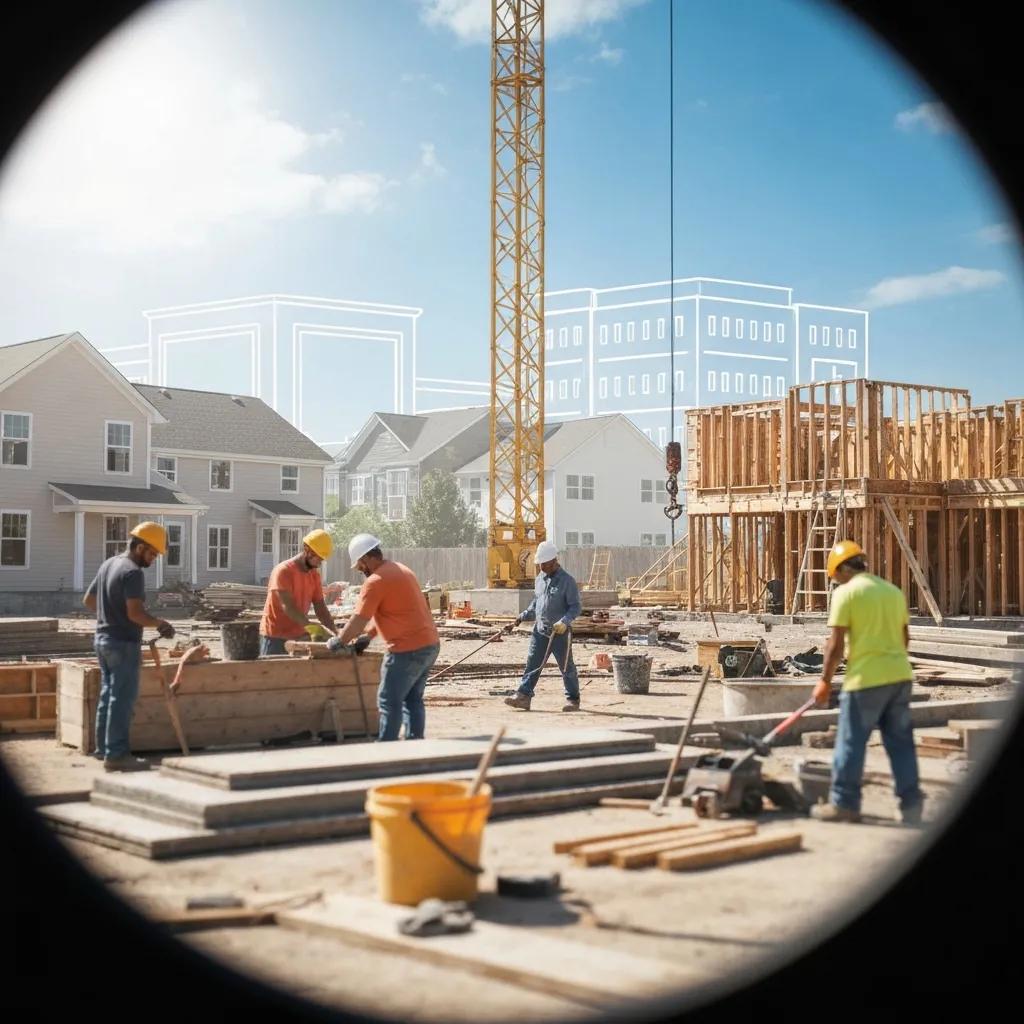
Hard money construction loans are short-term, asset-based loans that lean on property equity and project feasibility rather than full-file credit or tax return underwriting. Lenders convert the combined value of land plus planned improvements into a loan commitment that funds acquisition and milestone draws as the project advances. The primary benefits are faster approvals, stronger leverage in many cases, and underwriting flexibility that helps investors close deals conventional lenders can’t. Tradeoffs include higher interest rates, shorter terms, and draw-based funding that requires disciplined project management — all important to weigh before you choose a program. Next we’ll walk through how a ground-up construction loan moves from acquisition to occupancy so you can anticipate inspections, draws, and lender checkpoints.
How Do Hard Money Loans Work for Ground-Up Construction?
Ground-up hard money construction lending follows a predictable cycle: acquisition financing funds the land purchase as the initial tranche, you break ground and submit milestone draw requests, inspections verify progress, and remaining funds are released until the project is complete and stabilized. Underwriting focuses on the construction budget, contractor qualifications, permits, and a realistic timeline, with emphasis on contingency reserves and contractor holdbacks to limit risk. Draws tie to milestones like foundation, framing, and final finishes; inspections and lien releases are typically required before each disbursement. This draw-driven structure aligns capital with physical progress and reduces lender risk — knowing the inspection and verification process helps you avoid draw delays and budget overruns. Draw mechanics are similar across programs—fix & flip, acquisition, commercial—but expectations for LTV and term will differ.
What Are the Key Features of Fidelity Funding’s Hard Money Construction Loans?
Fidelity Funding’s hard money construction loans are built for investors who need fast, equity-focused financing for residential and commercial projects in California and similar markets. The program prioritizes speed — approvals in as little as 24 hours and closings often within 5–7 days — and flexible underwriting that emphasizes property equity and project budgets over full-credit files. Typical features include LTV up to roughly 70% (75% on a case-by-case basis), ARV considerations up to 85–90% for rehab scenarios, and rehab funding that can cover up to 100% of documented rehab budgets for qualifying fix & flip borrowers. Loan structures commonly offer interest-only payments and short-to-mid terms (for example, 12 to 36 months), giving borrowers room to sell or refinance into permanent financing. These operational choices reflect an equity-first approach for time-sensitive construction deals.
Which New Construction Loan Programs Are Available for Real Estate Investors?
New construction financing comes in several program types tailored to different investor goals — from quick flips to long-term rental conversions — and each balances leverage, term length, and underwriting differently. Core programs to consider are purchase/acquisition loans, fix & flip construction loans, bailouts/seconds for troubled projects, commercial new construction loans for multifamily or mixed-use, DSCR-focused refinance paths, and P&L-based approvals for self-employed borrowers. Picking the right program depends on your exit plan: sell, refinance to permanent financing, or hold as a rental. The comparison below helps you match a program to typical leverage, term, and use case so you can prioritize the options that fit your timeline and equity position.
| Program | Best For | Typical LTV or LTC | Typical Term |
|---|---|---|---|
| Purchase/Acquisition | Buying land or an SFR lot before build | Up to 70% LTV / 75% case-by-case | 12–36 months |
| Fix & Flip Construction | Renovation and resale powered by ARV | Up to 90% purchase + 100% rehab in some cases | 6–18 months |
| Bailouts / Seconds | Saving a stalled project or adding mezzanine capital | Varies; subordinate positions accepted | Short-term (months) |
| Commercial New Construction | Multifamily or mixed-use ground-up | LTC-focused; typically lower LTV than SFR | 12–60+ months |
| DSCR Refinance | Stabilize and convert to cash-flow loan | Based on NOI coverage, not just LTV | Long-term (permanent) |
| P&L Based Approvals | Self-employed borrowers without tax returns | Underwriting uses P&L and bank statements | Short to mid-term |
How Do Fix and Flip New Construction Loans Support Property Renovation?
Fix & flip construction loans cover acquisition and rehab by sizing the loan to after-repair value (ARV) and a documented rehab budget, often allowing investors to preserve personal capital. Rehab funds are released via draw schedules tied to milestones; funds pay contractor invoices, materials, and approved change orders once inspections confirm progress. Some lenders will consider high-leverage blends — for example, up to 90% of purchase plus full rehab funding through structured draw pools — when budgets, timelines, and contractor credentials are solid. Exit strategies for flips are sale on completion or refinance into a longer-term loan; the chosen exit influences appropriate leverage and contingency planning. Clear ARV sizing and disciplined draw management improve cash-on-cash returns and reduce timeline risk.
What Are Commercial New Construction Loans for Multifamily and Mixed-Use Projects?
Commercial new construction loans handle larger budgets and complexity for multifamily and mixed-use developments, where rents, entitlements, and project feasibility drive lending decisions. Underwriters review development budgets, market rent comps, zoning and entitlement status, and the borrower’s development track record when considering construction-to-perm or short-term hard money options. Commercial underwriting typically measures risk by loan-to-cost (LTC) and debt yield or DSCR rather than simple LTV, and lenders require detailed pro forma financials to support permanent financing assumptions. Larger projects also demand stronger contractor vetting, performance bonds or guarantees, and staged lender oversight to protect budgets and schedules. Those commercial requirements naturally lead to DSCR strategies for permanent financing once rent rolls begin.
How Do DSCR Loans Work for New Construction and Rental Property Financing?

DSCR loans measure a property’s ability to cover debt service using net operating income (NOI) as the primary metric, making them a common refinance path after construction stabilizes into rental income. DSCR — Debt Service Coverage Ratio — equals NOI divided by annual debt service; lenders set minimum DSCR thresholds to ensure a property can cover interest and principal. For new construction, investors usually complete the build with short-term construction financing, then refinance into a DSCR loan once occupancy and rent rolls validate projected NOI. Preparing for a DSCR refinance means forecasting stabilized rents, accounting for vacancy and operating expenses, and timing lease-up milestones so post-construction NOI meets lender thresholds. Below we define DSCR and provide a worked example to show how NOI maps to borrowing capacity.
What Is Debt Service Coverage Ratio and Why Is It Important?
Debt Service Coverage Ratio (DSCR) measures cash-flow sufficiency: DSCR = Net Operating Income / Annual Debt Service. It shows how many times a property’s income covers required loan payments. Lenders set DSCR targets by product and risk profile; for many investor loans acceptable values fall between 1.20x and 1.50x depending on conservatism and property type. When calculating NOI, underwriters deduct realistic vacancy, operating expenses, and reserves, and they may stress-test rent assumptions to model downside scenarios. DSCR matters because it ties property performance directly to loan size — a higher DSCR allows more conservative leverage, while a lower DSCR means you’ll need more equity or a different exit plan. We’ll follow with a practical example of a DSCR refinance after construction.
How Can Investors Use DSCR Loans for Long-Term New Construction Financing?
Investors commonly use a two-step path: fund construction with a short-term, draw-based loan, stabilize operations until target occupancy and rents are achieved, then refinance into a DSCR-based permanent loan that rewards stabilized cash flow. Refinance timing usually waits until the property hits required occupancy or lease-up milestones; lenders expect verified rent rolls, executed leases, and operating statements when assessing post-construction NOI. DSCR refinancing offers lower long-term rates tied to cash flow, predictable amortization, and the removal of short-term construction risk. Prepare by documenting operating expenses, projecting conservative rent growth, and completing capital expenditures before underwriting. These steps align with the documents lenders request during fast approvals.
What Are the Requirements and Application Process for New Construction Loans?
Successful construction loan submissions emphasize clear project budgets, vetted contractor bids, title and property documentation, and proof of borrower equity; many hard money lenders underwrite from those core materials instead of full-file tax returns. The fast-approval process typically follows: initial deal submission with basic property and budget info, rapid preliminary underwriting and conditional approval, documentation collection and escrow setup, then closing and funding with draw schedules in place. Underwriters focus on contingency reserves and contractor credentials; complete plans and permits speed review. The table below lists the documents that shorten review time and reduce draw risk.
| Document | Purpose | Example Acceptable Formats |
|---|---|---|
| Project budget & scope | Verifies cost and funding needs | Detailed spreadsheet with line-item costs |
| Contractor bid & license | Confirms cost and contractor capability | Signed contract and license copy |
| Property title report | Establishes lien position and ownership | Recent title or preliminary report |
| Proof of equity | Shows borrower skin in the game | Bank statements, asset statements |
| Permits and plans | Demonstrates entitlement progress | City-approved plans or permit applications |
What Documents Are Needed for Fast Construction Loan Approvals?
A focused checklist speeds approval and reduces underwriting questions: include a clear project budget, contractor bids with licenses, a current title report, proof of equity or down-payment funds, and any available permits or architectural plans. Lenders may also request insurance certificates and a permit schedule, plus identification and entity formation documents when the borrower uses an LLC. Present budgets as spreadsheets with contingency lines and a realistic milestone timeline so underwriters can map draws to project phases. Delivering a complete package reduces back-and-forth and positions you to accept conditional terms quickly, which helps move the loan to closing.
How Does Fidelity Funding Streamline the Construction Loan Application and Closing?
Fidelity Funding simplifies construction lending by prioritizing property and project equity, trimming document requirements versus full-file bank underwriting, and using a dedicated underwriting flow that produces conditional approvals quickly. Operational efficiencies include rapid deal review (approvals in as fast as 24 hours), clear draw schedules tied to contractor milestones, and closing workflows designed to fund within 5–7 days for time-sensitive acquisitions. By focusing on budgets, contractor vetting, and equity reserves rather than exhaustive borrower files, the lender reduces friction while protecting collateral. Borrowers who submit a complete package from the checklist above are best positioned to capitalize on these expedited timelines and close with minimal delay.
How Do Loan Terms Like LTV, LTC, and Draw Schedules Affect New Construction Financing?
Loan-to-value (LTV), loan-to-cost (LTC), and after-repair value (ARV) are core metrics that shape borrowing capacity and upfront equity needs. LTV compares loan amount to current property value, LTC compares loan to total project cost (land + hard and soft costs), and ARV sizing is common for rehab and flip scenarios where projected market value after completion determines loan size. Draw schedules allocate funds across construction stages to match physical progress; retainage and contingency holdbacks protect lenders but affect borrower cash flow. The table below summarizes how these metrics typically vary by program so investors can anticipate equity requirements and lender protections.
| Loan Type | LTV / LTC Typical | Term / Rate | Funding Speed |
|---|---|---|---|
| Hard Money Construction | Up to 70% LTV (75% case-by-case) | Short-term; higher rates | Fast (days to weeks) |
| Fix & Flip (ARV) | ARV up to 85–90%; purchase + rehab blends | 6–18 months; interest-only | Fast draws tied to milestones |
| Commercial Construction | LTC-focused; lower LTV | 12–60 months; variable rates | Moderate; detailed underwriting |
| DSCR Refinance | Based on NOI; DSCR thresholds | Long-term permanent | Slower; needs stabilization |
What Are Typical Loan-to-Value and Loan-to-Cost Ratios for New Construction?
Typical ratios depend on program and risk appetite: hard money construction loans often cap around 70% LTV, occasionally stretching to 75% on strong projects; fix & flip programs may rely on ARV metrics up to 85–90%; commercial projects favor LTC measures and usually offer lower LTVs because development risk is higher. Higher LTC or ARV-based lending lowers upfront equity needs but increases lender exposure and triggers stricter draw and inspection controls. Example: a small SFR build on a $100k lot with a $200k construction budget might see an 80% LTC limit, leaving the borrower to supply remaining equity or subordinate financing. Knowing how ratios affect cash needs informs your financing plan and exit strategy.
How Does a Construction Loan Draw Schedule Work for Ground-Up Projects?
A typical draw schedule divides funds across foundation, framing, roofing, rough-ins, and final finishes with percentage allocations that reflect projected costs; each draw is released after an inspection verifies completed work. Lenders commonly hold retainage until final completion to cover punch-list items, and they require lien releases and contractor invoices for each draw request. Draw delays usually stem from missing inspections, incomplete invoices, or unapproved change orders; proactive documentation and clear contractor communication prevent these delays. Matching draws to realistic timelines protects your cash flow and helps keep projects on schedule toward stabilization or sale.
What Are the Advantages of Choosing Fidelity Funding for New Construction Loans?
Fidelity Funding offers rapid decision-making, equity-first underwriting that reduces borrower documentation, and flexible products across purchase, fix & flip, commercial, DSCR, and P&L-based approvals. The firm emphasizes speed — conditional approvals can occur within 24 hours and closings often happen in 5–7 days — making it a practical partner for investors with time-sensitive acquisitions or distressed opportunities. Product features include strong leverage in appropriate cases (LTVs up to about 70% and ARV-based funding up to 85–90% for rehab scenarios), interest-only structures, and investor-friendly terms such as support for subordinate trust deed positions when needed. To move quickly, Fidelity Funding recommends assembling a concise project package with budget, contractor bid, title, and proof of equity to accelerate underwriting and close faster.
How Does Fidelity Funding Ensure Fast, Flexible Financing for Time-Sensitive Deals?
The lender combines an equity-first underwriting philosophy with a streamlined document checklist to enable quick conditional approvals and short closing timelines for deals that meet collateral and budget standards. Operational practices include dedicated underwriting touchpoints, pre-defined draw templates tied to common milestone inspections, and willingness to consider second or third trust deed positions for supplemental capital. These practices reduce approval friction without sacrificing protections, and they’re especially useful for bailouts, urgent acquisitions, or competitive purchase scenarios. Borrowers who prepare complete packages and respond promptly to draw documentation requests are best positioned to take advantage of expedited lending.
What Support and Resources Does Fidelity Funding Provide During the Loan Process?
Fidelity Funding provides hands-on support through underwriting contacts, clear document checklists, and managed draw schedules that simplify progress funding and inspections for builders and investors. Support typically includes guidance on contractor documentation, coordination of inspection requirements, and assistance mapping exit strategies — whether sale, DSCR refinance, or bridge-to-perm — so borrowers understand the milestones needed for refinancing. The lender also lays out next steps for borrowers ready to submit projects, including how to present budgets and contractor bids to minimize review time and reach funding quickly. Investors ready to move on time-sensitive opportunities can submit a full package or call the lending team to discuss eligibility and timelines.
- Submit your deal with a concise project package to get fast feedback.
- Prepare the essential documents (budget, contractor bid, title, proof of equity) to speed conditional approval.
- Call the team if timing is critical so underwriting can prioritize rapid review.
Frequently Asked Questions
What is the difference between hard money loans and traditional bank loans?
Hard money loans are asset-based and focus on the property’s value and project feasibility, which speeds approval. Traditional bank loans require extensive documentation — credit checks, tax returns, and full-file underwriting — which lengthens the process. Hard money loans usually carry higher rates and shorter terms, while bank loans offer lower rates and longer repayment periods. That makes hard money a reliable option for time-sensitive projects where speed matters.
How can I determine the right loan program for my construction project?
Choose a loan program based on your project goals, timeline, and exit strategy. Decide whether you’ll flip, hold as a rental, or pursue commercial development. Compare LTV and LTC ratios, typical terms, and funding speeds for each program. Talking with a lender about your timeline and cash flow needs will help identify which program aligns with your strategy.
What are the common pitfalls to avoid when applying for a construction loan?
Common pitfalls include incomplete project documentation, missing contractor bids, insufficient contingency reserves, and unrealistic timelines — all of which can delay funding or create cash flow problems. Not understanding the draw schedule is another frequent issue. To avoid these problems, submit a complete package, build budget contingencies, and keep clear communication with your lender and contractor throughout the project.
What factors influence the interest rates on construction loans?
Interest rates depend on borrower profile, property type and location, loan-to-value or loan-to-cost ratios, and overall project risk. Lenders evaluate feasibility, contractor qualifications, and the borrower’s experience. Broader economic conditions and market interest-rate trends also affect pricing.
How does the draw schedule impact my cash flow during construction?
The draw schedule dictates when funds are released and directly affects cash flow. Each draw links to project milestones and is released after inspection. Missing inspections, incomplete invoices, or unapproved change orders can create funding gaps, so plan milestones realistically and keep documentation current to avoid cash shortages.
What should I prepare for a successful loan application?
Prepare a clear project package: a detailed budget, contractor bids and licenses, proof of equity, a current title report, and any permits or plans. Organize documents for quick review and include a realistic timeline and contingency plan. A complete submission shortens underwriting and improves your chances of favorable terms.
Can I refinance a construction loan into a permanent mortgage?
Yes. Many investors refinance construction loans into permanent mortgages once the project is complete and stabilized. That often means moving to a DSCR loan that evaluates the property’s income potential. To refinance successfully, meet occupancy and rent-roll requirements and provide updated operating statements and lease documentation. Refinancing can secure better long-term rates tied to cash flow.
Conclusion
New construction financing gives investors the speed and flexibility to act on time-sensitive opportunities. With hard money and tailored program options, you can manage construction risk and move projects from ground-breaking to stabilization more efficiently. Understanding loan types, underwriting priorities, and document expectations lets you choose the right path for your goals. Ready to move forward? Explore our financing solutions or contact our team to discuss your project.