
Green Building Trends
Green Building Trends: Innovations and Investment Opportunities for Real Estate Investors
Green building refers to construction and renovation practices that cut energy, water, and material use while improving occupant health and resilience. For investors in 2025, these upgrades increasingly mean higher rents, quicker sales, and lower operating costs. This guide breaks down the leading green building trends for 2025, the materials and renewable systems that drive value, how certifications change marketability, and the practical financing paths investors use to move quickly on time‑sensitive deals. Many investors face tight timelines and limited capital when pursuing efficiency retrofits or net‑zero projects; we outline mechanisms, expected benefits, and clear next steps so you can evaluate opportunities and act fast. Expect concise trend summaries, material comparisons, renewable-integration guidance, certification impacts, and a financing section that compares loan options, timelines, and required documents — all focused on converting efficiency and sustainability into stronger NOI and resale premiums, and on how equity‑focused, fast loans help capture that upside.
What Are the Top Green Building Trends Shaping 2025?
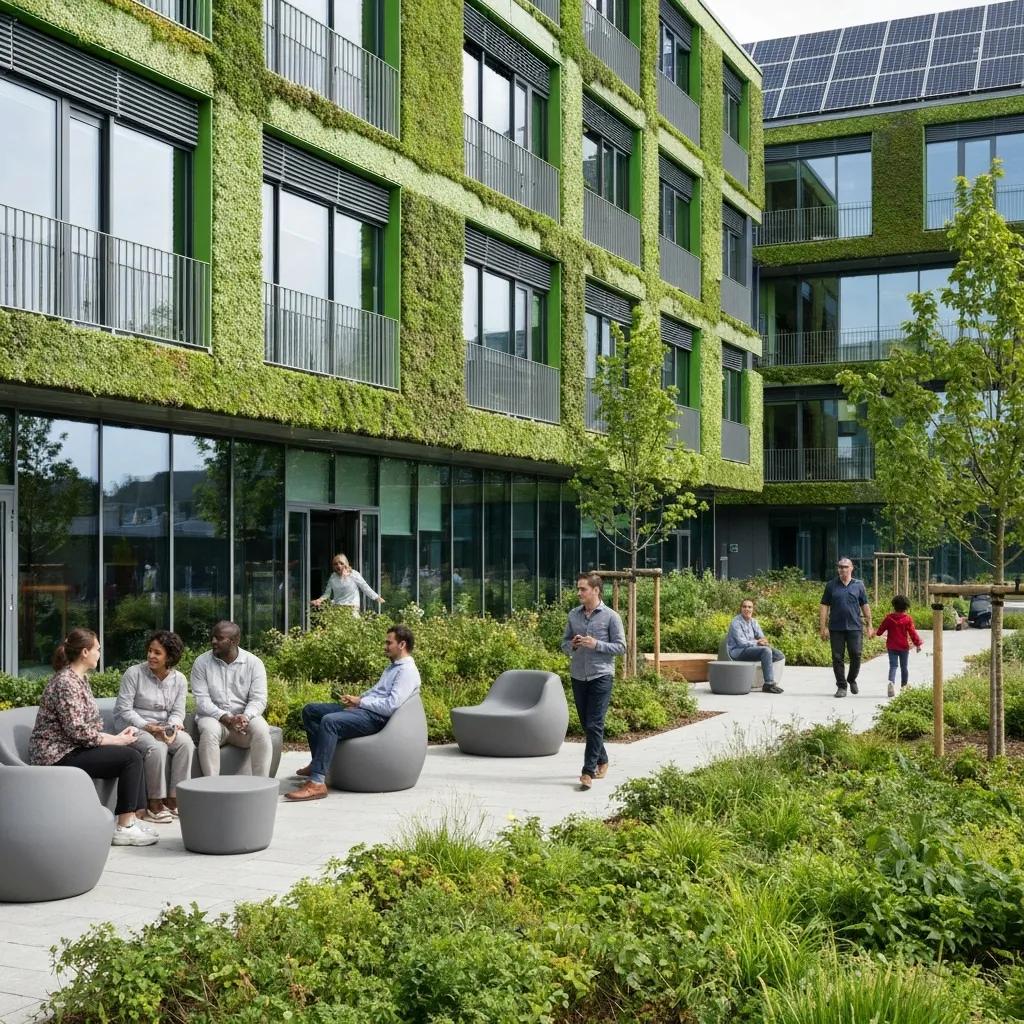
In 2025, green building centers on net‑zero energy, circular-material sourcing, smart controls, biophilic design, and water resilience — each a driver of asset value and tenant demand. Some trends lower operating costs directly; others meet tenant preferences that improve leasing and retention. Investors should prioritize retrofits that boost near‑term NOI while positioning assets for longer‑term premiums tied to performance or certification. Below are the highest‑impact trends with one‑sentence takeaways to help prioritize capital and rehab budgets.
Top green building trends investors should watch in 2025:
- Net-zero energy retrofits: Cut utility expenses and hedge against rising energy costs to improve NOI and marketability.
- Sustainable and low-carbon materials: Reduce embodied carbon and appeal to ESG buyers, sometimes simplifying permitting.
- Smart building and IoT energy management: Deliver measurable energy reductions and give landlords tighter cost control.
- Biophilic and healthy design: Improve tenant satisfaction and retention with better air quality and daylighting.
- Water conservation and resilience: Protect cash flow in drought‑prone or regulation‑sensitive markets.
- Circular construction and modular methods: Shorten schedules and reduce waste, lowering rehab timelines and labor risk.
These trends guide material and systems choices that affect financing, permitting, and projected returns. Understanding interactions — for example, pairing rooftop solar with battery storage — helps investors decide which upgrades to fund first.
What Are Net Zero Energy Buildings and Their Benefits?
Net zero energy buildings (NZEBs) produce as much energy on‑site as they consume over a year, usually by combining deep efficiency improvements with on‑site renewables and storage. The pathway is simple: shrink demand with insulation, airtightness, and efficient HVAC, then offset remaining load with renewables and batteries. For investors, NZEB retrofits can lower operating expenses, qualify for incentives, and create marketing advantages that support higher sale prices. These projects often require higher upfront capital but deliver predictable cash‑flow improvements; staged financing or equity overlays can accelerate implementation while protecting returns.
NZEB outcomes depend on integrated design and reliable monitoring to verify energy balance and savings. Documented performance supports higher valuations — which brings us to how construction practices and materials are evolving to enable these results.
How Are Sustainable Construction Practices Evolving?
Sustainable construction is shifting toward prefabrication, mass timber, low‑carbon concrete, and circular sourcing to reduce embodied carbon and schedule risk, while modular methods speed timelines and cut on‑site waste. These approaches matter because they lower lifecycle emissions and make costs and schedules more predictable — both critical for investor underwriting. Mass timber can reduce site labor and shorten framing time; modular bathroom pods move critical‑path work into factory settings to improve quality and timing. Faster stabilization of cash flows after rehab is especially valuable for time‑sensitive deals.
Adopting these methods requires coordination with contractors and lenders to align risk profiles and draw schedules. The next section reviews the materials that enable sustainable buildings and how they affect budgets and financing.
Which Eco-Friendly Building Materials Are Driving Sustainable Construction?
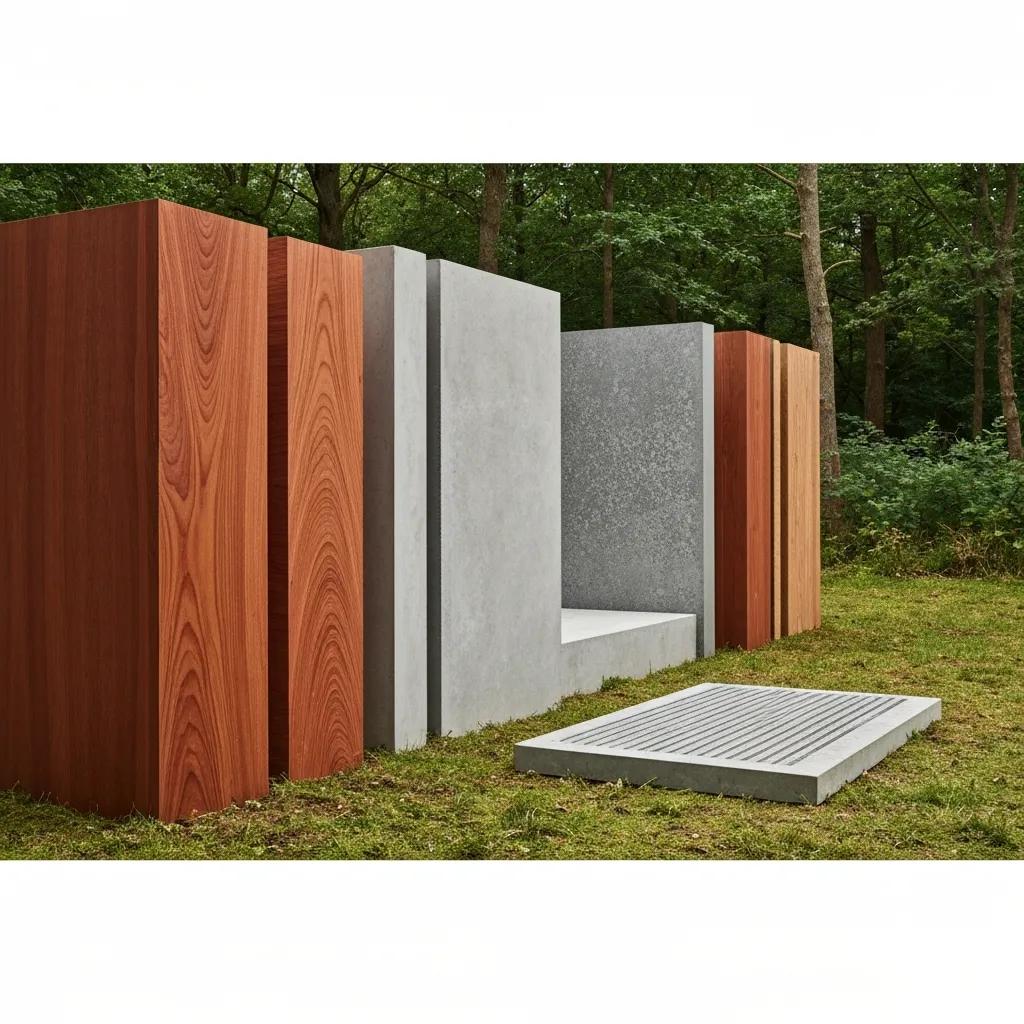
Material selection is central to sustainable projects. Choices like mass timber, low‑carbon concrete, recycled‑content steel, and high‑performance insulation change embodied emissions and long‑term maintenance demands. Put simply: choosing lower lifecycle‑carbon or longer‑lasting materials reduces total cost of ownership and appeals to environmentally conscious tenants and buyers. Investors should weigh upfront costs against expected operating savings, durability, and resale premiums when specifying materials for rehab or new construction. The table below compares common materials by environmental benefit, cost impact, and typical uses to help prioritize budget decisions and financing.
Key sustainable materials and why they matter:
| Material | Environmental benefit | Cost impact | Typical use |
|---|---|---|---|
| Mass timber | Lower embodied carbon than steel/concrete; stores carbon | Moderate to high upfront; can reduce labor costs | Mid‑rise framing, exposed interior finishes |
| Low-carbon concrete | Reduced cement content lowers CO2 footprint | Small premium depending on mix and availability | Foundations, slabs, structural elements |
| Recycled-content steel | Reduces virgin resource use and embodied carbon | Often comparable to standard steel in many markets | Structural framing, reinforcements |
| High-performance insulation | Cuts heating/cooling energy use and peak loads | Modest incremental cost with quick payback | Walls, roofs, thermal envelope |
Material choices also affect permitting, skilled‑labor availability, and rehab timelines — factors that influence financing terms and lender appetite for specific loans. The next subsection clarifies which materials deliver the best cost‑to‑benefit trade‑offs and where investors recoup costs fastest.
What Types of Sustainable Materials Are Most Effective?
The most effective materials reduce operating loads or extend service life — think high‑performance insulation, efficient windows, and durable exterior cladding. These items directly lower utility bills or defer replacement costs, producing measurable NOI gains that support financing. Upgraded envelope elements (insulation and windows) often pay back in under five years in many climates. Investors should prioritize envelope and systems upgrades early in a rehab to lower ongoing loads and reduce the size and cost of required renewables.
Material choices should match project goals — fast cash‑flow improvement, lower embodied carbon, or certification positioning — since each objective favors a different material mix and financing approach.
How Do Sustainable Materials Impact Environmental and Financial Outcomes?
Sustainable materials reduce lifecycle emissions and frequently improve long‑term maintenance profiles, which improves environmental metrics and stabilizes operating costs. Lower embodied carbon shrinks a property’s total footprint, while durable materials reduce future capital expenditures and support higher NOI. Financially, these upgrades make properties more attractive to tenants and buyers seeking dependable, lower‑cost assets, which can compress cap rates and raise valuations. Documented material improvements also contribute to certification credits and may unlock incentives that boost returns.
Material‑driven savings should be quantified in underwriting — estimated energy reductions, maintenance deferrals, and potential resale premiums — to decide which upgrades suit the investor’s hold period and exit plan. This material‑first approach naturally leads to renewable energy integration as the next lever for operational savings.
How Is Renewable Energy Integration Transforming Green Buildings?
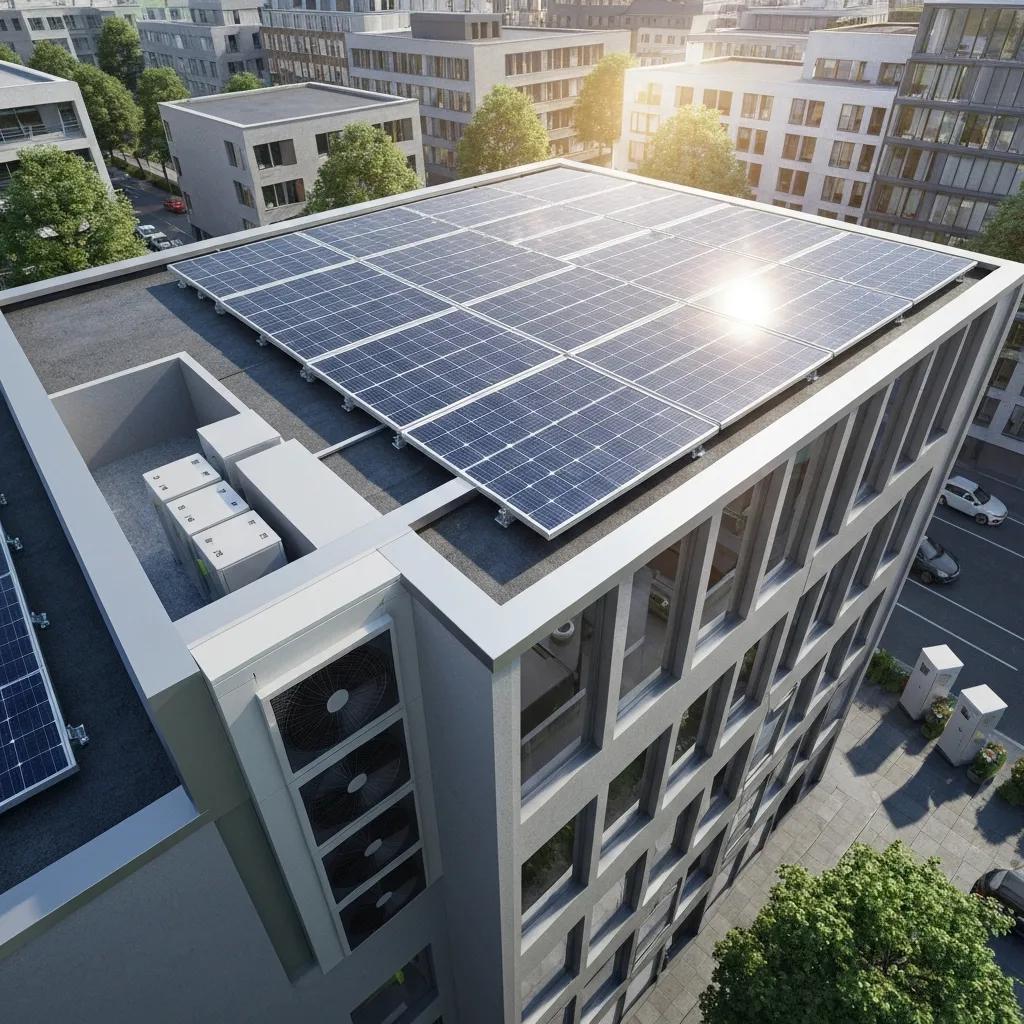
Integrating renewables — mainly rooftop and ground‑mounted solar, heat pumps, geothermal, and battery storage — is changing building economics by turning some variable utility costs into owned generation and stored capacity. The formula is demand reduction plus offset: efficiency cuts baseline load, renewables supply predictable energy, and storage shifts generation to meet peaks. For investors, this reduces utility bills, adds resilience during outages, and often increases tenant appeal; documented generation and storage support valuation uplifts through verified operating‑cost reductions. Below we list common renewable technologies and explain how they translate into measurable financial improvements.
Common renewable and efficiency technologies in buildings:
- Solar photovoltaic (PV) arrays for on‑site generation and long‑term bill reduction.
- Battery energy storage to time‑shift solar output and lower demand charges.
- Heat pumps and geothermal systems to replace fossil‑fuel HVAC and cut heating/cooling loads.
- Building‑integrated photovoltaics and façade systems for new construction that blend aesthetics with generation.
These systems are often combined — for example, rooftop PV plus batteries and heat pump conversions — to maximize savings and resilience, which in turn affect financing structure and lender willingness to underwrite green projects.
What Renewable Energy Technologies Are Common in Green Buildings?
PV solar, battery storage, heat pumps, and ground‑source geothermal are the most common technologies in commercial and residential retrofits. Each offers distinct benefits depending on site constraints: PV offsets electricity consumption, batteries enable peak shaving and backup power, heat pumps cut HVAC energy by moving heat rather than generating it, and geothermal provides highly efficient heating and cooling where geology allows. Typical placements vary: rooftop PV and batteries suit multifamily and commercial roofs, while heat pumps are broadly effective across climates for both multifamily and single‑family properties.
Choosing the right mix depends on load profile, roof area, utility rates, and local incentives — all of which also influence financing terms and payback timelines for underwriting.
How Does Renewable Energy Improve Building Efficiency and Value?
Renewables lower net energy use and stabilize long‑term operating costs, improving NOI and property value when savings are documented and verifiable. The mechanism is measurable: lower utility bills raise NOI and reduce income volatility, making properties more attractive to buyers and lenders. Payback and IRR calculations often look favorable once incentives, tax credits, or competitive financing are included. Properties with renewables can also command higher rents or faster lease‑up from tenants who value lower costs and sustainability.
Performance data strengthens lender underwriting and marketing claims, which points to the role of formal certifications in investment outcomes.
What Role Do Green Building Certifications Play in Real Estate Investment?
Certifications like LEED, BREEAM, and NGBS give third‑party validation of performance or sustainable practices and influence marketability, tenant demand, and occasionally regulatory treatment. Certifications act as trust signals: they lower information asymmetry by documenting energy performance, material selections, and health features, which can translate into higher occupancy, rent premiums, or valuation uplifts. Investors should weigh certification costs and timelines against expected premiums and operational savings; in many cases, partial certification or performance‑based verification offers a cost‑effective middle ground. Below are key certification impacts and a note on financing relevance.
Certifications affect buyer and tenant perceptions and may unlock incentives or tax benefits in some areas. The documentation for certification — energy models, commissioning reports, and post‑occupancy data — also supports lender underwriting. Investors evaluating certification should compare incremental costs to likely rent or cap‑rate benefits.
How Do Certifications Affect Property Value and Marketability?
Certifications improve marketability by signaling lower operating‑cost risk and healthier indoor environments, which attract creditworthy tenants and can lead to faster sales or price premiums. Studies consistently show certified properties often achieve higher rents or lower vacancy in competitive markets, because tenants value predictable costs and sustainability credentials. Premiums vary by market and certification level, but the reliable effect is reduced marketing friction and access to ESG‑focused capital. Investors should assess whether expected rental or sale premiums justify certification costs and any operational changes required.
Understanding certification steps clarifies what documentation and staging are necessary, which in turn shapes how financing should cover those costs.
What Are the Requirements and Processes for Obtaining Certifications?
Certification typically involves an initial assessment, documented design and material choices, commissioning, monitoring system installation, and verification audits; timelines range from several months to more than a year depending on scope. Common requirements include energy modeling, material specifications, commissioning reports, and post‑occupancy performance data, and projects must budget for consulting, documentation, and occasional incremental construction costs. Financing can include certification expenses within rehab or development loans, and lenders that underwrite performance‑based outcomes can speed adoption. Investors planning certification should build verification milestones into schedules and draw plans to avoid delays at stabilization.
For certified projects, flexible financing that accommodates staged spending and verification often helps ensure timely completion — which brings us to practical financing options for green and time‑sensitive deals.
How Can Real Estate Investors Finance Green Building Projects Efficiently?
Efficient green financing combines the right product, speed to close, and documentation matched to project risk; common tools include purchase loans, fix‑and‑flip hard money, bailout/bridge loans, second/third trust deeds, commercial loans, DSCR products, and P&L‑based approvals. For time‑sensitive deals, equity‑focused lending — where property value and rehab scope drive approval rather than credit score alone — often delivers faster closes and higher leverage. Typical program mechanics: fast approvals for hard‑money style products (often 5–7 days), purchase plus rehab financing with high LTV (up to 90% for fix‑and‑flip), cash‑out refinances around 70–75% LTV, a range of product types (purchase, refinance, rehab, bridge, foreclosure bailout), acceptance of many property types (residential, multifamily, commercial, land), second and third trust‑deed positions, local expertise in California markets, and nationwide financing for loans $1M+. Required documents are straightforward: property details and photos, a rehab scope with green line items, proof of equity, contractor bids, and title reports — preparing these in advance speeds approvals.
The Entity‑Attribute‑Value comparison below helps match loan types to project needs and timelines.
| Loan Type | Typical LTV / Term | Speed to Close |
|---|---|---|
| Fix & Flip (purchase + rehab) | Up to 90% purchase + rehab funding; short terms (6–18 months) | Often 5–7 days |
| Purchase loan (investment) | Variable LTV, depends on equity and property type | 1–3 weeks typical |
| Cash-out refinance | Up to ~70–75% LTV (example) | 1–3 weeks |
| Commercial / DSCR loans | Term length and DSCR underwriting; lower LTVs vs. hard money | 2–4+ weeks |
| Bailout / bridge loans | Short‑term, equity‑focused, may accept 2nd/3rd trust deeds | 5–14 days depending on documentation |
Assemble a concise submission packet — property summary, rehab budget with green item breakdowns, pro forma, contractor schedule, and title — and present it to lenders that prioritize property equity over credit scores to reduce friction. Fidelity Funding, based in Glendale, California, focuses on clear loan terms and fast funding for real estate investors, offering programs that align with the practical needs above and accept multiple property types and trust‑deed positions.
What Hard Money Loan Options Support Green Fix and Flip Projects?
Hard money and fix‑and‑flip loans fund purchase plus rehab costs, enabling investors to install energy‑efficient upgrades that raise resale value and rental income. These products often allow up to 90% financing on purchase with rehab draws that cover efficiency measures, and short‑term interest‑only terms built for quick turnarounds. Speed is a key advantage — many equity‑focused lenders can close in roughly 5–7 business days when the submission packet is complete — letting investors secure a deal and begin retrofits without long delays. Typical required documents include the purchase contract, a detailed rehab scope with green upgrades, contractor bids, and evidence of equity.
Structure the rehab to prioritize envelope and systems upgrades first to reduce downstream energy needs and document projected savings to support resale pricing or refinance.
How Do Commercial Loans Facilitate Eco-Friendly Property Developments?
Commercial loans for green developments are underwritten on DSCR, collateral value, and project feasibility. These loans usually have longer terms and require more documentation than hard‑money products but suit larger‑scale builds. Lenders evaluate the property’s income‑generating ability and collateral position, and will include green capital expenditures when supported by pro forma performance. Commercial lenders cover a range of property types — multifamily, office, retail, industrial — and can align amortization and term to development and stabilization timelines. Pairing commercial loans with incentives or performance guarantees can lower effective costs and improve lender confidence in energy‑related paybacks.
For scaled developments, combining commercial financing with targeted incentives or performance contracts often improves overall project economics.
What Are the Financial Benefits and Market Trends for Investing in Green Buildings?
Green buildings deliver measurable financial benefits: lower operating costs, rent premiums, higher occupancy, and often faster sales. Those results come from direct expense reductions and stronger tenant demand for healthy, efficient spaces. The mechanism is NOI improvement — energy and water savings increase cash flow, while market premiums and reduced vacancy expand net income — which can raise valuations when cap rates are steady. In 2025, tenant preference for sustainability is growing, investors are more willing to pay for certified or verified performance, and lenders increasingly consider utility‑cost‑based underwriting. The table below summarizes typical benefits and example metrics to help assess ROI for green investments.
Quantified benefits and market indicators:
| Benefit | Metric | Example value |
|---|---|---|
| Energy cost reduction | Annual utility savings | 10–30% reduction typical after deep retrofit |
| Rental uplift | Rent premium | 3–10% higher rents for certified/efficient units |
| Occupancy improvement | Vacancy reduction | Faster lease‑up and higher retention rates |
| Valuation impact | Cap‑rate compression / sale premium | Sale premiums vary; documented performance increases buyer interest |
These metrics help justify capital allocation for green upgrades. Pairing fast, equity‑focused loans with clear pro formas lets investors capture benefits quickly. If you’re ready to act, assemble a full deal packet, call a lender, or complete an online form with project details to secure rapid funding and begin implementation.
How Do Green Buildings Increase Property Value and Rental Income?
Green features raise value and rents by cutting operating expenses and aligning with tenant demand for efficiency and health — supporting higher rents and lower vacancy. The impact is direct (lower energy/water bills) and indirect (better tenant satisfaction and market positioning). Evidence shows certified or performance‑documented assets often command rent premiums and sell faster. Investors should include expected rent uplift in pro formas and present that case to lenders so financing reflects the full economic benefit of upgrades.
Installing energy and comfort upgrades early in rehab helps realize premiums at stabilization and supports refinancing or sale strategies.
What Operational Cost Savings Can Investors Expect from Green Buildings?
Operational savings typically show up as lower energy and water bills, reduced HVAC maintenance, and sometimes insurance or tax advantages. Cumulative savings frequently pay back upgrades within several years depending on scope and incentives. Deep envelope and systems upgrades commonly yield 10–30% energy reductions, and water measures further reduce utility spend. These savings increase NOI and can improve valuation through lower expense ratios and potential cap‑rate compression. Model conservative savings and include sensitivity analyses to account for energy‑price volatility.
Documenting post‑retrofit performance with monitoring systems strengthens claims to lenders and buyers, turning operational savings into realized valuation gains.
Frequently Asked Questions
What are the key financial incentives for investing in green buildings?
Investing in green buildings can unlock tax credits, grants, and rebates for energy upgrades — incentives that reduce upfront costs and improve ROI. Local and federal programs often support efficient equipment, solar, and electrification. Certified properties may also qualify for lower insurance rates or preferential financing. Investors should map available incentives for each market to maximize project economics.
How can investors assess the long-term value of green building investments?
Assess long‑term value by modeling projected cash flows that include energy savings, expected rent premiums, and lower vacancy. Perform market analysis to gauge tenant demand for sustainable units, and factor in certification impacts on resale. Evaluate the durability of selected materials, as longer service life reduces future capital needs and improves total returns.
What role does tenant demand play in the success of green buildings?
Tenant demand is central. Renters and buyers increasingly prioritize health, lower utility costs, and sustainable features. Properties that deliver better indoor air quality, lower operating costs, and visible sustainability credentials typically see stronger occupancy and retention, which supports higher net cash flow. Align upgrades with target tenant preferences to capture that demand.
How do green building trends impact construction timelines?
Trends like modular construction and off‑site prefabrication can shorten on‑site time and reduce labor risk, while some sustainable strategies require more upfront coordination and documentation, which can extend preconstruction planning. Balancing factory‑built elements with a clear permitting and logistics plan usually speeds overall delivery. Factor these trade‑offs into schedule and financing assumptions.
What are the challenges associated with financing green building projects?
Challenges include higher upfront costs for some sustainable materials and technologies and limited lender familiarity with green financing in certain markets. Demonstrating quantifiable savings to traditional lenders can be difficult. To overcome this, work with lenders experienced in green loans, prepare robust pro formas that include incentive assumptions, and provide clear documentation of projected performance.
How can investors ensure compliance with green building regulations?
Stay current on local, state, and federal sustainability codes and incentives. Engage architects, contractors, and consultants with green‑building experience, and plan for any required documentation or inspections. Pursuing recognized certifications (LEED, NGBS, etc.) or performance verification helps ensure compliance and creates a clear audit trail.
What future trends should investors watch in the green building sector?
Watch advances in renewable tech, wider adoption of AI for energy optimization, and greater emphasis on health and wellness features. The circular economy — materials reuse and waste reduction — is gaining traction, as are financing products tied to verified performance. Staying informed helps investors identify opportunities and adapt strategies as market and regulatory expectations evolve.
Conclusion
Green building investments deliver measurable advantages: lower operating costs, stronger tenant demand, and higher property values. By understanding current trends, materials, and financing options, investors can move decisively to capture these gains. If you’re ready to expand a greener portfolio, explore our financing resources and contact lenders who can close quickly and structure funding around performance milestones. Start your green building strategy today and position your assets for sustainable returns.