


Hard Money Appraisal Requirements
Hard Money Appraisal Requirements: Your Guide to Fast, Flexible Loan Approval with Fidelity Funding
Hard money appraisals establish a quick, lender-focused value for a property so private lenders can make fast, collateral-driven decisions and close time-sensitive deals. This guide breaks down what a hard money appraisal is, how it differs from a conventional appraisal, which valuation methods lenders accept, and the core calculations—like LTV and ARV—that determine loan size. Whether you’re an investor, broker, or owner, you’ll learn which appraisal approaches fit purchase, fix-and-flip, DSCR, commercial, and bailout situations, how those choices affect timing and risk, and what documentation speeds underwriting. We use terms such as hard money appraisal, broker price opinion, desktop review, ARV appraisal, and private money appraisal to show how valuation feeds into fast, flexible funding decisions and predictable closings.
What Is a Hard Money Appraisal and Why Is It Required?
A hard money appraisal is a valuation done for the lender with speed and collateral protection as the priority. It focuses on comparable sales, observable property condition, and—for flips—the after-repair value (ARV), instead of relying primarily on borrower credit. Lenders use these appraisals to set Loan-to-Value limits, size rehab reserves, and price loans to reflect collateral risk. The appraisal is a core input to underwriting and closing schedules. Below we compare this approach with conventional mortgage appraisals and explain how the appraisal outcome directly influences loan size and borrower costs.
How Does a Hard Money Appraisal Differ from Traditional Appraisals?
Hard money appraisals differ from conventional mortgage appraisals in purpose, speed, and the data emphasized. Traditional appraisals aim to establish long-term market value and follow investor or agency standards; hard money appraisals prioritize collateral adequacy and quick, verifiable comps to meet compressed timelines. Alternative methods—desktop reviews or broker price opinions (BPOs)—are often acceptable when speed matters, trading some depth for turnaround time. That trade-off can shorten underwriting from weeks to days. Knowing these differences helps you anticipate the valuation method you’ll see and which documents to prioritize.
Why Are Hard Money Appraisals Essential for Loan Approval and Risk Assessment?
Hard money appraisals quantify the collateral that secures the loan, so they directly determine loan amount, pricing, and required protections. The appraisal links the loan (numerator) to the property value (denominator)—either as-is or ARV—setting LTV or ARV-based limits and influencing rate, fees, and reserves. Accurate, well-documented valuations reduce potential loss severity on distressed or renovated assets and guide decisions about escrows, rehab holdbacks, or secondary valuations. Providing accurate property data upfront improves approval odds and can speed underwriting.
What Types of Hard Money Appraisals Does Fidelity Funding Use?

There are several valuation methods, and choosing the right one balances speed, cost, and reliability for the deal. Fidelity Funding uses desktop reviews, site inspections, broker price opinions (BPOs), full appraisals, and in-house collateral analyses depending on loan size, property complexity, and borrower profile. We support borrowers who need immediate solutions for time-sensitive transactions. The table below summarizes typical uses and trade-offs so you can match your timeline and documentation to the likely valuation method.
Introductory comparison of common hard money appraisal methods:
| Appraisal Method | Typical Use Case | Speed (days) | Pros | Cons |
|---|---|---|---|---|
| Desktop Review | Small loans, repeat borrowers, stable comps | 1–3 days | Fast, low cost, works when comps are clear | Limited on-site verification and condition detail |
| Site Inspection | Unique properties, condition-sensitive deals | 2–5 days | Confirms condition, supports accurate rehab estimates | Slower and more costly than desktop |
| Broker Price Opinion (BPO) | Short-term bridge loans, experienced investors | 2–4 days | Quick, market-informed estimate | Less standardized; accuracy can vary |
| Full Appraisal | Large loans, commercial, complex markets | 7–14+ days | Most thorough and defensible | Longest timeline and highest cost |
| In-house Valuation | Pre-underwriting for small/clear-equity deals | 1–5 days | Fast internal decisions; can waive external appraisal | Limited by internal data and scope |
When Are Desktop Reviews and Site Inspections Used in Hard Money Valuations?
We choose desktop reviews when property data and comps are clear, loan sizes are modest, or the borrower has an established track record. A desktop review pulls public records, current listings, and recent comps for a quick value estimate—best in liquid neighborhoods. Site inspections are necessary when condition materially affects value or rehab scope needs on-site verification (for example, properties with deferred maintenance or complex renovations). Expect desktop timelines of 24–72 hours; inspections typically add a few days. Supplying current photos and a concise scope of work speeds both methods and reduces follow-up requests.
- Desktop reviews are efficient for quick decisions in stable markets.
- Site inspections validate condition and rehab needs for accurate ARV calculations.
- Choose the method based on loan size, property complexity, and market liquidity.
How Do Broker Price Opinions Expedite Hard Money Loan Approvals?
Broker price opinions (BPOs) are market-based estimates from local brokers or agents and turn around quickly—usually within 48–72 hours. They combine neighborhood knowledge with recent sales and listings to create a defensible quick value. Lenders accept BPOs for short-term bridge loans, for experienced investors who provide corroborating documentation, and for lower-risk properties where condition isn’t in question. Because BPOs are less formal, lenders often apply more conservative LTVs when relying on them, so plan loan sizing accordingly.
- BPOs work well for quick bridge loans and investor-grade deals.
- Typical turnaround is 2–3 days and cost is lower than a full appraisal.
- Lenders commonly limit LTVs when using BPOs to offset valuation uncertainty.
When Is a Full Appraisal Required for Hard Money Loans?
A full appraisal is usually required for large loans, commercial assets, or when external investors or secondary-market standards demand formal reporting. Triggers include loan amounts above internal thresholds, unique property types with few comparables, or transactions involving investor pools that expect agency-style reports. Full appraisals strengthen underwriting defensibility but add time and cost; plan for a week or more to schedule, inspect, and receive the report. Compiling title info, recent comps, and a clear scope of work before ordering the appraisal reduces delays.
- Full appraisals are standard for complex or high-dollar loans.
- Expect longer timelines and more documentation than alternative methods.
- Thorough pre-appraisal files reduce rounds of questions and speed delivery.
How Does Fidelity Funding’s In-House Valuation Process Streamline Appraisals?
Fidelity Funding uses in-house underwriting and collateral review to shorten decision timelines for eligible deals and reduce reliance on external appraisers. In-house desktop analyses or internal valuations can often be completed in days, letting underwriting approve or set conditions faster than external cycles. This combines direct access to private capital with internal expertise, prioritizing equity and collateral clarity over lengthy credit reviews—helpful for investors needing quick closes. When borrower-supplied documentation is solid, in-house valuations frequently accelerate funding timelines and clarify when an external appraisal isn’t required.
- In-house valuations speed decisioning through direct underwriting review.
- They work best when comps and condition are readily verifiable.
- Clear internal criteria for waivers or external appraisals reduce surprises at closing.
Under What Conditions Can Fidelity Funding Waive a Full Appraisal?
Appraisal waivers are granted selectively when risk and collateral clarity are favorable. Typical conditions include repeat borrowers with strong performance, small loan sizes, substantial borrower equity, or properties with abundant, consistent comps. Waivers are unlikely for commercial properties, complex renovations, or distressed assets where condition or title issues affect value. Even with a waiver, lenders usually require basic documentation—photos, a recent comps list, and proof of rehab budget—to validate assumptions. Present clear equity and strong documentation to improve your chance of an in-house waiver.
- Waivers favor repeat borrowers, small loans, and high-equity positions.
- Distressed or complex properties typically require formal valuation.
- Supplying a concise data packet improves the likelihood of an in-house waiver decision.
What Are the Appraisal Requirements for Different Hard Money Loan Programs?
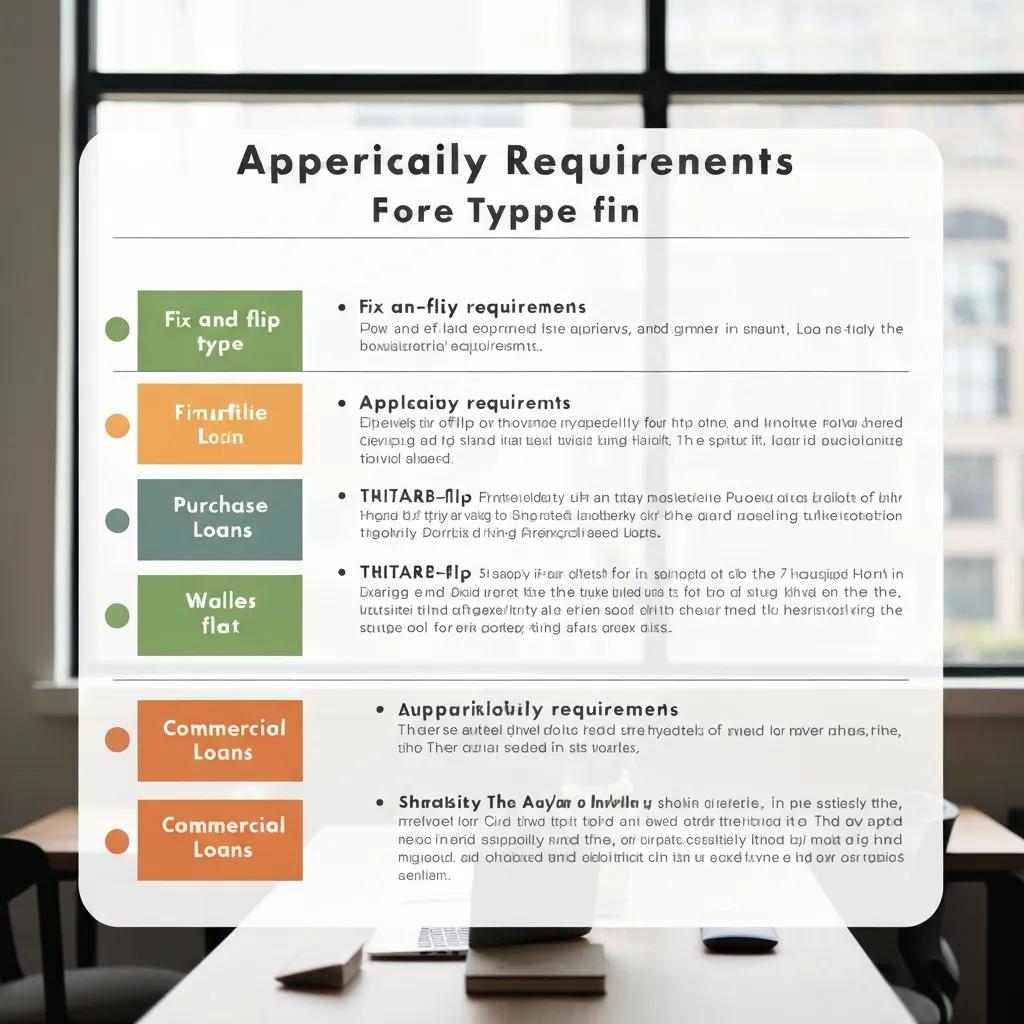
Appraisal requirements vary by program because valuation purpose and risk differ between purchases, fix-and-flips, DSCR/rental, commercial, and bailout loans. This section lays out program-specific valuation needs, common LTV/ARV thresholds, and the documents we expect so you can pick the right valuation path and prepare the right materials. Emphasis is placed on timelines, required documents, and immediate next steps so you see the link between appraisal output and program eligibility.
Program-specific valuation quick-reference:
| Loan Program | Required Valuation(s) | Typical Max LTV/ARV | Typical Documents Needed |
|---|---|---|---|
| Fix & Flip | As-Is + ARV (may require contractor bids) | ARV up to 85–90% for qualified deals | Scope of work, contractor bids, before/after comps |
| Purchase | As-Is valuation (desktop/BPO or full) | LTV up to 70% (75% case-by-case) | Purchase agreement, title info, property photos |
| Refinance / Cash-Out | As-Is or appraisal depending on loan size | LTV varies by program and equity | Existing loan docs, recent appraisal, financials |
| DSCR / Rental | As-Is appraisal + rent roll or CDA | Underwriting based on DSCR rather than strict LTV | Rent roll, P&L, leases, market rent comps |
| Commercial Hard Money | Full appraisal often required | LTV lower, case-by-case | Income statements, market studies, leases |
| Foreclosure / Bailout | Rapid valuation often via BPO or inspection | Conservative LTV, case-specific | Title, court docs, lien searches, condition photos |
What Are the Fix and Flip Appraisal Requirements Including As-Is and After-Repair Value?
Fix-and-flip loans typically require both as-is value and after-repair value (ARV). ARV is supported by comparable after-repair sales and a verified scope of work; lenders will want contractor bids to confirm rehab costs and timelines. These inputs determine loan proceeds and whether full rehab funding is justified. ARV-based limits commonly reach 85–90% for qualified projects; lending decisions depend on realistic rehab budgets and a defensible ARV. Supplying clear before photos, contractor estimates, and neighborhood comps speeds ARV assessment and strengthens the file.
- Provide both as-is and ARV evidence with contractor bids.
- Rehab budgets and timelines must be verifiable to qualify for higher ARV-based advances.
- A defensible ARV reduces lender conservatism and speeds approval.
How Are Commercial Hard Money Properties Appraised and What Are the Considerations?
Commercial hard money valuations often use the income approach, cost approach, or a hybrid depending on property use, lease structure, and market liquidity. Appraisers evaluate net operating income, cap rates, and market rents for income-producing assets; complex assets may require third-party specialists. Commercial appraisals generally take longer and need more documentation—leases, rent rolls, tenant schedules, and market studies—so prepare income data and comparables early to avoid delays.
- Income-producing commercial properties need rent and lease data.
- Third-party specialists may be required for complex valuation techniques.
- Expect longer appraisal timelines and more documentation than residential deals.
What Are the DSCR Loan Appraisal Guidelines and Why Are Dual Appraisals Needed?
DSCR loans focus on a property’s income capacity, so appraisals typically pair an as-is valuation with income validation—such as a collateral desktop analysis or rent-capacity report. Dual valuations give underwriters both market value and an income-based view used to calculate Debt Service Coverage Ratios, confirming the property can cover debt service. Lenders will request rent rolls, leases, and P&L statements to corroborate income, and they may constrain LTVs where rent comps are uncertain. Dual valuations increase investor confidence and clarify how income performance affects loan sizing.
- DSCR underwriting needs both value and income validation.
- Rent rolls and leases are essential to verify cash flow assumptions.
- Dual appraisals provide a fuller picture of debt capacity and investor comfort.
What Are the Appraisal Requirements for Purchase and Refinance Hard Money Loans?
Purchase loans need a reliable as-is valuation to set initial advances; refinance loans often require up-to-date appraisals to reflect market movement and borrower equity. For purchases, desktop reviews or BPOs can speed closings when comps are strong; refinances—especially cash-outs—often trigger more conservative review. Submitting the purchase agreement, recent comps, and title materials upfront speeds processing and improves the chance of higher LTVs when equity is clear. Repeat borrowers or strong-collateral deals may leverage in-house valuations to shorten timelines.
- Purchase loans emphasize as-is value tied to the purchase price.
- Refinances may require updated appraisals, especially for cash-out.
- Submitting clear title and comp data upfront accelerates approvals.
How Do Foreclosure Bailout and Bankruptcy Loans Affect Appraisal Requirements?
Distressed scenarios like foreclosure bailouts or bankruptcy complicate valuation because comps may be scarce and legal or title issues affect marketability. Appraisers and lenders will request additional documentation—court filings, lien searches, and title resolutions—and often rely on inspections or BPOs to move quickly while assessing risk. Lenders usually apply conservative LTVs and may require escrows for rehab or lien resolution. Providing full legal and title documentation plus clear condition photos helps underwriters reach faster decisions in distressed situations.
- Distressed properties require extra legal and title documentation.
- Conservative LTVs and escrows are common to address uncertainty.
- Fast valuations often rely on inspections or BPOs to assess risk while maintaining speed.
How Are Key Metrics Like Loan-to-Value and After-Repair Value Calculated and Used?
Clear definitions and examples show how appraisals translate to loan sizing and terms. Loan-to-Value (LTV) compares the loan amount to either as-is value or ARV depending on the program; After-Repair Value (ARV) estimates market value after rehab and drives flip financing limits. Lenders use these metrics to set maximum advances, required borrower equity, and fee/interest structures. Accurate calculations and supporting documents directly affect loan size and timeline. The table below defines key metrics, gives examples, and explains their underwriting impact.
| Metric | Definition | Calculation Example | Impact on Loan Terms |
|---|---|---|---|
| Loan-to-Value (LTV) | Loan amount divided by property value (as-is or ARV) | $200,000 loan ÷ $300,000 value = 66.7% LTV | Sets the max loan; higher LTV usually means higher rate/fees |
| After-Repair Value (ARV) | Estimated market value after planned renovations | Comparable sales indicate ARV = $400,000 | ARV-based advances determine rehab financing and reserves |
| Debt Service Coverage Ratio (DSCR) | Net operating income ÷ annual debt service | NOI $60,000 ÷ debt $48,000 = 1.25 DSCR | Affects eligibility for rental/DSCR loans and loan size |
What Is the Loan-to-Value Ratio and How Does Fidelity Funding Apply It?
LTV is the percentage of property value a lender will finance, calculated by dividing the loan by the as-is value or ARV depending on the program. Fidelity Funding typically caps LTV at 70%, with 75% considered case-by-case—reflecting our equity-focused underwriting. For example, on a $200,000 as-is value, a 70% LTV caps the loan at $140,000. ARV-based flip lending uses ARV as the denominator and follows different advance mechanics. Because appraisal value controls permitted loan size, accurate valuations help you maximize proceeds within policy limits.
- LTV controls maximum loan amount relative to the valuation used.
- Fidelity Funding commonly uses up to 70% LTV and evaluates 75% on select deals.
- Accurate appraisals and defensible ARV support higher permitted advances within policy.
What Is After-Repair Value and Why Is It Critical for Fix and Flip Loans?
After-Repair Value (ARV) is the projected resale price after agreed renovations and is the primary metric for flip financing. ARV is estimated from comparable after-repair sales, market trends, and a verified scope of work; lenders then set ARV-based advance percentages that can reach 85–90% for qualified projects under aggressive rehab policies. A defensible ARV backed by contractor bids and neighborhood comps reduces lender conservatism and increases available rehab funds—critical when borrowers seek to finance most or all rehab costs. Clear ARV documentation shortens underwriting and aligns expectations on proceeds and exit strategy.
- ARV drives how much rehab funding a lender will provide.
- Strong comps and verified contractor bids make ARV calculations more defensible.
- Higher ARV confidence can unlock larger advances and faster approvals.
What Documents Are Required to Ensure a Smooth Hard Money Appraisal Process?
A concise documentation package expedites valuation and underwriting. Essentials vary by program but commonly include property photos, purchase agreements, recent comps, and title evidence. For fix-and-flip loans, provide scope of work, contractor bids, and a rehab budget; for DSCR loans, include rent rolls, leases, and P&L statements; for commercial or bailout scenarios, add leases, court documents, and lien searches as applicable. Preparing these files in advance reduces back-and-forth with underwriters and shortens appraisal scheduling. The checklist below groups required documents by loan type to help you assemble a complete submission.
- Purchase loans: Purchase agreement, title prelim, property photos.
- Fix & Flip loans: Scope of work, contractor bids, before-condition photos.
- DSCR / Rental loans: Rent roll, leases, P&L or tax returns.
- Commercial loans: Leases, income statements, market studies.
- Foreclosure / bailout: Court filings, lien searches, title documentation.
Why Choose Fidelity Funding for Your Hard Money Appraisal Needs?
Fidelity Funding is a Glendale, California–based hard money lender focused on speed and equity. We offer flexible residential and commercial programs with direct access to private capital and in-house underwriting. That model emphasizes collateral and borrower equity over rigid credit rules, enabling faster decisions and the potential for rapid closings on qualified deals. Our product menu includes purchase loans, fix-and-flip loans, cash-out and refinance options, bridge and commercial hard money loans, foreclosure and bankruptcy bailouts, seller carry-back solutions, land and construction loans, and longer-term hard money financing—designed to meet active investor needs. Below are the core borrower benefits and how our approach ties to valuation choices and timelines.
- Speed: In-house underwriting and private capital shorten approval cycles.
- Flexibility: Programs cover varied property types and rehab financing needs.
- Equity focus: We emphasize collateral and borrower equity over rigid credit hurdles.
How Does Fidelity Funding’s Fast Closing and Equity-Focused Approach Benefit Borrowers?
By prioritizing collateral clarity and using in-house valuation workflows, Fidelity Funding can often move from submission to decision faster than lenders tied strictly to external appraisals and secondary-market rules. Faster decisioning preserves deal economics for time-sensitive acquisitions, foreclosure bailouts, and flips—sometimes producing approvals in days rather than weeks. Our equity-first underwriting also lets borrowers with strong property value but imperfect credit access advances based on collateral strength. The result: reliable, timely funding for active investors.
- Faster underwriting reduces the risk of losing time-sensitive deals.
- Equity-based decisions allow more borrowers to qualify despite credit challenges.
- Clear documentation of property value and rehab plans unlocks quicker advance availability.
How Does Local Expertise Enhance Fidelity Funding’s Appraisal Accuracy and Loan Approval?
Local market knowledge makes valuations more defensible by matching comps and adjustments to neighborhood nuance—especially valuable in diverse California markets. Fidelity Funding’s underwriting uses regional insight to interpret comps, seasonality, and local dynamics, reducing valuation uncertainty that can delay approvals or force conservative adjustments. Our relationships with local brokers, inspectors, and appraisers—combined with in-house analysis—help resolve edge cases faster and give borrowers realistic expectations on value and timelines. Accurate local valuation leads to smoother approvals and fewer last-minute conditions.
- Local comps and market nuance reduce unnecessary conservatism in valuations.
- Regional expertise shortens back-and-forth between underwriters and appraisers.
- Borrowers benefit from faster, more accurate valuation outcomes that support deal execution.
How Can You Get Started with Fidelity Funding’s Hard Money Loan Appraisal Process?
Preparing a clean submission and understanding likely valuation pathways materially improves approval speed and outcomes. Start by assembling core documents for your program—purchase agreement and photos for purchases, scope and bids for flips, rent rolls for DSCR—and be ready to explain condition, timeline, and exit strategy. After submission, our in-house underwriting will determine whether a desktop, BPO, inspection, or full appraisal is required and will communicate expected timelines and any additional documentation. Focus on packaging accurate property data and financials; for direct help, submit your deal, call the team, or fill out the form for a case-specific appraisal plan.
- Pre-qualify: Gather property photos, title prelim, purchase agreement, and basic financials.
- Program-specific docs: Add scope of work and contractor bids for flips or rent rolls for DSCR loans.
- Submit: Provide the full packet for in-house review so the valuation method can be selected.
- Respond quickly: Answer underwriter questions and supply follow-up documents to avoid delays.
These steps align documentation with valuation needs and help underwriting pick the fastest defensible appraisal pathway for your deal.
What Are the Steps to Submit Your Deal and Prepare for Appraisal?
Begin with a concise packet: property address, purchase terms (if applicable), photos, and high-level financials or rehab estimates. Our underwriting team reviews the packet, selects the appropriate valuation type, and requests any additional documents—contractor bids, rent rolls, or title paperwork—as needed. Once the valuation method is set, schedule inspections or third-party appraisals promptly and provide clear points of contact for appraisers. Timely responses and complete documentation shorten appraisal cycles and move the file toward conditions and closing.
- Make the initial packet complete and organized to enable a quick underwriting decision.
- The lender will advise which valuation method applies and list additional document needs.
- Fast scheduling and prompt follow-up reduce total time to close.
Where Can You Find More Information or Contact Fidelity Funding for Appraisal Questions?
For program-specific questions and appraisal guidance, review Fidelity Funding’s loan program pages and prepare your submission packet before outreach to minimize iterative requests. Preparing the checklist above before calls helps underwriting make efficient valuation decisions and recommend the fastest appraisal pathway. For deal-specific appraisal planning, submitting a complete packet lets the team set expectations on valuation method, timeline, and required documentation, and advise on maximizing proceeds through defensible ARV support and rehab documentation. This practical approach puts you in the best position to close quickly and predictably.
- Prepare the checklist before outreach to streamline valuation decisions.
- A complete submission reduces appraisal friction and improves timeline accuracy.
- Engage the underwriting team early with a full packet for the fastest appraisal pathway.
Frequently Asked Questions
What factors influence the speed of a hard money appraisal?
Turnaround depends on the chosen valuation method, property complexity, and the availability of comparable sales. Desktop reviews are fastest (1–3 days), while full appraisals take longer (7–14 days). Site inspections or unique property features add time. Providing clear, organized documentation upfront helps speed the process.
Can I use a hard money appraisal for refinancing my property?
Yes. Hard money appraisals can support refinancing, though requirements may differ from purchase loans. Lenders typically need an as-is valuation or a recent appraisal to reflect market conditions and equity. Be ready with existing loan docs and any recent appraisals to streamline the refinance review.
What should I do if my hard money appraisal comes in lower than expected?
If the appraisal is lower than expected, review the report for errors or omissions and gather additional evidence—recent comparable sales or records of improvements—to support a higher value. Discuss options with your lender, which may include appealing the appraisal, submitting supplemental documentation, or adjusting loan terms. Acting quickly and providing solid backup data is key.
Are there specific appraisal requirements for commercial properties?
Yes. Commercial properties typically require a full appraisal with income approach analysis, market studies, and detailed documents like leases and income statements. Complexity varies by asset class; providing complete financial data and market comparables upfront helps streamline commercial appraisals.
How can I prepare for a hard money appraisal to ensure a smooth process?
Gather the documents relevant to your loan type: property photos, purchase agreements, recent comps, and any program-specific items such as contractor bids for flips or rent rolls for DSCR loans. Organize this information before submission to reduce back-and-forth and speed underwriting.
What happens if I need to make changes after the appraisal is completed?
If changes affect property value—like renovations or repairs—notify your lender promptly. Depending on the change, a new appraisal or updated valuation may be required. Provide updated documentation and clear communication to help the lender assess whether loan terms or conditions need adjustment.
Can I appeal a hard money appraisal decision?
Yes. If you believe the valuation is inaccurate, review the report, identify errors or omissions, and collect supporting evidence—recent comps, photos, or additional property data. Present this information to your lender to request a re-evaluation. Appeals may add time, so act quickly and be thorough.
Conclusion
Knowing hard money appraisal requirements helps you secure faster, more predictable loan outcomes and lets investors act on time-sensitive opportunities. By choosing the right valuation method—desktop review, inspection, BPO, or full appraisal—and preparing the correct documentation, you improve approval odds and shorten timelines. If you want help with a specific deal or to learn which appraisal path fits your situation, reach out to our team for a case-specific plan.