


Tenant Screening: Practical Best Practices for Landlords to Secure Reliable Tenants and Protect Their Investments
Thorough tenant screening is one of the strongest defenses a landlord has against lost rent and property damage. This guide lays out clear, actionable best practices to help you choose dependable tenants and protect your investment. You’ll find a practical screening workflow, essential legal compliance points, a focused checklist of tenant criteria, the role screening plays in investment performance, and how to pick the right screening tools and services.
What Are the Essential Steps in an Effective Tenant Screening Process?
An effective screening process is consistent, documented, and focused on the facts. Key steps include collecting completed rental applications, running background and credit checks, verifying income and rental history, and keeping clear records. Following these steps reduces risk and makes lease decisions defensible.
How to Use Rental Applications to Gather Key Tenant Information
The rental application is your primary intake tool. A good form captures employment and income details, rental history, emergency contacts and references, and basic household information (number of occupants, pets). Require signatures and written consent for checks so you can verify claims quickly and maintain a reliable audit trail.
What Background and Credit Checks Should Landlords Conduct?

Run both a criminal/eviction background check and a full credit report. Background checks help protect other tenants and the property; credit reports reveal payment patterns and outstanding debts. Always get written consent before pulling reports and follow the Fair Credit Reporting Act (FCRA) when you use third‑party consumer reporting agencies.
How Can Landlords Legally Screen Tenants While Complying with Fair Housing Laws?
Screening must be consistent and non‑discriminatory. Fair housing protections prohibit decisions based on race, color, religion, sex, national origin, familial status, or disability. Apply the same criteria and procedures to every applicant and document decisions to reduce legal exposure.
What Are the Key Requirements of the Fair Housing Act for Tenant Screening?
The Fair Housing Act requires neutral, uniformly applied screening criteria. Avoid questions or policies that could be interpreted as targeting protected classes, and base denials on objective, job‑related, or financial evidence. Keep written policies and use them consistently.
How Do California’s 2024 Tenant Screening Laws Affect Landlords?
California’s 2024 screening rules add limits on how certain criminal records may be considered and increase disclosure requirements. Landlords operating in California should review the new restrictions, update application materials, and train staff to ensure compliance—violations can carry fines and other penalties.
What Are the Most Important Criteria to Include in a Tenant Screening Checklist?
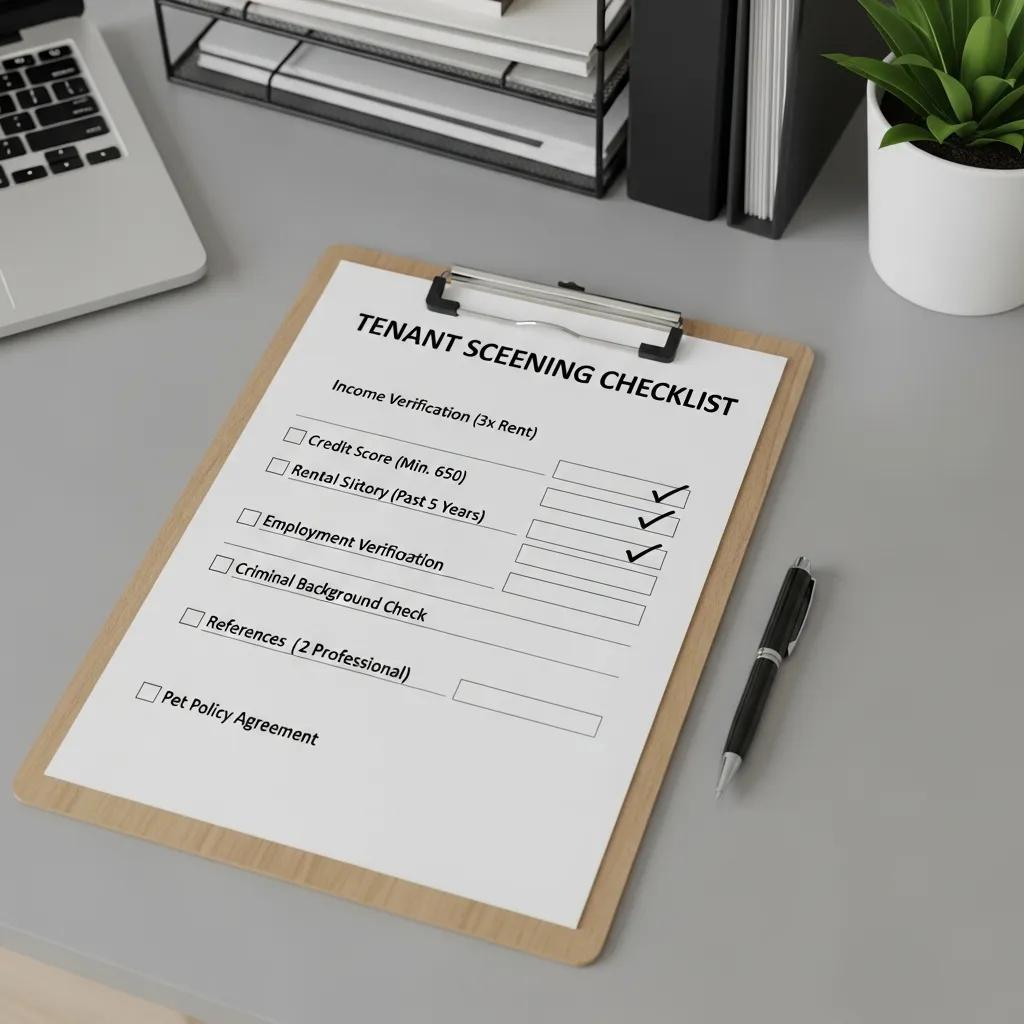
A solid checklist reflects your risk tolerance and operational needs. Common items include verifiable income, employment stability, rental payment history, credit profile, criminal and eviction history, references, and occupancy limits.
How to Verify Income, Employment, and Rental History Effectively
Ask for recent pay stubs, W‑2s or tax returns, and an employment verification letter when needed. For rental history, contact previous landlords to confirm on‑time payments, lease compliance, and care of the unit. Document calls and keep copies of all verification materials.
Which Red Flags Should Landlords Watch for in Tenant Applications?
Be alert for inconsistent employment, unverifiable income, recent evictions, sustained late payments on credit reports, and negative or evasive landlord references. Any of these deserve closer review or additional vetting before approving an application.
Why Is Thorough Tenant Screening Critical for Real Estate Investment Success?
Good screening reduces vacancies, costly evictions, and repair bills—improving cash flow and preserving property value. It’s a preventive step that protects both short‑term income and long‑term investment returns.
How Does Tenant Screening Help Prevent Evictions and Property Damage?
Screening identifies applicants with a history of timely payments and respectful tenancy, and flags those with records suggesting risk. Choosing tenants based on documented behaviors lowers the chance of defaults and property damage and shortens the timeline to resolve problems when they do occur.
What Are the Financial Benefits of Selecting Reliable Tenants?
Reliable tenants pay on time, reduce turnover and vacancy-related costs, and typically maintain the unit—saving you on repairs. Over time, consistent rent collection and lower maintenance expenses translate into stronger net returns and less time spent on crisis management.
How to Choose the Right Tenant Screening Services and Tools for Your Rental Properties?
Select tools that balance thoroughness, compliance, and usability. The right provider speeds decisions, keeps you compliant, and integrates with your workflow so you can scale screening across multiple units.
What Features Should Landlords Look for in Tenant Screening Software?
Look for FCRA‑compliant reports, complete criminal and eviction data, access to credit reports, easy applicant portals, secure data handling, and integrations with your property management system. A clean, simple interface saves time and reduces errors.
How to Compare Credit Bureaus and Background Check Providers
Compare report coverage, data sources, turnaround time, pricing, and compliance support. Prioritize providers that document their methods and offer dispute support if applicants challenge report contents.
This table highlights the core screening steps and why each matters. Use it as a quick reference when you build or refine your process.
By applying these best practices—consistent applications, careful verification, and reliable reporting—you’ll improve tenant quality and protect your assets. Combine clear policies with the right tools to make screening efficient and defensible.
Frequently Asked Questions
What should landlords do if they encounter a discriminatory tenant screening practice?
Stop the practice and document the incident. Review and update your screening policy to ensure it’s objective and uniformly applied. Seek legal advice if necessary, and report violations to local housing authorities. Train staff to prevent future issues and keep records showing consistent application of your criteria.
How can landlords improve their tenant screening process over time?
Track outcomes (evictions, late payments, maintenance issues) and adjust criteria based on real results. Solicit feedback from property managers, stay current on legal changes, and adopt tools that automate checks and recordkeeping to reduce human error.
What are the potential consequences of inadequate tenant screening?
Poor screening can lead to unpaid rent, higher repair costs, longer vacancy periods, and costly evictions. It can also increase liability exposure if screening practices aren’t legally sound. Investing time in screening upfront usually saves money and stress later.
How often should landlords conduct tenant screenings for existing tenants?
Screenings are standard for new applicants. For existing tenants, re‑screen only when legally permitted—such as at lease renewal if your lease allows—or when there’s a reasonable concern. Always obtain consent and follow applicable notice requirements.
What role do references play in the tenant screening process?
References—especially from prior landlords—offer direct insight into a tenant’s payment history, care of the property, and lease compliance. Use them to corroborate application claims and to probe any inconsistencies you find in records or reports.
Can landlords charge fees for tenant screening, and what are the regulations?
Yes, landlords can charge an application or screening fee, but amounts and disclosure requirements vary by jurisdiction. Disclose fees up front, keep receipts, and ensure the fee reflects the actual cost of screening. Some areas require refunds or limit fees—check local rules before charging.
Conclusion
Consistent, well‑documented tenant screening is a practical way to protect rental income and preserve property value. Implement clear policies, verify applicant information thoroughly, and use compliant screening tools to reduce risk. Start refining your process today—better screening means fewer headaches and stronger returns over time.